




The enemy is wise. In a correct and prophetic manner: a nation cannot depend on foreigners to have life. Knowing the enemy as “still alive” reflects what many scholars describe as Western geopolitical fundamentalism—a system in which powerful nations consistently prioritize their own strategic interests over the sovereignty and dignity of smaller nations. This is what Kwame Nkrumah understood, the piercing clarity: Western powers act to protect their global influence, even when such actions blind developing nations to their own potential, resources and independence.
Foreign agencies, governments, and institutions can shape narratives, economics, and politics in ways that keep African nations dependent and insecure. Nkrumah warned that depending on foreigners for survival is the fastest way to lose national destiny. The enemy is not only visible in armies and sanctions; it is present in ideas, reports, policies, information and narratives that quietly and chiefly undermine self‑belief and self‑reliance.
Why Kwame Nkrumah Was Feared by Foreign Powers
- His ideology exposed neo‑colonialism. Nkrumah taught that even after independence, foreign powers could still control African nations through loans, aid, currency manipulation, military influence, and economic pressure. He called this “the last stage of imperialism.” This truth stripped away the moral disguise of foreign influence.
- He pushed for total African unity. Nkrumah believed Ghana’s independence was meaningless unless tied to the liberation of all Africa. His vision of a United States of Africa threatened global powers that benefited from a divided continent.
- He rejected Western geopolitical control. His African‑centered political modernity, supported by Marxist‑Leninist analysis, made him intellectually independent and strategically unpredictable—dangerous to foreign interests.
- He was building economic independence. Through industrialization, state‑owned enterprises, Pan‑African trade, and infrastructure, Nkrumah sought to reduce foreign dependency. Foreign powers feared losing economic control over Africa’s resources and markets.
- He had global influence beyond Ghana. Nkrumah became a Pan‑African symbol whose speeches, books, and diplomacy inspired liberation movements across the continent. Leaders who unite nations are always feared by those who profit from division.
Geopolitical Awareness and the Danger of Foreign Narratives
Geopolitical enemies are smart in seeing nations fall. Powerful states have long histories of protecting their interests, not the interests of smaller nations. They study weaknesses, divisions, economic struggles, and political instability—because national decline strengthens their leverage. This is why citizens must remain alert, historically conscious, and geopolitically literate.
Foreign agencies understand psychology, economics, propaganda, and influence. They know how to shape narratives, destabilize confidence, and make nations doubt their own potential. Foreign reports must be read with deep caution, as they often reflect the priorities of the institutions that produce them. They should write reports about their own countries—but geopolitics rarely works that way. Nations write about others because influence is a weapon of power.
Nkrumah saw this clearly. His ideology warned that neo‑colonialism does not end with independence; it simply changes form. He watched foreign governments use economic pressure, media narratives, intelligence networks, and diplomatic influence to shape African politics. This is why he became “fearful in the eyes of the enemy”:
- He exposed their strategies.
- He resisted their control.
- He pushed for African unity.
- He refused dependency.
- He understood global power better than expected.
Why Nkrumah’s Ideology Must Not Be Ignored
Nkrumah’s warnings remain painfully relevant:
- Foreign aid can create dependency.
- Foreign investment can extract more than it gives.
- Foreign governments act in their own interest.
- Geopolitical influence can blind nations to their own potential.
Ignoring Nkrumah’s ideology is not a historical mistake; it is a living danger. It means repeating the same patterns that keep Africa dependent, divided, and vulnerable to external manipulation.
Africa must think for itself, speak for itself, and build for itself.
Nkrumah’s Proof: Self‑Reliance, Unity, and Political Consciousness
Nkrumah proved that self‑reliance, unity, and political consciousness are the only path to true freedom. No nation can rise on borrowed ideas, borrowed money, or borrowed validation. Freedom requires:
- economic independence
- intellectual independence
- political awareness
- continental unity
- control over narrative and identity
A nation that depends on foreign narratives will lose its own destiny. A people who trust foreign reports more than their own history will remain blind. African nations possess immense potential—but remain blind to wisdom when foreign narratives dominate their vision.
It is time for Africa to trade among its own nations, fight for common currency, build common agencies, develop common manufacturing industries, reject greed, and silence misinformation. It is time to change the narrative.
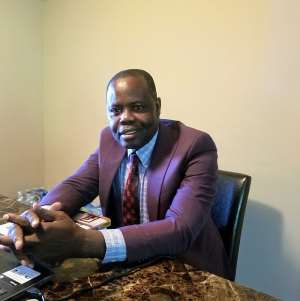
Gaddiel R. Ackah is an educator, operations executive and youth empowerment advocate dedicated to helping young people discover purpose and rise with confidence. He inspires the next generation to think deeply, live boldly and build meaningful futures.


 How IGP Yohuno led Police team to rescue victim, arrest four kidnappers in Assin...
 Akufo-Addo would have used Accra-Kumasi expressway for galamsey – Mahdi Gibrill
 Nigeria's Dangote refinery launches continent's biggest IPO
 Accra-Kumasi Expressway to cut travel time to 2hours, drive 120km per hour — Mah...
 'Our own money $2billion ready, we have not gone to borrow money from anywhere' ...
 Founder’s Day September 21 declared public holiday
 Council of State was not qualified to determine prima facie case against Torkorn...
 'Grounds for removal of Chief Justice and justice of superior court shallow, eph...
 Don't be a Bar that flips on principles but a Bar that is consistent — AG tells ...
 Prostate cancer may show no symptoms until advanced stage – Urologist warns


