




Political blindness occurs when political actors ignore economic realities and rely on exaggerated narratives that can significantly distort national development and weaken a country’s ability to attract foreign direct investment (FDI). In developing countries such as Ghana, political rhetoric often shifts rapidly, and opposition parties may amplify negative claims for electoral advantage. However, multinational investors do not respond to political noise; they study the real institutional, regulatory, and macroeconomic conditions of a nation before committing capital. Understanding this distinction is essential for protecting national development from unhealthy political behavior.
Multinational Investors Watch Political Realities Before Investing
Multinational investors carefully examine political stability, regulatory quality, and institutional effectiveness because these factors determine whether long‑term investments can survive policy reversals, civil unrest, or governance disruptions. In countries where political narratives shift quickly, investors rely on independent risk‑assessment models, macroeconomic indicators, and historical governance patterns—not partisan rhetoric. Their priority is to protect capital, ensure profitability, and avoid exposure to unpredictable political shocks. When political actors ignore these realities, national development suffers because investor confidence becomes fragile.
Opposition Political Blindness Distorts National Development
Opposition parties sometimes fall into political blindness, exaggerating negative narratives without considering the economic consequences. These narratives may weaken public trust, create the illusion of instability, and distort the country’s international image. In environments where fact‑checking institutions are limited, misinformation spreads easily, shaping public discourse and influencing investor perceptions. Although this behavior is common globally, it can unintentionally harm national development by discouraging investment, slowing job creation, and undermining long‑term economic planning.
Opposition Parties’ Naiveness to Exaggerate Misleading Narratives
Opposition parties often exaggerate political narratives because public opinion is a powerful electoral tool. Negative messaging can weaken the ruling government’s credibility and create momentum for political change. Claims about debt, corruption, or instability whether accurate or exaggerated can emotionally influence citizens. However, these narratives frequently serve political strategy rather than economic reality. When political actors prioritize electoral gains over national stability, they risk deterring investors even when core institutions remain functional and investment fundamentals are strong.
Inconsistent IMF Reports and External Amplification of False Narratives
In some cases, inconsistent interpretations of international reports—such as IMF assessments—can unintentionally fuel misleading political narratives. When opposition parties selectively use or misinterpret external reports, it can amplify falsehoods and create confusion about the country’s economic health. Investors typically analyze full IMF datasets, macroeconomic trends, and long‑term indicators rather than political interpretations. However, repeated misuse of external reports can distort public understanding and weaken investor confidence. Kwame Nkrumah emphasized national dignity through self‑dependence, not IMF dependence—highlighting the importance of interpreting external economic assessments responsibly.
What Can Be Done to Educate Opposition Parties
To reduce the spread of misleading political narratives, governments, civil society, and academic institutions can promote structured political education focused on economic literacy and responsible communication. Political actors should be trained to understand how exaggerated claims affect investor confidence, employment, and national development. Strengthening independent fact‑checking bodies can help verify political statements and discourage misinformation. Establishing nonpartisan economic forums where political parties engage experts on investment, macroeconomics, and governance can encourage more responsible political communication. When political actors appreciate how their narratives influence international investment decisions, they are more likely to adopt messaging that supports national stability rather than undermines it.
Erasing Ignorance and Protecting National Development
Beware of unhealthy politics. Political blindness and exaggerated opposition narratives can distort national development and weaken investor confidence. Multinational investors study real political and institutional conditions—not partisan rhetoric—before committing capital. Educating political actors, strengthening fact‑checking systems, and promoting responsible communication are essential steps toward erasing ignorance and safeguarding national development. When political discourse aligns with economic reality, the nation becomes stronger, more stable, and more attractive to global investors.
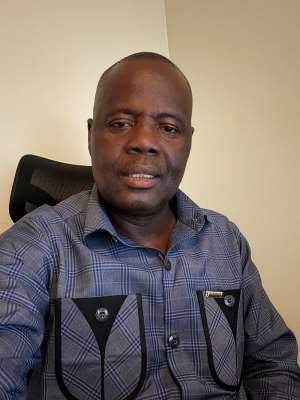
By Gaddiel R. Ackah
Gaddiel R. Ackah is a U.S. Navy veteran, operations executive, educator, and Christian author whose work spans leadership, ministry, and organizational development. He brings a global perspective to both his professional and spiritual calling. As Operations Manager at Globe Transportation and a Doctor of Business Administration candidate, his academic focus includes global business, ethical & analytical leadership, strategic operations and institutional effectiveness. His writing emphasizes national development, responsible governance and the intersection of faith and leadership with the goal to driving efficiency forward.

 Thousands attend Kenya opposition rally amid anger over political violence
 Trump slams AI sceptics as Altman pauses OpenAI IPO plans over safety concerns
 WASSCE: School officials helped students cheat for years, but we now see the tru...
 Probe alleged military killing of lecturer in Bawku – Kusaug Youth demands
 ‘If we all pay GH¢1,000 each, we should be able to construct National Cathedral’...
 Mahama inspects proposed site for Upper West Regional Airport
 Mahama reiterates government's commitment to end double-track SHS system
 Police interdict officer over death of 23-year-old Ivan Baidoo on Tema Motorway
 Improved invigilation is exposing true performance of Ghanaian students — Mahama...
 There's no policy to introduce Arabic, Chinese in all public schools — Mahama


