




Dear Adolescent,
Stay away from romantic relationships while you are in school. Blending romance with schooling comes with a high risk of consequences—and neuroscience explains why.
Adolescence is a season of brain development, learning, and personal growth. Entering an intimate relationship during this period can create distractions that quietly interfere with academic success. To understand how, we must look at three key players in the adolescent brain: the prefrontal cortex, the amygdala, and the dopamine system.
1. The Prefrontal Cortex: The Brain's CEO (Still Under Construction)
The prefrontal cortex is responsible for rational thinking, decision‑making, planning, and impulse control. In adolescents, this part of the brain is still developing—meaning it has not yet matured the way it has in adults. As Harvard Health describes it, the adolescent brain is like “a car with a powerful gas pedal and weak brakes.”
As a result, young people may:
- Struggle to balance academics and relationships effectively.
- Make impulsive decisions, often choosing romance over study time.
- Have difficulty setting priorities, leading to distractions from schoolwork.
- Find it hard to manage a relationship while maintaining good academic performance.
2. The Amygdala: The Emotional Center
The amygdala processes emotions such as love, excitement, jealousy, and stress. In adolescents, the amygdala is far more active than the prefrontal cortex—and because the prefrontal cortex isn't fully matured, young people tend to rely too heavily on the amygdala for reasoning and decision‑making.
But remember: the amygdala is the emotional center of the brain. When you rely on it for rational thinking, most of your decisions will be driven by emotion.
This can lead to:
Intense emotions, mood swings, and distraction. Relationship conflicts, jealousy, or heartbreak that make it hard to concentrate in class. Impulsive reactions to relationship problems, producing anxiety and stress that interfere with learning. Becoming emotionally overwhelmed by relationships, which erodes mental focus and academic success.
3. The Dopamine System: The Brain's Reward Center
The dopamine system controls motivation and pleasure. When adolescents fall in love or engage in romance, the brain releases dopamine, creating feelings of excitement, joy, and reward. As Steinberg (2008) explains, adolescent risk‑taking is fueled by a “dramatic remodeling of the brain's dopaminergic system”—creating heightened reward‑seeking during a period when impulse control is still maturing.
This becomes problematic because:
- Relationships feel more rewarding than studying, so adolescents may unknowingly sacrifice their education for short‑term emotional satisfaction.
- Adolescents may become dependent on the emotional highs of romance, prioritizing the relationship over their studies.
- Motivation for school tasks drops, since romantic interactions provide more instant pleasure than long‑term educational success.
- Focus shifts toward the partner rather than future goals.
A Balanced Word
This is not to say that romance is wrong, or that every adolescent who dates will fail. Some students manage relationships well, and research shows the academic effects vary—for some, a relationship can even offer support. But for many, romance competes directly with study time, focus, and emotional stability. The issue is not love itself; it is timing and balance. Romance has a season—and that season is not while your education is still being built.
The Bottom Line
Because the prefrontal cortex is still developing, the amygdala drives strong emotional reactions, and the dopamine system fuels pleasure‑seeking behavior, adolescents often struggle to balance romance with schooling. Research involving more than 9,400 adolescents found that romantic relationships can undermine academic performance—particularly for students who have the most to lose.
So here is the counsel: Education first. Relationships later.
Two eyes, they say, can never look into a bottle at the same time. You cannot give your full focus to your books and to a partner simultaneously—and one of them will suffer. Make sure it isn't your future.
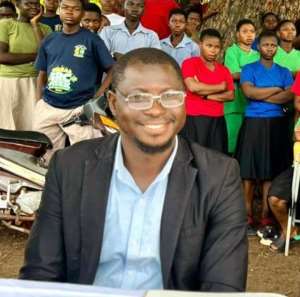
By Counsellor Ibrahim Kassim
Eremon Senior High Technical School, Lawra, Upper West Region – Ghana

 Thousands attend Kenya opposition rally amid anger over political violence
 Trump slams AI sceptics as Altman pauses OpenAI IPO plans over safety concerns
 WASSCE: School officials helped students cheat for years, but we now see the tru...
 Probe alleged military killing of lecturer in Bawku – Kusaug Youth demands
 ‘If we all pay GH¢1,000 each, we should be able to construct National Cathedral’...
 Mahama inspects proposed site for Upper West Regional Airport
 Mahama reiterates government's commitment to end double-track SHS system
 Police interdict officer over death of 23-year-old Ivan Baidoo on Tema Motorway
 Improved invigilation is exposing true performance of Ghanaian students — Mahama...
 There's no policy to introduce Arabic, Chinese in all public schools — Mahama


