




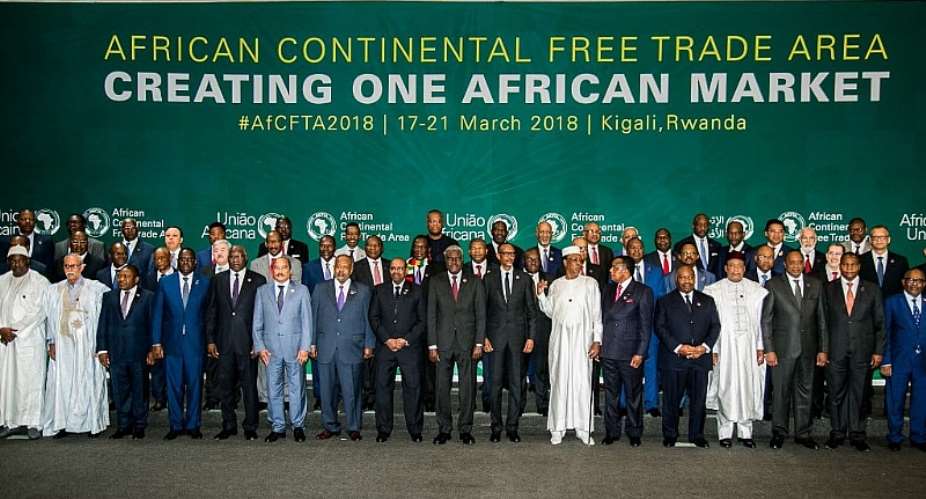
This is what the African Continental Free Trade Area (AfCFTA) should increasingly look like: one African country has supply, another has demand, and the job of the continental trading system is to make sure the product meets the required standards and moves efficiently across the border.
Africa does not lack products to trade. Across the continent, farmers, manufacturers and small businesses produce food, beverages, textiles, cosmetics, building materials and countless other goods. At the same time, African countries continue to import many of these products from outside the continent.
The missing link is often not production or demand. It is the ability to connect the two efficiently.
A Ghanaian company may have a product that consumers in Nigeria, Kenya, Rwanda or South Africa want. A farmer or processor in Côte d’Ivoire may have raw materials needed by a manufacturer elsewhere in Africa. Yet standards, certification, customs procedures, transportation costs, payment systems and inadequate market information can turn what should be a straightforward commercial transaction into a complicated exercise.
This is where AfCFTA must prove its value.
The success of AfCFTA should not ultimately be measured by the number of conferences held, protocols signed or speeches delivered. It should be measured by how easily an African business can identify a customer in another African country, meet the applicable standards, receive the necessary certification, ship the goods, clear customs and receive payment.
Standards are particularly important. Free trade does not mean lowering product-quality or safety requirements. It means making those requirements clearer, more predictable and, where possible, harmonised or mutually recognised across participating countries.
A food processor in Ghana seeking to enter another African market should be able to understand exactly what product registration, labelling, packaging, testing and certification requirements apply. Businesses should not have to navigate an entirely new regulatory maze every time they cross an African border.
Logistics is equally important. A tariff advantage means little if transporting goods between two African countries is more expensive or complicated than importing similar products from another continent. Roads, ports, railways, warehouses, cold chains and efficient border procedures are therefore part of the AfCFTA agenda.
Digital systems can also transform intra-African trade. Businesses need platforms that help them identify buyers and suppliers, verify companies, understand market requirements, process documentation and make secure cross-border payments.
This is especially important for Africa's micro, small and medium-sized enterprises. Large corporations can employ consultants and establish offices across multiple countries. A small Ghanaian manufacturer cannot. AfCFTA must therefore be designed to make cross-border trade easier for the smaller entrepreneur, not only for multinational companies.
The opportunity is enormous. Instead of every African country trying to produce everything it consumes, AfCFTA provides an opportunity for countries to build competitive industries and trade with one another.
One country has the supply. Another has the demand.
Between them should be an efficient African system of standards, certification, financing, logistics, customs clearance and payment that makes the transaction possible.
That is when AfCFTA stops being primarily an agreement on paper and becomes what African businesses need it to be: a functioning continental marketplace.


 Ghana wishes Guyanese diplomat well in UN Secretary-General bid – Ablakwa
 Galamsey 'stealing' boys from classrooms in Bongo – DCE raises alarm
 Leaving Majority Leader role for ministerial position was my choice – Mahama Aya...
 A Rocha Ghana stands by claim of 50-plus forest reserves affected by galamsey
 September 10: Cedi sells at GHS12.15 on forex market, GHS11.45 on BoG interbank
 Open aviation fuel supply to more players to reduce airfares – Akim Swedru MP to...
 Pay my salary arrears, terminal benefits by September 11 or face court – Former ...
 Trump says he'll give Americans $5,000 each if Republicans win midterm elections
 'Govt moves to confiscate, auction containers left at Ghana’s ports for over six...
 How honest station loading boy handed over missing £3,000, GH¢1,000 to Police


