




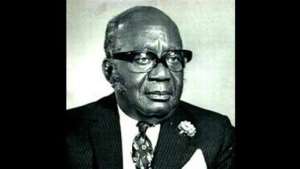
Fifty-six years ago today, Edward Akufo-Addo was sworn in as the ceremonial President of Ghana, marking the start of the country’s Second Republic and a return to constitutional civilian rule after years of military government.
Akufo-Addo was elected President on 29th August 1970 in a special election by an electoral college, defeating Dr Isaac I.B. Asafu-Adjaye by 123 votes to 35. He was sworn into office on 31st August 1970, with Dr Kofi Abrefa Busia serving as Prime Minister and head of government.
The Second Republic followed Ghana’s period under the National Liberation Council, the military administration that took power after the overthrow of Ghana’s first President, Dr Kwame Nkrumah, in 1966.
Under the 1969 Constitution, Ghana adopted a parliamentary system based largely on the Westminster model. Executive authority was divided between the President, who served mainly as Head of State, and the Prime Minister, who exercised executive power as head of government.
Akufo-Addo’s election therefore differed sharply from the presidential system Ghana has today. He was chosen by an electoral college rather than through a nationwide popular vote, reflecting the largely ceremonial role assigned to the presidency.
But his journey to the presidency had already taken him through some of the most consequential moments in Ghana’s political and judicial history.
A prominent lawyer and one of the Big Six who played leading roles in the struggle for independence, Akufo-Addo had served on Ghana’s Supreme Court between 1962 and 1964.
He was one of three judges who heard the case involving Tawia Adamafio, Ebenezer Ako Adjei and Coffie Crabbe after the 1962 Kulungugu bomb attack on Nkrumah.
The three accused were initially found not guilty. The decision angered the government, and Akufo-Addo and his fellow judges were subsequently dismissed from the bench.
After the 1966 coup, however, Akufo-Addo returned to public office. He was appointed Chief Justice and later chaired the Constitutional Commission that helped draft the 1969 Constitution under which Ghana entered the Second Republic.
His transition from a dismissed Supreme Court judge to Chief Justice and, eventually, President gave his political career an unusual arc. For supporters of judicial independence, his return to the highest constitutional office was seen as a vindication of the principles he had defended on the bench.
As President, Akufo-Addo worked alongside Busia, whose Progress Party government pursued liberal democratic policies while confronting serious economic difficulties.
Busia, unlike Akufo-Addo, held the principal executive authority under the constitutional arrangement. His government introduced a programme of economic austerity as it attempted to deal with the financial pressures inherited from the previous administration.
The partnership between the two men represented Ghana’s return to civilian constitutional government, but the experiment was short-lived.
The Second Republic lasted just over two years. On 13 January 1972, Colonel Ignatius Kutu Acheampong led a military coup that overthrew Busia’s government while Busia was abroad.
The coup brought the Second Republic to an end after 27 months of Busia’s premiership, which had begun on 1 October 1969.
Akufo-Addo’s presidency had lasted only about 16 months.
Yet, more than five decades later, the events of 1970 remain an important chapter in Ghana’s constitutional history: a period when the country attempted to rebuild civilian government, divide political power between a President and Prime Minister, and restore constitutional rule after years of military administration.
 Supreme Court dismisses Solomon Asamoah’s injunction bid in Skytrain Trial
 Over 6,000 phone numbers linked to scams as 50% traced to TikTok — TrustGH
 Supreme Court nominee explains why he opposes the idea of separate Bail Act
 Krobohene praises community for embracing Christianity after ancestral deity goe...
 Accra: FDA seizes cigarette-shaped lollipops, arrests key suspect
 August 31: Cedi sells at GHS12.20 on forex market, GHS11.26 on BoG interbank
 SOEs swing from GHS2.25bn loss in 2024 to GHS19.8bn profit in 2025 – SIGA
 56 years on: How Edward Akufo-Addo became Ghana’s President
 UDS graduate working as head porter gets second chance to return to University
 Amenfi Central MP Joana Gyan Cudjoe ends relationship with KECHE

