




For generations across Africa, the placenta has been treated not as biological waste but as a companion to be honoured buried under a tree, beneath the family home, or in a spot chosen by the sex of the newborn, its return to the earth marking the true completion of childbirth.
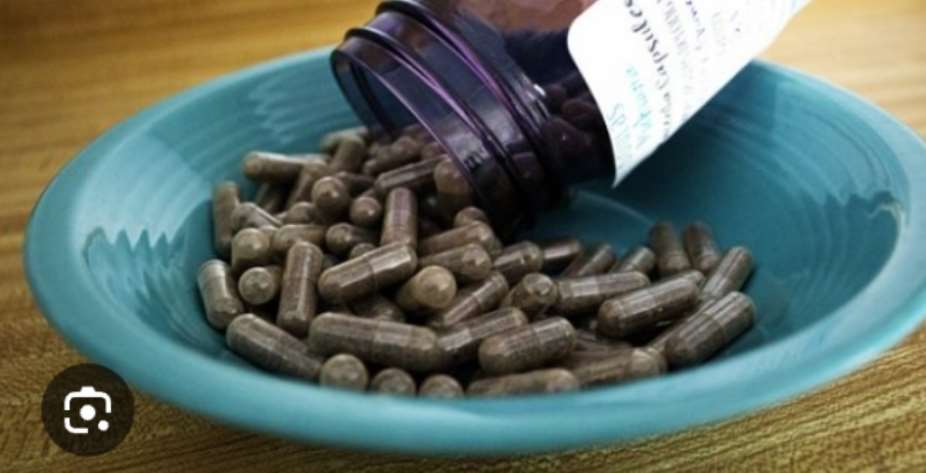
Now a small but growing number of African mothers are breaking with that inheritance, choosing instead to dry, grind, and swallow the organ in capsule form, or blend it raw into a postpartum smoothie.
BBC's Focus on Africa, hosted by Nkechi Ogbonna, put the shift to two women sitting on opposite sides of it: maternal health advocate Ruth Sally Kodam and placenta encapsulation specialist Mary-Nissi Lemon.
What The Ancestors Buried
The reverence African societies have shown the placenta is not incidental it is theology. Among the Yoruba, the placenta is called ibi, understood as the "bad" counterpart to the "good" baby, and must be buried separately even as the child is welcomed home (2). In parts of Ghana it is regarded as the newborn's dead twin and given full burial rites near the family compound; elsewhere in the country, failing to bury it correctly is believed to doom the child to a rebellious temperament.
The Igbo of Nigeria and Ghana share the "dead twin" framing, while in northern Niger's Sahel communities the placenta is called a "traveling companion" that ushers the baby from one world into the next proper burial safeguarding the mother's future fertility (3). Among Kenya's Luo, geography carries meaning too: a boy's placenta is buried on the right side of the mother's house, a girl's on the left, right corresponding to permanence and authority, left to impermanence (4).
Across West Africa more broadly, burial of the placenta and umbilical cord is widely believed to heal the womb and restore fertility a belief once recorded even in 19th-century Sweden, suggesting the instinct is not uniquely African but has simply endured longer here.
The Global Trend Reaching Africa's Cities
Placenta encapsulation dehydrating the organ, grinding it into powder, and packing it into pill capsules a new mother can take for weeks after birth has been gaining traction globally, particularly in Western wellness circles, alongside a rise in placenta-based cosmetics.
Market researchers have tracked rapid expansion in the global placenta powder market, driven by that same demand. Some mothers skip the pill stage entirely and consume the organ raw, blended into a smoothie shortly after delivery. Advocates cite anecdotal benefits: mood stabilisation, replenished iron, reduced postpartum bleeding, a faster hormonal return to baseline, and support for milk supply through hormones like human placental lactogen and prolactin.
None of these claims, it's worth noting, currently carry robust clinical trial backing the evidence remains largely anecdotal, and mainstream obstetric bodies in the West have generally urged caution given the risk of infection transmission through improperly processed placental tissue.
A Quiet Break, Not a Loud Rebellion
What makes the African version of this trend notable is not its scale it remains a minority practice but what it represents: young, often urban and educated mothers weighing inherited ritual against a wellness culture increasingly available to them through specialists like encapsulation practitioners now operating on the continent.
The conversation Ogbonna hosted did not frame it as tradition versus modernity in crude opposition, but as two women one rooted in maternal health advocacy, one in the emerging encapsulation practice mapping where the science, the culture, and the choice actually meet.
The Bigger Question
Whether placenta consumption takes hold more broadly in Africa will likely depend less on wellness-market momentum than on how comfortably it can sit alongside rather than replace practices that have anchored childbirth, fertility, and communal identity for generations.
Burial rites persist because they answer questions encapsulation does not: about ancestry, about the spirit's passage, about a woman's place within a lineage. A capsule can address the body. It has, so far, said little to the rest.
Mustapha Bature Sallama
Medical/Science communicator, Private Investigator, Criminal Investigation and Intelligence Analysis,United States Institute of Peace (USIP), [email protected] +233555275880
References
Apple Podcasts / BBC Focus on Africa, "Placenta: to preserve or consume?" episode description. https://podcasts.apple.com/us/podcast/focus-on-africa/id263570559
Afrocritik, "The Significance of the Placenta in African Cultures." https://afrocritik.com/placenta-in-african-culture/
Cambridge Core, African Studies Review, "Traveling Companions: The Burial of the Placenta in Niger." https://www.cambridge.org/core/journals/african-studies-review/article/abs/traveling-companions-the-burial-of-the-placenta-in-niger/704A2558C6C718B7F7642EEF66A267D8
PMC, "The Disposal of Placenta among Indigenous Groups Globally: An Integrative Literature Review." https://pmc.ncbi.nlm.nih.gov/articles/PMC10622600/
PubMed, "[West African childbirth traditions]." https://pubmed.ncbi.nlm.nih.gov/6558064/
Dancing Doula of the North, "Placenta encapsulation: fad or helpful postpartum tool for wellness?" https://dancingdoulaofthenorth.substack.com/p/placenta-encapsulation


 ‘Containment is not prevention’ – National Security boss outlines 18-month maste...
 Wontumi withdraws from NPP Chairman contest
 ‘Who can pay us?’ – KSM denies being on NDC government payroll
 Vigilante groups adopting covert networks, mobilizing through encrypted chats – ...
 ‘We are solidly behind you’ — Christian Council rallies support for Ghana Medica...
 CHRAJ, NCCE and NSS equip university leaders with tools to fight corruption and ...
 Mahama to cut sod for multi-tiered car park, hotels complex at Accra Internation...
 24-hour economy is bigger than ‘three people, one job’ – Rashid Pelpuo
 Ghana much safer this year than even 2025 - Interior Minister
 Ghana’s economic recovery impressive — IMF

