




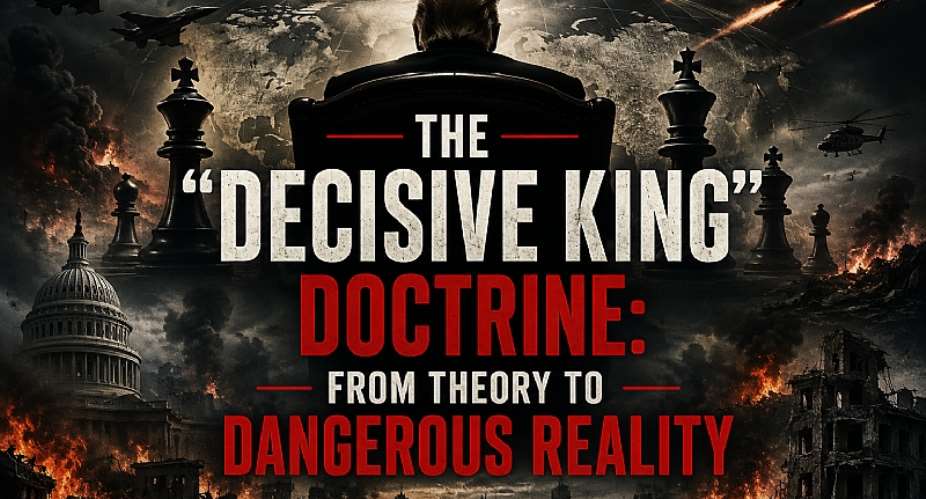
In international relations, the “mad king” theory has long been debated as a strategic posture—where a leader projects unpredictability to intimidate adversaries and extract concessions. However, what was once considered a calculated theory now appears to be manifesting in ways that are far more chaotic than strategic. The world, in recent years, has witnessed glimpses of leadership behavior that raises serious concerns about stability, judgment, and the future of global order.
One cannot ignore a pattern of erratic diplomatic conduct that undermines the very foundations of statecraft. Consider the optics of inviting a key ally such as the Japanese Prime Minister, only to turn a formal engagement into an awkward display of ill-timed humor framed as a “surprise.” Diplomacy relies on trust, predictability, and respect—qualities that seem compromised when state interactions are reduced to impulsive theatrics. Such actions are not merely personal missteps; they ripple across alliances, weakening confidence in leadership.
Similarly, strained relations with European allies reveal a deeper issue. Seeking support from the European Union and reacting with hostility when faced with resistance reflects not strength, but insecurity. Threatening actions against regions like Sweden or Greenland—whether rhetorical or exaggerated—signals a troubling blend of narcissism and coercive diplomacy. Alliances are not sustained through intimidation; they thrive on mutual respect and shared interests.
The pattern extends further into global economic and security frameworks. Appeals to NATO and even China for cooperation, followed by reactionary rhetoric upon refusal, suggest a leadership style driven less by strategy and more by emotional impulse. The notion of deliberately destabilizing the global economy—despite acknowledging domestic vulnerabilities—points to a dangerous mindset: if one suffers, all must suffer. This is not empathy; it is collective punishment masquerading as policy.
Adding to the confusion are ambiguous claims and unverifiable statements, such as attributing aggressive intentions toward Iran to an unnamed former president. Such narratives blur the line between (truth) and (political storytelling), creating an environment where misinformation can justify escalation. In a world already fraught with tensions, ambiguity at the highest level of leadership is a risk multiplier.
This brings us to the evolving conflict surrounding Iran—a situation that has steadily intensified. Reports of restricted communication within Iran, including internet blackouts, obscure the human cost of ongoing hostilities. Strategic moves such as Kharg Island and the Strait of Hormuz remain critical only for regional stability but for global energy security. Any escalation in these logic could have far-reaching consequences, including disruptions in oil supply and increased geopolitical volatility.
The specter of nuclear escalation, while still hypothetical, cannot be entirely dismissed in environment . When rhetoric becomes increasingly aggressive and strategic patience erodes, the threshold for catastrophic decisions lowers. If Gulf Cooperation Council (GCC) states are drawn deeper into the conflict, the of regional expanding into South Asia—including Pakistan—or even extending toward East Asia becomes more plausible.
Iran, for its part, may find itself cornered. History has shown that nations under existential pressure often resort to asymmetric responses. Missile strikes, cyber warfare, and proxy engagements could redefine the battlefield, potentially pulling European actors into direct confrontation. NATO’s calculated movements, often described as defensive, may equally be interpreted as preemptive for a broader conflict.
Meanwhile, global alignments continue to shift. Russia’s acknowledgment of Iran as a “loyal friend” adds another layer of complexity. Such declarations are not merely symbolic; they at potential strategic underlying that could counterbalance Western influence. Yet, history cautions that alliances built on convenience can be as fragile as those built on coercion.
The central question remains: are we witnessing the brink , or merely a phase of heightened pressure and posturing? The answer lies in the decisions made today by those in positions of power. What is evident, however, is that reckless leadership, combined with fragile alliances and escalating rhetoric, creates a combustible environment.
If the “mad king” doctrine was ever intend of calculated unpredictability, it has now drifted into the realm of genuine threats . And in a nuclear-armed world, the cost of such threats is not theoretical—it is existential.


 ‘Containment is not prevention’ – National Security boss outlines 18-month maste...
 Wontumi withdraws from NPP Chairman contest
 ‘Who can pay us?’ – KSM denies being on NDC government payroll
 Vigilante groups adopting covert networks, mobilizing through encrypted chats – ...
 ‘We are solidly behind you’ — Christian Council rallies support for Ghana Medica...
 CHRAJ, NCCE and NSS equip university leaders with tools to fight corruption and ...
 Mahama to cut sod for multi-tiered car park, hotels complex at Accra Internation...
 24-hour economy is bigger than ‘three people, one job’ – Rashid Pelpuo
 Ghana much safer this year than even 2025 - Interior Minister
 Ghana’s economic recovery impressive — IMF

