




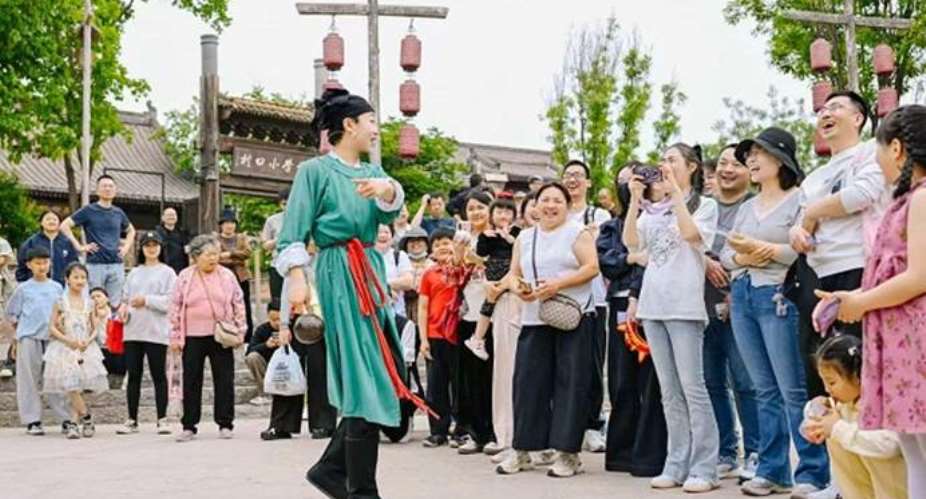
China is in the final stretch of its summer travel season, one of the busiest periods of the year for domestic tourism. The country's railways are expected to handle 1.01 billion passenger trips during the 62-day summer travel rush, which ends on August 31. But the most interesting change is not simply how many people are travelling. It is what they are travelling for.
A factory is becoming a tourist attraction. A school textbook is becoming a travel itinerary. A film set is becoming a destination. That may look like a tourism trend. It is better understood as an economic signal. For decades, China's growth was powered by building more: factories, infrastructure, housing and commercial space. As the economy matures, another source of value is becoming more important: finding new uses for what already exists. China's changing tourism industry offers a glimpse of how this works.
The tourist is buying an experience
The latest numbers point to an interesting gap. In the first half of 2026, Chinese residents made 3.46 billion domestic tourist trips, up 5.4 percent from a year earlier. But total tourism spending rose by only 2 percent, to 3.21 trillion yuan. China is not short of tourists. The bigger opportunity is to create more value from each trip.
That fits a broader change in Chinese consumption. In 2025, services accounted for 46.1% of per-capita consumer spending, up from 42.6% in 2020. Spending on education, culture and entertainment rose over 70% over the same period. Chinese consumers are increasingly spending on things that cannot be put on a shelf. That creates new opportunities for businesses and destinations to turn existing resources into services.
Giving existing assets a second economic life
Industrial tourism offers a particularly clear example. In May, seven government departments issued guidelines encouraging factory tours and industrial-heritage tourism. Beijing aims to attract 20 million industrial tourists annually and generate 3 billion yuan in related revenue by 2027. The significance lies less in the size of the market than in the idea behind it.
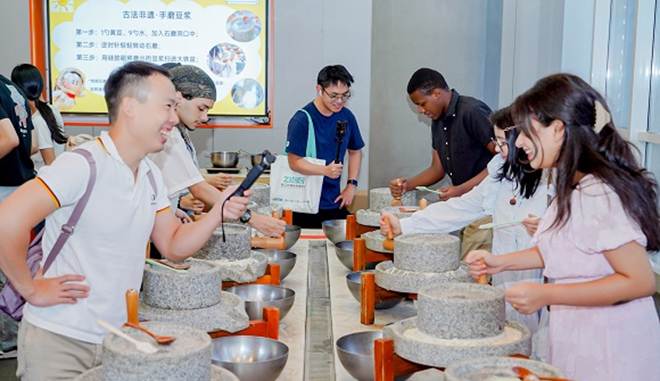 Visitors experience making soy milk with a traditional stone mill at Joyoung in Hangzhou, Zhejiang Province.
A factory can do more than make products. It can also offer consumers an experience built around how those products are made. An old industrial site can become a heritage attraction. A former production area can become a commercial district. A historic neighborhood can combine preservation with new forms of consumption.
This is particularly relevant for a country that has accumulated an enormous stock of industrial and urban assets over decades of rapid development. Economic value does not always require a completely new asset. Sometimes it comes from finding a new use for an existing one. Tourism is making that process visible.
The same transformation is happening in China's cultural economy. China's box office reached 51.8 billion yuan in 2025, while the estimated value of the wider film industry chain reached 817.3 billion yuan. Tourism, transport, catering and retail all benefit from film-related consumption. The significance is not simply that films can generate tourism. It is that content can connect different parts of the economy to consumers.
A film can sell a ticket. It can also inspire a journey, fill a hotel room and bring customers to a restaurant near a shooting location. A textbook can do something similar by turning knowledge into a travel experience. A sporting event can turn spectators into tourists. An industrial site can turn production history into cultural consumption. In each case, something that already exists acquires a new commercial connection. Content creates attention. Attention creates interest. Interest creates consumption. Tourism sits at the center of that chain.
The rise of the experience economy
Digital platforms are accelerating the process. A destination no longer needs to compete only with other destinations. It competes with films, games, concerts, shopping and short videos for consumers' limited leisure time. At the same time, social media makes it easier for relatively obscure places to find the audiences most interested in them.
 A view of Zhengzhou Movie Town in Henan Province.
A small town does not need to appeal to everyone. It can build a tourism business around a particular story, product or cultural identity. This changes the economics of tourism. The most valuable resource is no longer simply a spectacular landscape. It is the ability to turn attention into an experience. That is why China's tourism shift is closely connected to the rise of its service and digital economies. The two are increasingly reinforcing each other.
A more flexible way to create value
This is perhaps the most interesting part of the story. China's tourism transformation is not about replacing manufacturing with tourism, or investment with consumption. It is about adding new layers of value to an existing economic base. Growth does not always require building something new. It can also come from making existing assets more productive, more connected and more valuable to consumers. For a maturing economy, that flexibility matters. It can create opportunities for local businesses, extend the economic life of physical assets and connect cultural resources with growing demand for services and experiences.
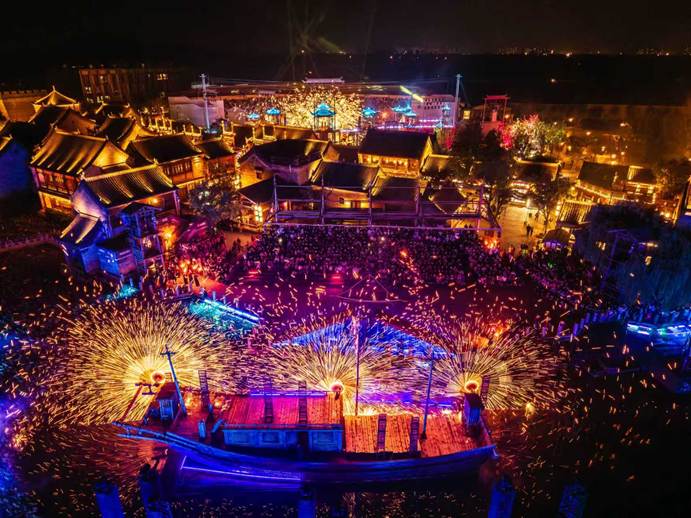 A view of Zhengzhou Movie Town in Henan Province.
The tourism industry is simply where this shift is easiest to see. The factory, the film set and the textbook are not unusual because they have suddenly become tourist attractions. They are interesting because they show how China's economy is learning to connect things that once belonged to separate worlds: production and consumption, culture and commerce, physical assets and digital attention.
That may be the deeper story behind China's changing tourism habits. The next wave of value creation may come not only from building new things, but from discovering how much more the things China has already built can do.
Jiang Tao, reporter
CGTN Radio

 Ghana lost 1.1 million ounces of gold to smuggling in 2023 – GHEITI report
 Stranded Ghanaian fishermen narrate how they ate fresh fish, drunk sea water to ...
 How notorious armed robber died on the way whiles leading police to arrest accom...
 'We must continuously improve cargo handling, coordination among port operators'...
 GPHA honours industry players, former leaders and staff at 40th anniversary awar...
 Nii Lante Vanderpuye confident of winning NDC national chairmanship despite Gold...
 Agalga dismisses critics, assures Builsa North of progress on Sandema–Wiaga Road
 NDC Lawra constituency polls: We are not going to disappoint you – Chairman Bati...
 Ghana's President Mahama calls for new West African security accord, stronger AU...


