




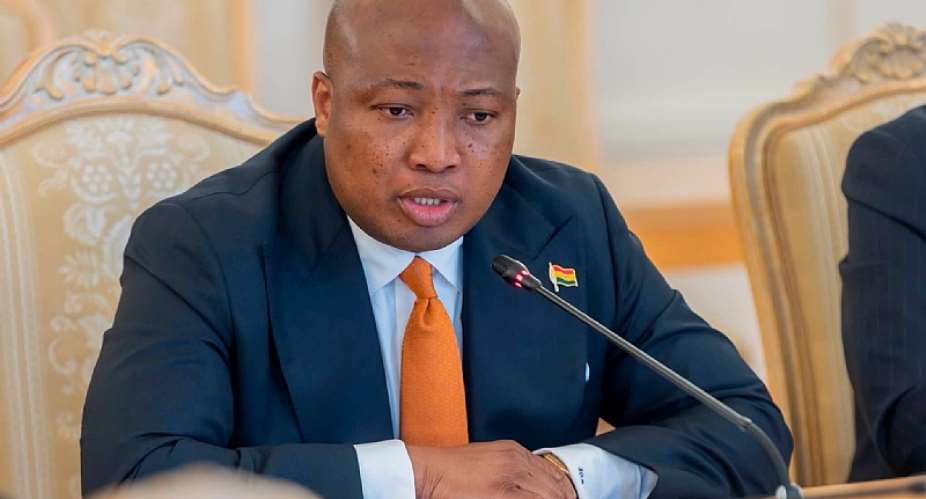
Ghana has called for a major overhaul of the global financial architecture, arguing that high borrowing costs and unfavourable sovereign risk assessments place African economies at a disadvantage.
The Minister for Foreign Affairs, Mr Samuel Okudzeto Ablakwa, who made the call on Ghana's behalf, said the current system must be reformed to ensure fairer access to financing and sustainable development.
He stated this at a press briefing following his recent three-day working visit to Russia.
According to Mr Ablakwa, African economies are often classified as high risk by international sovereign rating agencies, resulting in higher interest rates when countries seek financing on the international market.
“The international financial system is rigged against the Global South. High risk, high interest, high capital, which is very expensive and continues to militate against the development of Africa”, he said.
He noted the situation had left several African countries spending between 40 and 50 per cent of their national revenue on debt servicing and interest payments.
Mr Ablakwa said Ghana was therefore advocating reforms that would create a fairer global financial system and give developing countries better access to affordable capital.
He said sovereign ratings assigned to African economies needed review, particularly where the assessments created perceptions of excessive risk and increased borrowing costs.
The Minister also called for debt forgiveness for heavily indebted African countries, saying debt servicing limited resources available for development.
“Let's look at debt forgiveness. Let's look at the international financial architecture. Let's look at UN reform”, he said.
Mr Ablakwa said the proposed reforms formed part of Ghana’s broader reparatory justice agenda, which he said should not be viewed simply as a demand for financial compensation from Western countries.
He said African countries were instead seeking support for development, entrepreneurship, industrialisation and other initiatives that would strengthen their economies.
“African leaders are not asking for money to line our pockets. That's not what we're asking for,” he added.
Mr Ablakwa cited the announcement by the Archbishop of Canterbury of £100 million to support young African entrepreneurs and startups as an example of the type of partnership Ghana would welcome.
He said the reform of the global financial system should also be accompanied by changes that would enable African countries to exercise greater control over their natural resources.
According to him, Africa could not continue exporting raw materials while importing finished products at much higher prices.
“We want to add value to our resources, industrialise, build factories, and then you can partner with us in a win-win arrangement," he said.

 Extortion allegations against Afenyo-Markin irrelevant to alleged $1.7bn GoldBod...
 OSP assesses extortion allegations against Afenyo-Markin for possible investigat...
 ‘I don’t support calls to remove Afenyo‑Markin as minority leader’ — Sticka
 Bawumia backs Afenyo-Markin to lead minority’s push for accountability over Gold...
 IMF debt assessments fail to fully capture Ghana’s mounting crisis risks – Dr. M...
 26 suspects put before court over 2020, 2024 election-related violence – Interio...
 June 29 flood affected about 92,000 people, killed 39 – Interior Minister
 Despair and anger in Conakry after deadly landfill collapse
 'We have never taken GHS1 billion overdraft from BoG' – GoldBod denies claim by ...

