




Since time immemorial, Africa’s cultural identity has been defined by its most vibrant symbols: the thunder of drums, the kaleidoscope of traditional fabrics, the aroma of local cuisine, and the spirited energy of dance and festival.
Yet, beyond these visible expressions lies a deeper, often overlooked dimension: culture as a living science and a reservoir of collective knowledge that shapes how communities govern, manage resources, confront climate change, and define wellbeing itself.
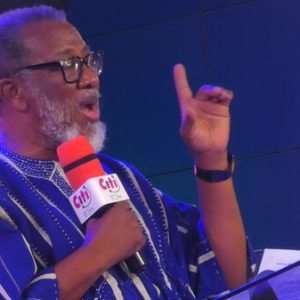
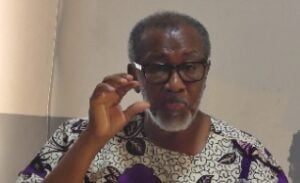
This is the intellectual frontier being explored at Millar Open University, a pioneering institution that is challenging mainstream approaches to higher education by placing African culture at the epicenter of knowledge production and development. For Professor David Millar, the university’s founder and guiding voice, the reduction of culture to mere spectacle obscures its true power: its ability to organize societies, solve problems, and inform every facet of daily life.
“Culture isn’t just about art or entertainment,” Professor Millar insists. “It is a science, a system of knowledge that equips communities to respond to challenges.”
At Millar Open University, the case is made that development cannot be separated from culture. Every project, whether in healthcare, governance, finance, or environmental protection, unfolds within a cultural context. This means that imported solutions, no matter how well-intentioned, risk failure if they ignore the knowledge systems and values of the people they seek to help.
Professor Millar’s argument upends a longstanding hierarchy in global knowledge production. While Western science is often treated as the universal standard, indigenous knowledge is relegated to folklore or belief. But what if science itself can be interpreted through a cultural lens? At Millar Open University, the answer is a resounding yes: the institution advocates for a multicultural approach to science, where different societies, European, Asian, African, can each contribute their intellectual traditions to a richer, more nuanced understanding of the world.

“Take Western science and view it through a cultural perspective,” Millar explains. “This justifies the idea of multicultural science.”
This approach aligns with global debates on decolonisation, reparations, and the legitimacy of African knowledge systems. The university views these not as side issues, but as central to the way knowledge is produced and validated. Professor Millar points to the important but often underrecognized work of African Studies centers at the University of Ghana and elsewhere, arguing that such conversations need to move from the academic margins to the mainstream.
Millar Open University’s commitment to flexibility is as radical as its intellectual vision. Unlike many open universities that rely exclusively on distance learning and massive enrollment, Millar’s model blends physical and virtual engagement in a monthly rhythm. Students, most of whom are already employed professionals, engage in remote learning for most of the month, then converge on campus for intensive, face-to-face sessions.
This structure caters to adults juggling work, family, and academic ambitions. Around 98 percent of PhD students and 70 percent of master’s students are employed before enrolling. Rather than serving as a launchpad for young people entering the workforce, the university acts as a transformative platform for professionals seeking to challenge and expand the knowledge they already possess.
Perhaps most distinctively, the university promotes “unlearning and relearning.” Students are encouraged not just to acquire new skills, but to question received wisdom and reconsider their fields from indigenous perspectives. An accountant might explore local financial traditions; a doctor might study non-communicable diseases through alternative frameworks. The aim is not to reject conventional knowledge, but to interrogate its universality and foster intellectual pluralism.
Located in Ghana’s eastern corridor, Millar Open University deliberately maintains a rural orientation, even as it attracts urban students. The goal is to offer education outside the usual urban-centric models and professional networks, making advanced study accessible without requiring relocation or loss of employment. Flexible fee arrangements and limited scholarships make the institution more accessible, though it relies primarily on tuition for sustainability.
The university’s approach finds its most profound expression in its relationship with indigenous communities. Professor Millar challenges the notion that development should be measured solely by material wealth. In many communities, wellbeing is defined by social relationships, happiness, and communal belonging, not just by cars, homes, or bank balances. Recognizing these values makes traditional knowledge and institutions relevant to contemporary debates about development and climate change.
Sacred landscapes and traditional institutions are treated as vital sources of environmental knowledge. Customary rules protecting forests, groves, and water bodies reflect centuries of climate adaptation, long before the concept entered global policy discourse. Instead of asking only what communities can learn from modern science, Millar Open University asks what science can learn from communities that have managed their ecosystems for generations.
To illustrate these ideas, Professor Millar often references “The Gods Must Be Crazy,” using its story of a Coca-Cola bottle’s disruptive arrival in a remote community as a metaphor for development’s unintended consequences. The lesson: technology or aid is not inherently beneficial. Its impact depends on the cultural system it enters.
While ICT is central to Millar Open University’s model, enabling research supervision and communication, the institution deliberately preserves monthly in-person sessions. For a university that sees culture as lived experience, face-to-face engagement remains essential.
With 14 years of operation, national accreditation, and academic affiliations, including a partnership with the University for Development Studies, Millar Open University is not an academic outlier. Its research networks extend to Zimbabwe, South Africa, the Netherlands, and beyond, positioning its cultural approach within a global intellectual conversation.
The university’s success is not measured in job creation, but in the transformation of professional practice. Its graduates, already positioned in academia, public administration, and other sectors, bring new ways of thinking to their fields. A health worker might integrate biomedical and indigenous knowledge; a policy-maker might draw on traditional concepts of governance and wellbeing; a researcher might see a shrine as a form of ecological management.
Ultimately, Millar Open University’s radical proposition is that culture is not just about what people do, but how they know and live. It challenges the separation of African culture from science, policy, and development, a separation that never truly existed for many communities.
For Ghana and Africa, the real significance of this experiment may lie in its central question: Can development be reimagined so that Africans do not have to abandon the knowledge systems that have sustained their communities for generations? For Professor Millar and his colleagues, the answer is yes, if we start by listening to what communities already know. Education, in this sense, becomes not just a path to employment, but a dialogue among different ways of knowing, a radical lesson for the continent and the world.


 'There is no support’ – Prisons DG explains why ex-inmates are likely to return
 ECG announces nationwide meter audit to combat electricity theft
 Afenyo-Markin, NEIP CEO Eric Adjei settle defamation suit out of court over exto...
 GIS recovers GH¢124,552 in excess salary arrears paid to 23 officers
 Minerals Commission denies Alfred Mahama’s role in Narawa Licence revocation
 No more ‘No Bed’ excuse as Health Minister unveils real-time bed monitoring syst...
 NAGRAT alleges 38 Obuasi teachers targeted for transfers for speaking out agains...
 Immigration Service gives two officers November 7 deadline to refund GH¢57,006 u...
 'Every tonne of waste we dump is a job we bury' — Dr Siaw Agyepong
 GES directs Ashanti regional, Obuasi East educational directors to step aside ov...


