




When Ebola resurfaced in the Democratic Republic of Congo, something notable happened: laboratories confirmed cases quickly, surveillance systems flagged them, and trained personnel mobilized without having to invent a response from scratch. That is not luck. It is the payoff of two decades of investment in Africa's laboratory systems — investment that a multi-country assessment completed by the African Society for Laboratory Medicine (ASLM), just before this outbreak began, had already documented in detail.
Across 26 African countries, that assessment found that the essential building blocks were already in place: functional surveillance systems everywhere, core diagnostic testing capacity everywhere, laboratory coordination units in the overwhelming majority of countries, and laboratory policies and regulatory frameworks in all of them. This is a continent that has quietly built one of the more substantial public health infrastructures of the past twenty years, largely without the credit it deserves.
So why does this outbreak also feel like déjà vu?
Because the assessment found something else, too — something the current response has now confirmed rather than contradicted. Africa has built laboratory capacity. It has not yet consistently built laboratory capability: the ability to make all of that capacity function as one integrated system, at speed, under pressure. Specimen referral networks that work in ordinary times fragment under emergency load. Laboratory data systems that operate fine day-to-day don't talk to surveillance platforms when it matters most. Supply chains built for routine testing volumes strain the moment they need to flex. None of this is new information. It was flagged before the outbreak. The outbreak simply proved the flag was correct.
This distinction matters more than it might seem. It is the difference between a health system that can survive an emergency and one that is ready for one. And it reframes what "readiness" should mean to the governments and institutions currently deciding where the next round of health investment goes. A gleaming new lab, a shiny sequencing platform, a training program completed — these look like progress, and often are. But if the specimen referral network still can't move a sample fast enough, or the surveillance database still can't talk to the lab information system, the investment hasn't yet bought preparedness. It has bought potential.
The uncomfortable truth is that this is a solvable problem, and Africa mostly knows how to solve it — which makes the continued underinvestment in the unglamorous connective tissue of health systems (interoperability, logistics, workforce surge capacity, domestic financing) harder to excuse. Ribbon-cuttings happen for new laboratories. They rarely happen for a functioning specimen courier network or an emergency operations protocol that's been stress-tested twice a year. But it is precisely that unglamorous work that determined how fast the DRC could respond this time — and will determine how fast the next country can respond to the next one.
There will be a next one. Ebola, mpox, cholera, and novel pathogens do not wait for systems to catch up. The choice in front of African governments, regional bodies, and international donors is not whether to keep investing in laboratory systems — that argument was won years ago. The choice is whether the next wave of investment finally targets the connective tissue rather than another round of infrastructure that looks impressive and functions in isolation.
Africa did not start this outbreak from zero. It should not have to start the next one from zero either. The tools exist. The lesson has already been delivered twice — once by an assessment, and now by an outbreak. The only question left is whether it gets acted on a third time, before the bill comes due again.
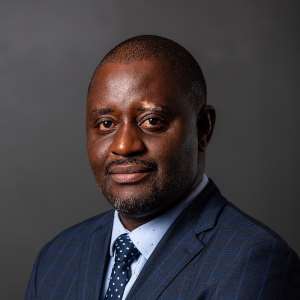
Dr. Talkmore Maruta, Director of Programs, ASLM

 IMF upgrades 2026 growth forecast but warns of 'split' outlook
 What we know about Pope Leo XIV's planned lung operation this week
 Former DR Congo president Kabila forms new force with M23 armed group
 'Stop excessive financial demands before sharing information with us' — Interior...
 EC will serve national interest, not partisan politics – Deputy Chair Dr Kwaku A...
 I expect no preferential treatment from EC for myself as President, my party or ...
 Afenyo-Markin meets management, proposes reforms to turnaround struggling ECG
 ECG management commends Afenyo-Markin for reforms during short stay as Board Cha...
 Nyaho Medical Centre ordered to report to CID over expired data protection certi...
 PTAAM-Africa calls for government probe into alleged World Cup visa fraud


