




Every woman has the right to be treated with dignity, compassion and respect when giving birth. Yet for many South African women childbirth in public health facilities can be marked by poor communication, neglect, lack of privacy and, in some cases, verbal or physical mistreatment from health workers.
In a few cases, exposure to severe, disrespectful and abusive behaviour can lead to long-term psychological distress, affecting women and their families.
Efforts to improve respectful maternity care in South Africa have focused mainly on training individual healthcare workers through short courses. Training is important. But it often overlooks a crucial factor: the organisational culture in which health professionals work.
Health workers don't operate in isolation. Their behaviour is influenced by heavy workloads, staff shortages, workplace hierarchies, team relationships and leadership practices. Providing more respectful care means addressing these underlying organisational factors.
We have spent more than two decades designing and implementing health systems research to improve care for women, newborns and children. Our recent study, conducted in nine rural district hospitals in South Africa's KwaZulu-Natal province, explored whether improving teamwork, learning and workplace culture could improve women's experiences of maternity care.
This is the first study to assess the feasibility and effects of an intervention addressing both organisational culture and women's experience of care.
After the intervention, we found improvements in key aspects of care: particularly in communication, autonomy and supportive care experienced during childbirth. Importantly, the largest gains were observed among women from poorer households and those who had attended fewer antenatal visits, who may be more vulnerable. It also improved organisational learning culture and health worker teams.
A different approach
We developed and carried out an intervention called Strengthening Teamwork and Respect (STAR) over a one-year period. The intervention did not focus solely on how staff treated women. It also encouraged teams to examine their own working environments, communication patterns and professional relationships.
The approach involved:
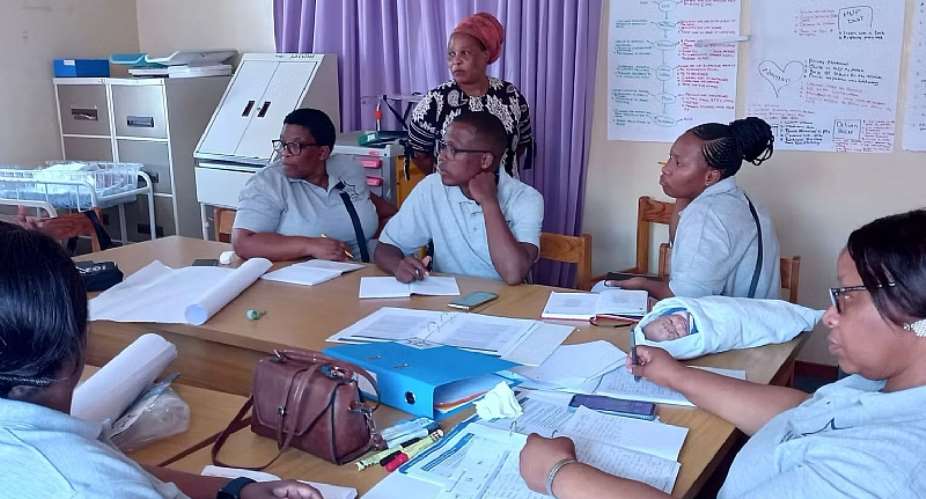
participaton: multidisciplinary teams of nurses, midwives, doctors, managers and non-clinical staff met approximately monthly. They reflected on challenges in their maternity units and developed locally relevant “change projects”.
leadership by local staff champions selected from within each maternity unit. The champions received a two-day training.
the use of structured activities to encourage reflection, dialogue, teamwork and problem-solving.
What we found
We surveyed more than 1,800 women who had recently given birth, as well as over 200 maternity healthcare workers, before and after the intervention.
Our main findings included an improvement in overall person-centred maternity care. Scores increased from 61.5 out of 100 before the intervention to 65.7 afterwards.
The greatest improvements were in areas related to communication and autonomy. More women reported that healthcare providers explained procedures, sought consent before examinations, involved them in decisions about their care, and allowed them greater choice during labour.
Supportive care also improved. Women reported shorter waiting times, greater trust in healthcare providers and a more positive overall experience.
One particularly striking finding concerned birth companions. Before STAR, almost nine out of 10 women said they were not allowed a companion of their choice to stay with them during labour. After the intervention, access to companionship increased substantially.
Many of the participating hospitals had chosen to make birth companionship one of their change projects. STAR teams developed ways to make it possible to have birth companions – things like name badges for companions, written confidentiality agreements, and informing security staff.
Perhaps the most encouraging finding was that the largest improvements occurred among women who often face the greatest barriers to good care. Women from the poorest households experienced greater gains than women from wealthier households. Similarly, women who had attended fewer antenatal visits showed larger improvements than those with more frequent antenatal care.
Our research also measured changes in organisational learning culture. We measured the extent to which workplaces encouraged learning, dialogue, innovation and shared problem-solving.
Healthcare workers reported stronger continuous learning cultures, greater openness to feedback, better systems for sharing lessons, and stronger leadership support. One of the greatest improvements was staff feeling more empowerment to initiate positive changes.
In highly hierarchical healthcare environments this can be transformative. When staff feel empowered, they are more likely to identify problems and work collaboratively to solve them.
Challenges remain
The improvements we observed were modest rather than dramatic.
Many longstanding challenges remain. Staffing shortages, workload pressures and service delivery demands often limited participation in the intervention. Attendance varied across professional groups. Maintaining momentum required ongoing support.
Our study was also conducted without a comparison group. This means we cannot definitively attribute all observed changes to the STAR intervention alone.
Nevertheless, the findings provide important evidence that respectful maternity care is not only about changing individual behaviour. It is also about creating work environments that support learning, teamwork, reflection and accountability.
Lessons for the future
Healthcare systems around the world are under pressure. The instinctive response is often to introduce more training, guidelines or policies. But respectful care cannot simply be instructed from above.
Women's experiences are shaped by the culture of the facilities where they give birth. Improving those experiences requires creating workplaces that support the people who provide care.
The success of STAR suggests that healthcare workers themselves can be powerful agents of change when given the tools, support and space to lead.
For policymakers, the message is clear: dignity and respect during childbirth needs investment in the culture of the workplaces where care happens.
Tanya Doherty receives funding from the South African Medical Research Council.
Christiane Horwood receives funding from University of KwaZulu-Natal.
By Tanya Doherty, Professor and Chief specialist scientist, South African Medical Research Council And
Christiane Horwood, Senior researcher, University of KwaZulu-Natal

 'Freedom is never a gift; It is earned through sacrifice, sustained by vigilance...
 Police investigate death of two women found in Tamale Hotel
 'UGMC is the worst hospital in Ghana' — Michael Blackson accuses hospital of mot...
 Four killed, several injured as terror snake causes dynamite explosion at Aboso
 Two granted bail for sharing President Mahama GH¢150million video
 State should fund internal party elections to reduce corruption — Asiedu Nketiah
 'Lawyers can’t do politics just like that' – Appiah-Danquah slams Godfred Dame
 'Our superior courts are sitting on close to 29,500 pending cases' — Justice Kul...
 Nana Ato Dadzie backs return of Public Tribunals
 'Complete existing Accra-Kumasi Highway works before expressway' — Minority tell...

