




A financial barrier that was supposed to be a temporary pilot has now become a fixed feature of US immigration policy, and it is Africa that will feel it most.
What the Rule Says
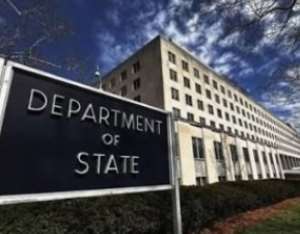
The US State Department has confirmed it is making permanent a visa bond programme that could require applicants from 50 countries 30 of them African to post a refundable bond of up to $20,000 before they can be issued a B1 business or B2 tourist visa. The rule, published as a draft notice in the Federal Register on Friday, takes formal effect on 3 August 2026.
Under its terms, consular officers may require a bond as a condition of visa issuance, with the amount left to their discretion. Newsweek reports that officers are generally expected to default to a $15,000 bond, lowering it to $10,000 for applicants who cannot afford the higher figure, or raising it to the full $20,000 where an applicant's ties to the US raise particular concern.
The pilot version of the programme, launched in August 2025, had offered a lower entry point of $5,000; that option has now been eliminated entirely, and the ceiling has risen from $15,000 to $20,000.
The bond is fully refundable if the visitor departs the United States before their authorized stay expires and complies with all visa conditions. It is forfeited entirely if the traveler overstays or otherwise violates the terms of their visa.
The African Countries on the List
Thirty of the fifty countries covered by the programme are African: Nigeria, Algeria, Angola, Benin, Botswana, Burundi, Cabo Verde, Central African Republic, Côte d'Ivoire, Djibouti, Ethiopia, Gabon, The Gambia, Guinea, Guinea-Bissau, Lesotho, Malawi, Mauritania, Mauritius, Mozambique, Namibia, São Tomé and Príncipe, Senegal, Seychelles, Tanzania, Togo, Tunisia, Uganda, Zambia, and Zimbabwe. The remaining twenty countries span Asia, the Caribbean and the Pacific, including Bangladesh, Cambodia, Cuba, Venezuela and Papua New Guinea.
The State Department has said the list may be revised on a rolling basis, meaning additional countries could be added or removed as the programme continues.
Why Washington Says This Works
The State Department frames the programme as a compliance tool rather than a punitive one, pointing to data from the pilot year as justification for making it permanent. Officials had originally projected roughly 2,000 applicants would fall under the bond requirement annually; in practice, about 20,000 applicants were covered, and nearly half of them chose not to pay rather than post the bond.
The department reported an 83 percent decline in B1/B2 visa issuance to nationals of listed countries during the pilot period, which it treats as evidence the policy suppresses overstays rather than simply deterring travel outright. The Trump administration has also pointed to the cost of locating, detaining and deporting visa overstayers estimated at roughly $18,000 per person as a rough justification for setting bond amounts at a comparable financial scale. According to the department's own figures, nearly 45,500 visitors from the 50 listed countries overstayed their visas in 2024.
The Case Against It
Immigration advocates and African commentators have pushed back hard on the framing. Their central objection is that a policy nominally aimed at overstays compliance functions, in practice, as an economic filter: a $10,000 to $20,000 bond, even if fully refundable on compliance, is simply out of reach for the vast majority of prospective travelers from the affected countries, regardless of how genuine their business or tourism plans are.
The near-halving of applicants willing to even attempt the bond, and the resulting 83 percent collapse in visa issuance, is read by critics not as proof that the policy targets bad-faith travelers, but as evidence that it has priced out legitimate ones. For African travelers in particular, the policy adds a steep financial gate on top of an already demanding visa interview and documentation process, at a moment when the continent's business, academic and diplomatic engagement with the United States continues to grow.
The practical effect, at least in the near term, is that citizens of 30 African countries now face one of the most expensive discretionary visa conditions applied anywhere in US immigration policy a bond large enough, in many cases, to exceed an applicant's annual income before they have even boarded a plane.
Mustapha Bature Sallama.
Medical/ Science Communicator,
Private Investigator, Criminal investigation and Intelligence Analysis.
International Conflict Management and Peace Building.USIP
[email protected]
+233-555-275-880
References
PBS NewsHour / AP, "U.S. will make visa bond program permanent, affecting mostly African countries." https://www.pbs.org/newshour/politics/u-s-will-make-visa-bond-program-permanent-affecting-mostly-african-countries
Newsweek, "Visa Bonds Up To $20,000 Are Set To Stay: These 50 Countries Are Impacted." https://www.newsweek.com/visa-bonds-up-to-20000-are-set-to-stay-these-50-countries-are-impacted-12273768
U.S. News & World Report / AP, "US to Make Visa Bond Requirements Permanent, Affecting Mostly African Countries," 31 July 2026. https://www.usnews.com/news/world/articles/2026-07-31/us-to-make-visa-bond-requirements-permanent-affecting-mostly-african-countries
Tuko.co.ke,
"30 African Countries Affected as US Makes $20,000 Visa Bond Permanent." https://www.tuko.co.ke/world/us/634915-30-african-countries-affected-visa-bond-permanent-full-list/
Pointblank News, "US Makes $20,000 Visa Bond Mandatory for Nigerian Travellers, 29 Other African Nationals," citing DW Africa. https://pointblanknews.com/pbn/news/us-makes-20000-visa-bond-mandatory-for-nigerian-travellers-29-other-african-nationals/
DAWN.com,
"US to make visa bond programme permanent for people from dozens of countries." https://www.dawn.com/news/2019949


 Sedina acquittal: Court of Appeal judgment speaks to tremendous flaws that shoul...
 NDC govt promised to use Price Stabilisation and Recovery Levy to cushion consum...
 UCC Vice-Chancellor unveils vision to drive innovation, research and global comp...
 Asantehene charges new KNUST VC to lead with humility and fairness
 Tema Oil Refinery restored to full operation without bail out from government — ...
 TOR revival is restoration of our birthright by the resilience of our engineers ...
 President Mahama reacts to viral Tema New Town fish video
 Ghana Boundary Commission assesses Ghana-Togo border, engages communities in Oti...
 Minority accuses Ato Forson of using urgency certificates to fast-track tax hike...

