




Introduction
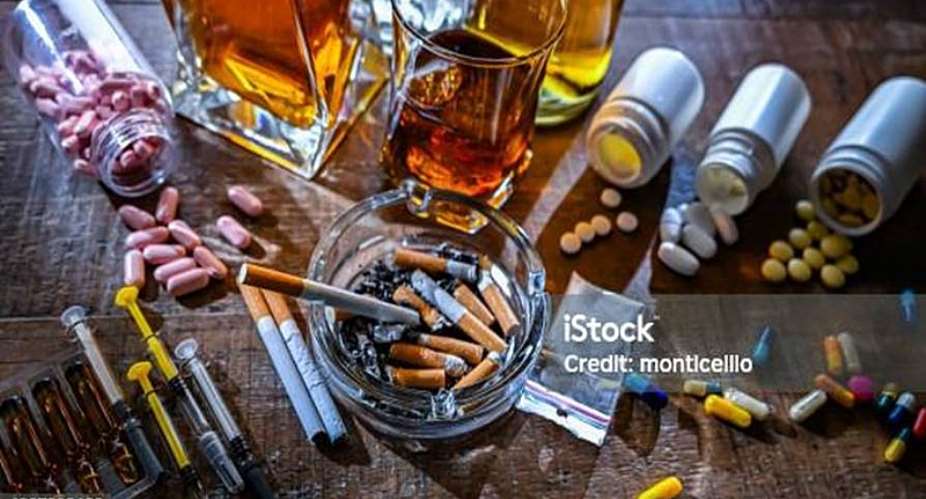
It is no secret that drug and substance abuse across Africa is the fastest-growing public health and developmental crisis.A crisis that is also exposing deep governance failures. Youth are the hardest hit. But drugs do not just destroy individuals — they destroy nations.The drug and substance abuse crisis is a direct attack on Africa’s Agenda 2063.
The Youth Bulge
The “youth bulge” is a situation where the majority of a population is under 35 years of age. 60% of Africa’s 1.5 billion people are under 25 years of age — that is 900 million youth(1). An estimated 70% are under 30 years of age. Those specifically between 15-34 years of age are roughly 400 million, (2). Every year, between 10-12 million youth enter the job market (3). Currently, Africa is the youngest or the most youthful continent. By 2030, 40% of the world's young people will be African,(4). Africa’s youthful population is a double-edged sword: it is either an opportunity — a demographic dividend — or a risk — a demographic disaster.
Demographic Dividend
If this youthful population is educated, skilled, and employed, Africa becomes the largest workforce and the largest market. As Europe, China, and Australia age, Africa will grow more youthful.The African consumer market is projected to be worth US$2.5 trillion by 2030 (5). Besides being consumers, this youthful continent would produce innovators and builders.Thus, Africa's youthful population is an opportunity for Africa's growth but only if these youths are empowered to realize their potential.Drug and substance abuse are now threatening to destroy that potential.
Demographic Disaster
If African youth are not educated, skilled, or employed, then Africa faces disaster: unemployment, poverty, migration, instability, and drug abuse.
Why Is Africa More Vulnerable to the Drug Crisis?
Geography
West Africa, viewed as the gateway of drugs into Africa sits between drug producers in Latin America and drug consumers in Europe.Africa which was once a transit route. Today, it is an active consumer market.
Weak Institutions
Courts, police, and underpaid border authorities can easily be bribed. Institutional failure is widespread.
Youth Bulge
With an estimated 420 million unemployed youth in Africa,(6), the drug economy becomes “the employer”.
Resource Curse
Resource revenues can be used to purchase drugs, making tracking harder.
Conflict and Instability
Drug trafficking thrives in unstable environments especially conflict and war zones and Africa has many such zones. Drug money is also used to buy weapons, fueling further violence.
Drug & Substance Abuse: A New Crisis
According to the United Nations Office On Drugs and Crime (UNODC, 2024) , 1 in 7 people aged 15-64 in Africa use drugs, which translates to forty (40) million people,(7).
What 40 Million Means?
If 40 million Africans are hooked, Africa is no longer just a transit zone — it is an active consumer. This also means: lost productivity, lost workforce, lost market, lost innovation, and rising hospital and rehabilitation bills.The drug economy is drinking the youth bulge dry. Africa’s greatest asset by 2050 is its 900 million youth.The drug economy targets them directly. Potential is destroyed. Instead of producing engineers, Africa produces hospital cases.Instead of Gross Domestic Product (GDP,), Africa produces rehab bills.The demographic dividend becomes a demographic disaster.
Impact on Development: A Wealth Drainer
Lost Productivity
An addicted worker is absent, slow, and error-prone. African Union (AU) estimates that more than US$15 billion is lost annually to substance abuse,(8).
Healthcare Costs
Governments spend on emergencies, rehab, and HIV/TB treatment.
Illicit Financial Flows
Drug money is laundered through real estate, gold, and forex. It funds corruption, not factories, and devalues currency.
Family Poverty
Families sell assets, cattle, and school fees to fund addiction. This creates intergenerational poverty...from extraction to addiction.
Sectoral Damage To Africa Agenda 2063
Industrialization
Factories cannot run with an addicted workforce and unsafe towns.
Agro-business
Youth leave labour intensive and relying farms for cities to sell/use drugs. Food security drops.
Education
One in four school dropouts in some areas are linked to substance abuse,(9).
Health
Hospitals are overwhelmed. A mental health crisis linked to substance abuse is exploding.
Peace & Security
Drug money funds gangs, terrorism, and conflict minerals in the Sahel.
Demographic Dividend Attacked
Instead of 900milion youthful workers, Africa risks 900million dependents.
The Dangers of the Drug Economy
The drug economy is not just a “social problem.” It is an anti-development project. It creates a new elite: not innovators, not builders, not industrialists, not entrepreneurs, not business moguls— but drug importers and their drug protectors. These are the "Drug elites" or "Poison elites" or "Poison bourgeoisie". These drug or poison elites add absolutely nothing to Africa’s development agenda, but takes everything away: youth potential, public health, social fabric, and security is wiped away.
The Poison Bourgeoisie
The most dangerous outcome is the emergence of a new elite: “the Poison Bourgeoisie". Whilst real bourgeoisie -are builders, the poison bourgeoisie are extractors, more of new colonisers.Real bourgeoisie build factories, farms, refineries(Alick Dangote style), poison bourgeoisie import cocaine, codeine etc. Real bourgeoisie pay tax and employ thousands, poison bourgeoisie evades tax, and employs 5 dealers or drug pushers. Real bourgeoisie export finished goods, poison bourgeoisieexport cash and addiction. Real bourgeoisie may invest in schools, hospitals, poison bourgeoisie invest in mansions, cars, bribes. Real bourgeoisie may align with Africa's Agenda 2063, poison bourgeoisie are ultimate enemies of Africa's Agenda 2063. Poison bourgeoisie add no infrastructure, no jobs, no technology. They only extract: youth, health, money, hope, and governance.
Drug Problem & Governance: The Nexus
“Drugs are a symptom. The disease is poor, weak, or captured governance".
Governance is how a country makes decisions, implements them, and accounts for them. It is about who decides, how they decide, and who benefits. Captured governance serves a clique at the expense of the nation — open to drug cartels. Poor governance serves foreign interests at the expense of national interest. Weak governance has institutions that cannot deliver — courts, police, borders fail etc
Why Governance Matters?
Bad, poor, weak or captured governance accentuates the drug problems.This is because porous borders, airports, ports, drugs freely enter. Poor or weak governance means there is no trust between citizens and authorities. Citizens do not report cases or cooperate with police. Captured governance protects corrupt officials, drug importers and their protectors. Weak governance results in many "ungoverned or ungovernable places". Places where drugs freely thrive. Weak governance means no jobs or employment and the youth turn on the use of drugs.Weak governance means rehabs are limited or unaffordable which means addiction becomes permanent.
Good, strong governance breaks all this cycle. Therefore, another critically important way to fight drug and substance abuse problems in Africa is by having good governance. When governance is strong, drugs struggle to survive and thrive. Drug cartels do not flourish. When governance is weak, poor or captured, drugs become the government because drug wealth will be used to buy political power and political power is used to protect drug wealth. Good governance in the fight against the scourge of drug and substance abuse is about not lying about the problem , not blaming citizens or youth who are the victims. It is about telling the truth, admitting problems, and inviting solutions. Fixing governance in order to stand a better chance of fighting drug and substance abuse.
Power and Poison: The Triangle
Globally, Africa included the drug economy viably when: Power, Corruption and Drug elites form a triangle.The drug triangle. Each feeds the other. Power protects, corrupt officials are bribed and drug elites have their way. Politicians with power control borders, police, courts and licenses. Corruption sells protection and impunity. During the period 2008-2012, Guinea-Bissau was called a “narco-state” as military officials allegedly protected shipments of drugs from Latin America on their way to Europe,(10).
How dangerous is governance failure?
In the fight against drug and substance abuse, governance failure is catastrophic. For example, different type of drugs are legally and officially banned by national governments but despite that,such drugs and substances keep on doing rounds despite them being officially banned...why? because importers of such or brewers of such illicit alcohols have political power. That is governance failure. For this reason, it is true to argue that drug problems are also a governance issue. Governance failure is at the very root of the drug and dangerous substance proliferation in many African nations. Justice dies- only poor, not connected users go to jail. Big dealers walk scot free.Youth learn and believe..to make it, join it (drug eco-system..or push drugs, development stalls. ..no investor risks a "narco- risk" country.Africa should fight the label of soon being labelled "narco- risk state".
"Narco- Risk State"
Narco- state is the predictable logical end of governance failure in the fight against drugs.Therefore, drug issues are no longer moral or development but also governance issues. Fix power, fix corruption and the drug numbers drastically fall.Failure to check power, to deal with corruption and the carnage brought by drug and substance astronomically rises.If not cautiously checked soon many African nations will see drug cartels & corrupt officials governing more than the state. Drug elites purchase political power- fund campaigns, fund political parties, Mexico style, Colombia style etc.
How Drug & Dangerous Substances Shape The African Story?
Due to the scourge of drugs and dangerous substances, the story of Africa degenerates into a blame game. The government says “youth moral failure.” Youth say “government failure". Pan-Africanist values — discipline, hard work, self-reliance — are replaced by “get rich quick” and “get high quick.” Social media and music drill and glorify alcohol and drugs.Foreign media portrays African youth as addicts and migrants.This kills investment and African pride.
Conclusion
Africa’s biggest advantage is the youth bulge. Drugs are directly attacking that asset. Poor, weak, or captured governance is assisting that attack. Having a drug policy alone is not enough, war for good governance should also be part and parcel in the fighting scourge of drugs.The drug economy is anti-Africa Agenda 2063. It builds nothing. It refines nothing. It employs no one productively. It only extracts: youth, health, money, and sovereignty. Africa does not just need a “war on drugs", Africa also needs a "war for governance". Until and only until Africa breaks the link between power , corruption and poison (drugs) and strive for robust governance, our African nations, communities, and families remain in grave danger.Drug and substance abuse is a direct threat to Africa's quest for development and for better governance as well a security threat to nation-building.
F. Madondo (African Teacher) [email protected]
Endnotes
1. UN, 2023, Young People’s Potential, the Key to Africa’s Sustainable Development, Available at: www.un.org
2. Robinson A, 26 Nov 2025, "The $2.5 Trillion Opportunity US Investors Can’t Access" Chair, Africa, Milken Institute International, Available at: www.milkeninstitution.org
3. Africa Youth Employment Outlook, 2026, Available at: www.mastercardfdn.org
4. Pauline McCallion, Feb 23, 2026, Africa at Davos 2026: Young population provides a bright outlook, Jan 23, 2026Available at: www.weforum.org
5. Robinson A, 26 Nov 2025, "The $2.5 Trillion Opportunity US Investors Can’t Access" Chair, Africa, Milken Institute International, Available at: www.milkeninstitution.org
6. Africa Youth Employment Outlook, 2026, Available at: www.mastercardfdn.org
7. UNODC,2023, United Nations Office On Drugs & Crime, Available at: www.unodc.org
8. AU, 2024, Available at: www.au.intl.org
9. Atuhaire Shamirah, Kyomuhendo Charlotte & Kobusingye Prudence, April 2025, "Addiction On Child School Drop Out In Uganda. A Case Study Senso High School Wakis", Available at: www.researchgate.net
10. Antonio Cascais,12 August 2025, "Guinea-Bissau's struggle to fight 'narco-state' image"Available at: www.dw.com

 Foreign Affairs Ministry requests special audit of emergency evacuations since 2...
 Germany cuts energy tax to lower petrol prices as Merz faces state key elections
 Trump says son repaid Russian oligarch who funded wedding festivities
 France calls on Moscow to reverse takeover of European assets
 Highly influential people sponsoring Ghana Jollof TikTok activities – CID
 'Ghana Jollof' case: Bawumia's condemnation of nurse's arrest is hypocritical – ...
 Ahafo Ano South West MP involved in road accident
 Constitutional Review alone will not solve Ghana’s problems – Kwesi Pratt Jnr.
 East Legon Football Academy applauds NPA Boss for supporting youth football
 Lawyer challenges two-week remand of Salomey over connection to wanted 'Ghana Jo...


