




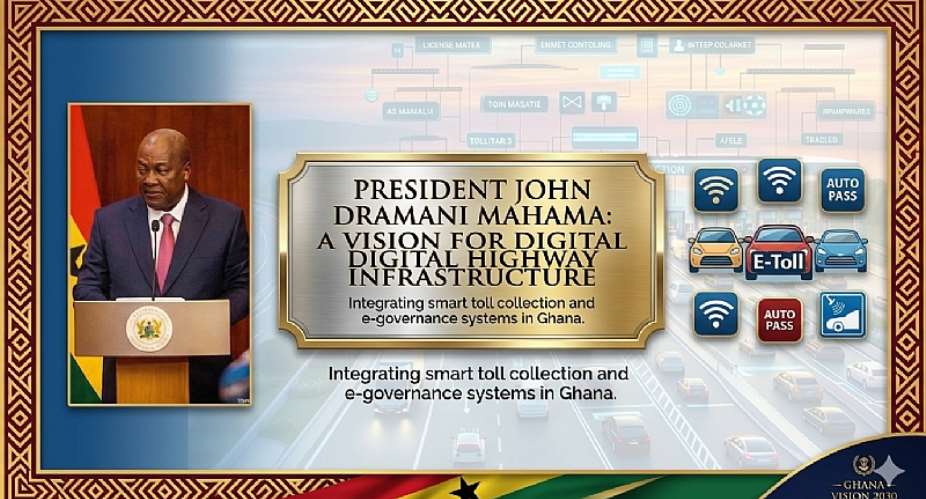
For nearly five years, Ghana’s national road network has bled capital from a self-inflicted fiscal wound. In November 2021, an unprecedented administrative maneuver crippled a major source of infrastructure funding overnight. The abrupt halt of road toll collection did not just starve the national Road Fund; it summarily discarded hundreds of physically challenged citizens from the labor force and plunged our federal highways into advanced structural decay. Today, as Parliament exercises its proper constitutional oversight by approving a 20-year Public-Private Partnership (PPP) concession agreement with Rock Africa Limited, the state attempts a high-tech resurrection of its tolling infrastructure. This investigation analyzes the institutional overreach that derailed our road sector, maps out the newly targeted transit corridors, details the incoming punitive enforcement architecture, and offers policy recommendations to safeguard this multi-billion cedi digital ecosystem.
The History: How One Man's Word Sidestepped Constitutional Power
The collapse of Ghana's legacy tolling system is a textbook case study in executive impatience and the bypassing of legislative processes.
- The Budget Proposal: On November 17, 2021, the Minister for Finance presented the 2022 Budget Statement to Parliament. He explicitly proposed eliminating road tolls to ease vehicle congestion, intending to replace the revenue with the controversial Electronic Transfer Levy (E-Levy). Legally, this was a proposal awaiting parliamentary debate and statutory amendment.
- The Ministerial Fiat: Within hours of the budget reading, the then-Minister for Roads and Highways, Kwasi Amoako-Atta, took the floor of the nation by storm. By mere word of mouth, he issued a sweeping administrative directive ordering the absolute cessation of all toll collection nationwide, effective midnight on Thursday, November 18, 2021.
- The Legislative Subversion: This executive order explicitly circumvented Article 174 of the 1992 Constitution. Lawmakers and legal scholars quickly pointed out that an individual sector minister lacks the legal authority to waive, alter, or abolish taxes and revenues established by an Act of Parliament. By replacing statutory laws with verbal orders, the state instantly sacrificed approximately GH¢78 million in annual revenue, stranding vital maintenance projects.
- The Broken Social Contract: When the manual booths were abruptly abandoned, the ministry issued verbal promises that displaced toll workers—the vast majority of whom were physically challenged individuals specifically recruited for social inclusion—would be systematically retrained, reassigned, and kept on government payrolls. This promise went unfulfilled, leaving a highly vulnerable segment of the population economically marginalized while legacy booths rotted into dangerous highway obstacles.
The Fiscal Illusion: E-Levy Collapse vs. Toll Revenue Forecasts
The primary justification for abolishing the tolls in 2021 was the projection that the E-Levy would easily eclipse toll collections. History proved this to be a catastrophic fiscal miscalculation.
- The Revenue Deficit: The Ministry of Finance initially projected the E-Levy would rake in GH¢6.9 billion in 2022. Following intense public resistance, late implementation, and massive behavioral shifts by mobile money users, the tax collapsed spectacularly, realizing only about 12% of its revised targets.
- The Lost Funding: While the state chased a volatile digital financial transaction tax, it abandoned a highly reliable, physically verifiable revenue stream. The GH¢78 million generated annually by the old toll booths—though plagued by leakages—was predictable cash that went directly into routine maintenance.
- The Infrastructure Debt: The five-year gap in toll collection created a massive backlog in road financing. Without a dedicated toll stream feeding the Road Fund, the government was forced to rely on expensive commercial borrowing to patch failing trunk roads, compounding the national debt crisis.
The 13 Strategic Corridors: Where the 66 Sites Will Sit
The newly approved PPP framework seeks to move past legacy operational structures by deploying a network of 66 automated tolling stations across 13 highly targeted commercial and transit corridors. This geographic distribution is calculated to maximize revenue collection from cross-border freight and high-density commuter traffic:
- The N1 Highway Corridor (Coastal Trunk): Retrofitting high-volume entry points including the heavily traveled Tema Motorway and the Ashaiman interchange zones to capture urban-industrial transit.
- The N2 Corridor (Eastern Axis): Deploying modernized electronic tracking over major transit rivers, specifically covering the Sogakope Bridge and up through the Volta logistics network.
- The N6 Corridor (Accra–Kumasi Infrastructure): Upgrading the primary economic spine linking the capital to the middle belt, targeting high-volume freight traffic.
- New Strategic Intersections: Deploying 28 entirely new, barrier-free camera gantries along critical mining, logging, and agricultural transport routes across the remaining ten operational corridors. The Ministry of Roads and Highways has stated that tolls will strictly apply only to engineered, paved highways, protecting motorists from paying to drive on unmotorable paths.
Transport Union Reactions and the Looming Passenger Fare Hikes
The imminent return of road tolls has already sent shockwaves through the commercial transport sector, signaling a direct financial impact on ordinary Ghanaian commuters.
- GPRTU Warnings: The Ghana Private Road Transport Union (GPRTU) and other major transport bodies have expressed deep concern over the operational costs of the new electronic system. Union leaders warn that tolls represent a direct addition to operational overheads, alongside fluctuating fuel prices and spare part inflation.
- Immediate Fare Adjustments: Transport unions have stated that any reintroduction of toll fees will be immediately countered with a corresponding upward adjustment in transport fares. Commercial drivers argue they cannot absorb these automated deductions without passing the costs down to passengers.
- The Commuter Burden: For daily commuters traveling through high-frequency corridors like the Tema Motorway or Kasoa, these fare hikes threaten to significantly erode disposable income, sparking fresh debates on inflation and the rising cost of living.
Strict Enforcement: The Legal Penalties for Digital Evasion
Unlike the legacy manual system where drivers could easily bypass or exploit gaps, the incoming Public-Private Partnership relies on automated, multi-lane free-flow technology. By utilizing high-definition overhead cameras to capture license plates and cross-reference them with national identity data, the system introduces a highly structured enforcement framework:
- Automated Fine Structuring: Motorists who fail to link their mobile money wallets or bank accounts, or who carry insufficient balances at the time of transit, will trigger an automated digital citation linked directly to their vehicle profile.
- Blacklisting via DVLA: The concession agreement integrates data directly with the Driver and Vehicle Licensing Authority (DVLA). Any vehicle with unpaid, accumulated electronic toll bills will be systematically blocked from renewing its annual roadworthiness certificate or vehicle registration.
- Compounded Penalties: Unpaid toll fees will incur escalating interest rates and late-payment penalties calculated automatically by Rock Africa Limited’s backend tracking software.
- Impoundment Protocols: For repeat offenders and commercial transport fleets flagrantly evading gantry cameras through license plate alteration or obstruction, the law grants highway authorities the power to impound vehicles until all back-dues and administrative fines are cleared.
Academic and Policy Recommendations
To prevent this new multi-lane free-flow system from repeating past mistakes, the government and the concessionaire should establish clear operational guardrails:
- Statutory Ring-Fencing of the 70% State Share: Parliament must enforce strict legal limits on the government's 70% share of gross toll revenues. These funds must be paid directly into a dedicated, unalterable sub-account within the Road Fund strictly reserved for preventative asphalt maintenance and road safety systems.
- Legally Enforced Backend Reabsorption of Displaced Workers: Rock Africa Limited must honor its social responsibility clauses by dedicating a fixed percentage of its 30% operational revenue allocation to running digital monitoring centers. These centers should be staffed by the physically challenged workers who were displaced in 2021, providing them with training in data verification, video analysis, and customer service.
- Dynamic, Transparent Tariff Reviews: The Ministry of Roads and Highways must publish a transparent, predictable pricing index for distinct vehicle classes before deployment. This will help prevent transport unions like GPRTU from enacting sudden, arbitrary fare hikes that hurt ordinary commuters.
- Independent Third-Party Digital Auditing: To protect against software manipulation or hidden revenue leaks, an independent cyber-auditing firm must evaluate the transaction engines every six months, with the findings made available for parliamentary and public review.
Restoring the Rule of Law to Our Highways
The reintroduction of road tolls under an automated, cashless framework is a necessary structural step for Ghana's transport economy. However, the most vital lesson of this five-year policy cycle is the high cost of bypassing institutional checks and balances. When national policy is dictated by verbal ministerial commands rather than statutory parliamentary approval, the state loses revenue and vulnerable citizens lose their livelihoods. By launching an electronic system that splits revenue 70/30 in favor of the public sector, Ghana has an opportunity to build a sustainable, transparent source of infrastructure funding. The success of this new phase will depend entirely on how strictly we maintain statutory discipline, protect displaced workers, and ensure that every cedi collected goes directly toward improving our roads.
✍️ Retired Senior Citizen
For and on behalf of all Senior Citizens of the Republic of Ghana 🇬🇭
Teshie-Nungua
[email protected]


 Koko seller caught washing feet with sponge allegedly used for customers' bowls
 Dramatic scene unfolds as alleged thief brandishes knife, refuses to surrender t...
 My husband from Bolgatanga loves sex too much – Woman cries on live TV
 Bawumia Pays Tribute: Hails Late Ya‑Na as a King of Peace and Unity
 Mahama Commends Dagbon, Calls for Sustained Unity Under New Regent
 New Regent Pledges Continuity, Respect for Rotational Succession
 Dame Breaks Silence: Says Sedina Appeal Claims Are “False, Devious”
 Dagbon Hailed for Peaceful Rites as NPC Applauds Seamless Regency Transition
 NPP Drops Bombshell: How Sedina Allegedly Drained GH¢90m and Beat Jail
 France and Italy boost border controls after migrant influx into Spain's Ceuta

