




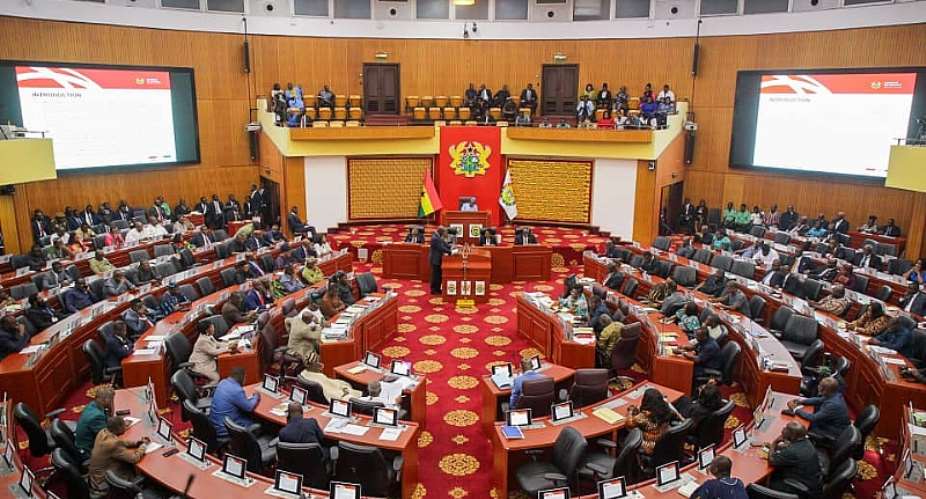
Parliament has passed the Energy Sector Levies (Amendment) Bill, 2026, introducing new measures aimed at closing tax loopholes in the downstream petroleum sector and curbing fuel smuggling that the government says has cost the country an estimated US$25 million in lost revenue within the first six months of 2026.
The legislation, approved on Friday, amends the Energy Sector Levies Act, 2025, by increasing the Energy Sector Shortfall and Debt Repayment Levy (ESSDRL) and the Road Fund Levy on fuel oil.
Presenting the Bill to Parliament, Finance Minister Dr Cassiel Ato Forson stressed that the amendment does not introduce a new tax on motorists or increase fuel prices at the pump.
He explained that the measure is intended to eliminate a tax evasion scheme in which some operators have allegedly been misclassifying diesel as fuel oil to take advantage of lower tax rates.
According to Dr Forson, the practice has resulted in an estimated US$25 million in revenue losses between January and June this year.
The minister said diesel currently attracts taxes of about GH¢3.35 per litre, while fuel oil is taxed at only GH¢0.25 per litre, creating a significant tax differential that has encouraged abuse.
"Mr Speaker, this has resulted in a differential of GH¢3.15," he told Parliament.
He explained that a time-series analysis conducted by the Ministry of Finance showed that Ghana's average monthly consumption of fuel oil over the past five years stood at about five million litres. However, between January and June 2026, reported fuel oil volumes exceeded 20 million litres per month, representing an increase of approximately 493 per cent over the previous year.
Dr Forson said the sharp increase strongly suggested that some traders were disguising diesel imports as fuel oil to evade taxes.
He noted that the amendment seeks to eliminate this incentive by narrowing the tax gap between diesel and fuel oil while maintaining tax relief for genuine industrial users.
Under the new arrangement, industries that qualify for tax exemptions on fuel oil will no longer receive them upfront. Instead, they will pay the applicable taxes at the point of purchase and subsequently apply for a refund.
"Mr Speaker, ex-ante simply put is you get a tax exemption ahead, but now you get a tax exemption ex-post. You have to pay for it as industry and claim the refund," he explained.
To ensure the new system does not disrupt industrial operations, Dr Forson announced that the government would amend the Revenue Administration Act to reduce the tax refund period from 90 days to 14 days.
He added that, pending the legislative amendment, the Commissioner-General of the Ghana Revenue Authority (GRA) would issue a practice note to guarantee that eligible industries receive their refunds within 14 days.
The Finance Minister recalled that the government had successfully addressed a similar smuggling scheme involving marine gas oil by aligning its tax rates with diesel, a move that effectively ended the abuse.
He said intelligence gathered by the ministry indicates that smugglers have since shifted their operations to fuel oil, making the latest amendment necessary.
Dr Forson warned that if the loophole is not closed, Ghana risks losing more than GH¢1 billion annually in tax revenue.
The government believes the new law will strengthen revenue mobilisation, improve transparency in the petroleum sector and ensure that fuel tax incentives benefit only the industries for which they are intended.

 Mysterious illness leaves children struggling to walk, hear in Mafi Kope
 ‘We’ve come back to make sure our father's ideas never die’ – Nkrumah family
 Ghana Jollof: Akosua Manu appeals to Naana Jane to use her influence to free Sal...
 Yellow fever confirmed in Sissala East after 21 mysterious deaths
 Kenyasi man allegedly attacked by prison officers and inmates over yam theft cla...
 Germany’s far-right AfD makes strong gains in two state elections
 Savannah Regional Minister, IGP Yohuno visit Gbindabuor following lynching of po...
 Jehovah's Witnesses make blood component decisions a matter of personal conscien...
 Road contractors fed on contracts for years without completing projects – Alhass...
 Ghana Jollof saga: ‘She has no right to do what she’s doing’ – Inusah Fuseini


