




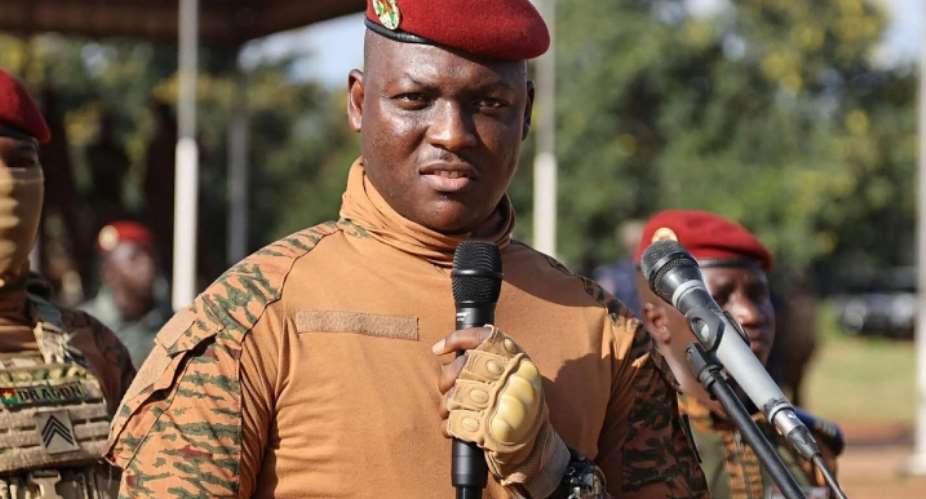
Since Captain Ibrahim Traoré took power in Burkina Faso in September 2022, control of the information space has become as central to the junta's survival as control of the battlefield. At the center of that effort sits a network of online activists known as the Rapid Communication Intervention Battalions, or BIR-C, which presents itself as a patriotic citizens' movement but which multiple investigations now describe as a coordinated digital propaganda operation built to defend the regime, harass its critics and push narratives favorable to the government.
A structured propaganda machine, not a spontaneous movement
A new investigation published on July 23 by Reporters Without Borders (RSF) offers the most detailed picture yet of how the network functions, and of its direct links to senior government figures. According to RSF, the BIR-C is not a formal military unit but an organized network of cyber activists working in coordination across platforms, running harassment campaigns against journalists, opposition figures and civil society activists, mass-producing pro-regime propaganda, manufacturing and amplifying rumors, deploying doctored images and personal attacks to discredit targets, and synchronizing output across websites, Facebook pages, influencer accounts and pro-junta groups.
RSF's findings draw on internal WhatsApp conversations, metadata and phone numbers tied to network members and the investigation identifies both well-known pro-junta influencers and officials close to the government, including Burkina Faso's Minister of Defence, General Célestin Simporé, among those connected to the network.
The reach of these campaigns is no longer confined to Burkina Faso itself. Several African media outlets have noted that the same narratives and storylines used domestically resurface in political debates in neighboring Alliance of Sahel States (AES) members and their region, notably Benin, Côte d'Ivoire and Togo, where comparable disinformation patterns have since been observed.
The Arnaud Froger case
The RSF investigation's publication was followed almost immediately by a real-time demonstration of the tactics it described. On July 26, Arnaud Froger, head of RSF's investigations unit and co-author of the report, became the target of an online smear campaign that mirrored patterns the organization had already documented in earlier attacks on journalists.
The first structured piece of content appeared the same day on the Burkinabè website Info Mobile du Zandoma, under a headline branding Froger an unmasked agent of French intelligence. It was published under the pseudonym "Sagecrivain," an author RSF had previously identified as an influential BIR-C figure and the main instigator of an earlier campaign against Sky News journalist Yousra Elbagir. The same content was also the first to appear on Facebook under the account "Wangnin Zerbo," an Ouagadougou-based profile with close to 60,000 followers.
The article cast Froger as a French DGSE operative with ties to Freemasonry, and extended the same unsubstantiated accusation, of working to destabilize the AES, to Human Rights Watch's director, Philippe Bolopion. No verifiable evidence was offered for any of these claims, and the screenshots the piece cited as proof were never made accessible to the public.
RSF's analysis of how the campaign spread identified the same signature elements found in earlier BIR-C operations: publication within hours of the original investigation, near-identical wording repeated word-for-word across numerous pro-junta Facebook accounts, recycled visuals including photomontages depicting Froger with demonic imagery, his personal contact details circulated on Facebook the same day, a shared vocabulary built around phrases like "agent of manipulation," "mercenary" and "Western conspiracy," and accounts overwhelmingly traced back to Ouagadougou.
A repeating pattern aimed at foreign correspondents
The Froger episode echoes an earlier campaign against Sky News's Yousra Elbagir, who was accused of espionage, sabotage and involvement in a Western conspiracy after airing a report on Burkina Faso's deteriorating security situation. As with Froger, multiple accounts simultaneously circulated photomontages portraying her with horns, alongside near-identical messaging designed to discredit her personally rather than engage with her reporting.
Taken together, RSF describes this as a consistent modus operandi: whenever an investigation threatens to expose the government, a rapid digital counter-campaign shifts public attention away from the substance of the findings and onto the personal character of the journalist who produced them, using claims that are rarely substantiated but are amplified through coordinated, cross-platform repetition.
A question of informational sovereignty
The contrast RSF draws is a pointed one: its own findings rest on verifiable material, WhatsApp records, metadata and traceable account coordination, while the accusations leveled against journalists rest on claims whose supporting "evidence" is never made public or independently checked. In an environment where large populations can be shaped by disinformation, RSF frames the stakes as a matter of African informational sovereignty itself: genuine sovereignty over public discourse depends not just on who controls the narrative, but on whether the information circulating can actually be verified.
Mustapha Bature Sallama.
Medical/ Science Communicator,
Private Investigator, Criminal investigation and Intelligence Analysis.
International Conflict Management and Peace Building.USIP
[email protected]
+233-555-275-880
Sources
Reporters Without Borders (RSF), "Désinformation et raids en ligne contre les journalistes : enquête sur le BIR-C, la milice numérique pro-junte burkinabè," July 23, 2026
Info Mobile du Zandoma, "Enquête – Dossier Exclusif: Arnaud Froger, un agent de manipulation de la DGSE démasqué," July 26, 2026
Jeune Afrique, "Au Burkina Faso, RSF accuse Ibrahim Traoré de posséder une « milice numérique » qui cible les journalistes," July 2026
Lendjampost, "Burkina Faso : Reporters sans frontières accuse une « milice numérique » de harceler les journalistes," July 2026
Le Lynx, "Burkina Faso : désinformation et raids en ligne contre les journalistes – enquête sur le BIR-C," July 2026
Ivorian.net, "BIR-C : l'arme numérique burkinabè qui vise la Côte d'Ivoire," 2026
Nasuba Infos, "Le Bénin a survécu à deux coups : celui des armes et celui de la BIR-C/AES sur nos écrans," 2026
YouTube, "'President for life': Inside Traoré's Burkina Faso," 2026

 NAIMOS arrests 19 in Mpohor Fiase anti-galamsey operation
 ECOWAS, partners reaffirm commitment to advancing gender equality and women’s em...
 Court of Appeal acquits and discharges former MASLOC CEO Sedina Tamakloe, overtu...
 WAEC releases BECE 2026 results, cancels entire results of 105 candidates
 Infantino defends FIFA investment plan amid mounting backlash
 US carries out 'powerful' strikes on Iran after attacks on bases and regional al...
 Ayariga Hails Supreme Court Ruling on Delegate System… But Warns of Rising ‘Mone...
 Government must come clean on VALCO's future — Minority
 Supreme Court ruling abolishing delegate system creates more problems than it so...
 “End of the cocoa season pandemic” — Barker-Vormawor hails SC ruling on delegate...

