




Submitted to the International Criminal Court (ICC) on 15 July, the petition alleges a "pattern of widespread and systematic attacks" against migrants in South Africa and accuses President Cyril Ramaphosa's government of failing to prevent or punish those crimes.
The petition was filed by Palgrave Boakye-Danquah, a former Ghanaian government spokesperson on governance and security, and Emmanuel Kotin, a counter-terrorism and security analyst.
"For years, African brothers and sisters have been killed, beaten and driven from their homes in South Africa," they said in a press release.
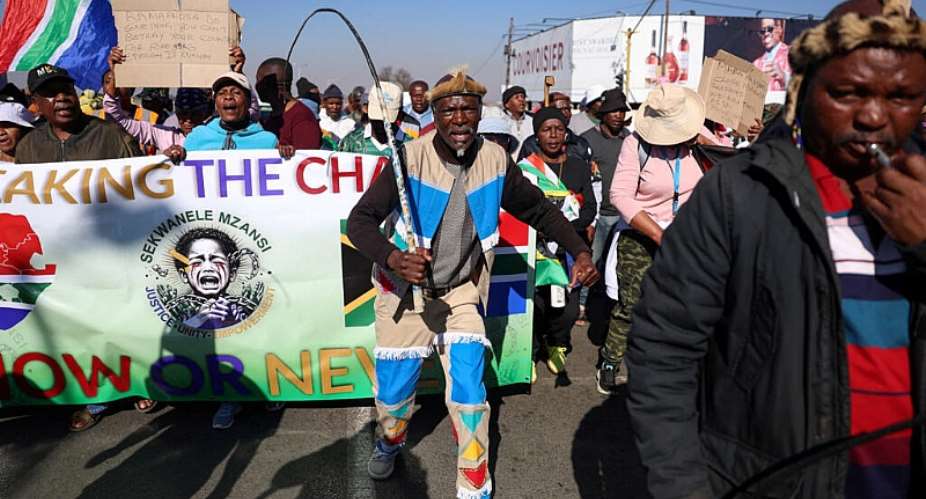
South Africa has been gripped by a surge in anti-immigrant protests in recent months, accompanied in some cases by violence against foreigners, whom protesters blame for problems such as crime and unemployment. Zulu protesters in Durban on 30 June 2026. Thousands of demonstrators massed across South African cities on the same day to vent anger at undocumented foreign nationals, as police mounted a major operation to head off looting and xenophobic violence.
Several African migrants have been killed in the unrest, while others have been beaten and have seen their homes and shops looted. Tens of thousands have fled the country.
Ghana's President John Mahama on Thursday reiterated his call for the African Union (AU) to address the wave of anti-immigrant violence, which he said was "escalating".
"Sweeping the matter under the carpet will not resolve the root causes," the President said, adding that he had secured a commitment to discuss the topic at the next AU summit.
South Africa protesters confront migrant homes during nationwide marches
State failings
Citing Article 7 of the ICC's Rome Statute, the two Ghanaian plaintiffs contend that widespread and systematic attacks against a civilian population could constitute crimes against humanity.
"While we commend individuals in South Africa who have condemned these acts, the pattern, scale and recurrence of the violence raise serious questions about the failure of state authorities to prevent, investigate and punish these crimes," their statement said.
The ICC has confirmed receiving a petition from two Ghanaians requesting a preliminary examination into recurring xenophobic attacks and alleged crimes against humanity in South Africa. The court has not yet said publicly whether it will consider the demand.
A spokesperson for South Africa's foreign affairs ministry said the petition was opportunistic.
"South Africa has a sophisticated domestic legal framework and legislation provides comprehensive safeguards and enforcement measures against discrimination of any kind, including intolerance on the grounds of social origin," spokesperson Chrispin Phiri told Reuters news agency.
President Ramaphosa has previously condemned the attacks and warned against scapegoating immigrants for deep-rooted problems.
South Africa unrest grows as migrants become 'scapegoats'
Thousands leave country
As the wealthiest country on the continent, South Africa has long been a destination for documented and undocumented African workers searching for work. For years, it has experienced periodic outbreaks of xenophobic violence.
Xenophobic groups set a deadline for undocumented migrants to leave by 30 June, and citizens of other African countries flocked to consulates and community halls seeking transport home.
More than 160,000 foreign nationals have left South Africa over the past two months, according to an AFP tally based on figures from the repatriating governments.
The largest numbers to leave this year are from Zimbabwe and Malawi, but hundreds more are from other countries including Ghana, Kenya, Lesotho, Mozambique, Nigeria and Uganda. Malawi nationals seeking to return home wait to be processed by border officials in Durban, South Africa, on 25 June 2026.
Zimbabwe's government said this week that 108,366 of its nationals had come home as of 18 July.
Malawi announced on Monday that more than 46,890 citizens had returned since early June, with the government providing 699 buses for the journey home. Six people died in transit.
Nigeria has said two of its nationals were killed in "the ongoing xenophobic protests and attacks of migrants".
Ghana said one of its citizens died in a Cape Town township in "anti-immigrant demonstrations linked to ongoing xenophobic attacks".
Nearly 2,000 Mozambicans also returned, according to South African government figures.
Some crossed the border with help from their government after two Mozambican nationals were killed at the end of May after a protest in the southern town of Mossel Bay. They were the first people to die in the latest unrest.
(with newswires)

 Police arrest mother of suspected Nsawam highway robbery leader for hiding gun; ...
 How police busted armed robbery gang targeting gold dealers in Ashanti, Western ...
 Family demands answers over reported disappearance of corpse at Battor Catholic ...
 How errand boy murdered Dr Jesse Amuah and his wife and now arrested for hiding ...
 Police dismantle robbery gangs across Ghana; AK-47s and ammunition recovered
 Effiduase Asokore MP threatens to sue Reverend Owusu Bempah over defamation
 NPP Nasara wing in Ashanti condemns Reverend Owusu Bempah over divisive comments...
 Gov’t spent over GH¢49m to evacuate Ghanaians from South Africa's xenophobic ten...
 “The direction this country is going is dangerous, Ghana is sick" – Rev. Fr. Adu...
 Gov’t supports farmers for large-scale dry-season tomato cultivation to boost su...

