




A society that mocks honest labour is a society preparing for its own destruction. Nations do not become prosperous by celebrating wealth alone; they become prosperous by honouring the labour that creates wealth.
The dignity of labour is the foundation upon which every great civilization has been built. Whenever that dignity is eroded, corruption replaces productivity, greed replaces innovation, and society begins a slow but certain decline.
It therefore pains me whenever I hear politicians, senior government officials, opinion leaders, and even journalists ridicule Nigerians who engage in honest occupations simply to feed their families. Nothing is more heartbreaking than hearing legitimate work described as "menial," as though some occupations are reserved only for those whom society considers inferior.
The recent controversy surrounding the First Lady's encouragement of the Akara business exposed a dangerous mentality that has gradually become part of our national culture. Rather than appreciating the value of entrepreneurship, many people rushed to mock the idea, forgetting that every great business in the world started with a simple product that solved an everyday problem.
What exactly is wrong with selling Akara? Millions of Nigerians eat Akara every single day. It is affordable, nutritious, and woven into our national food culture. Why then should anyone be ashamed of making an honest living from providing a product that millions consume?
The answer lies in our warped understanding of success. We have become a society that measures dignity by appearance rather than productivity. We admire expensive suits more than skilled hands. We celebrate luxury cars more than thriving factories. We applaud sudden wealth without asking how it was acquired, while we ridicule those who wake before dawn every morning to earn an honest living.
This is not merely unfortunate; it is dangerous. Every multinational corporation that dominates today's global economy began with someone solving an ordinary human problem. McDonald's was built on hamburgers. KFC was built on fried chicken. Starbucks transformed an ordinary cup of coffee into a global brand worth billions of dollars. Italy turned pizza into a cultural export. France elevated bread and pastries into national symbols. India has built international food brands around ordinary local cuisine.
If these nations can create global industries from everyday food, why should Nigeria laugh at an entrepreneur who decides to commercialize Akara? Perhaps the problem is not Akara. Perhaps the problem is us. Our educational system has unintentionally produced graduates who see themselves as job seekers rather than problem solvers. Somewhere along the line we began to believe that obtaining a university degree automatically entitles one to an air-conditioned office, a government appointment, and a comfortable salary.
Nothing could be further from the truth. Education was never intended to be a passport to comfort. It was designed to equip the human mind with the capacity to think critically, solve problems, create opportunities, and improve society.A degree is not a crown. It is a tool. Like every tool, its value depends entirely on how it is used.
What is so special about possessing a university degree that one cannot clean floors, collect refuse, repair machinery, cultivate farmland, or engage in any other honest occupation? Does education diminish the dignity of work, or should it increase the quality of work? The irony is almost painful.
The engineers who designed air conditioners did not become engineers because they loved sitting inside cool offices. They became engineers because they identified a problem and applied knowledge to solve it. Every scientific invention, every technological breakthrough, every medical discovery, and every engineering marvel began with someone refusing to accept existing limitations.
Education creates thinkers. It creates innovators. It creates builders. It creates creators of value. Unfortunately, in Nigeria, education has increasingly become a badge of entitlement instead of a call to service. Instead of asking, "What problem can I solve?" many graduates ask, "Who will employ me?" Instead of wondering how they can create wealth, they spend years waiting for somebody else to create it for them. That mindset explains much of our national stagnation.
Across the developed world, educated people are respected because they create industries. They establish businesses. They invent technologies. They improve agriculture. They expand healthcare. They modernize manufacturing. They build companies that employ thousands of people.
In Nigeria, however, we often define success by proximity to political power rather than by productive enterprise. This explains why politics has become the fastest route to wealth. It also explains why public office has become more attractive than private innovation. The consequence is devastating.
We now live in a country where many politicians possess greater wealth than industrialists who have spent decades building businesses and creating employment. We celebrate consumption instead of production. We admire luxury instead of industry. We honour possession instead of contribution. That inversion of values is destroying the moral fabric of our nation.
We have created a culture in which those who genuinely work are looked down upon, while those whose wealth cannot be explained are treated like celebrities. This is perhaps Nigeria's greatest moral tragedy. Many of the individuals who shape public opinion openly ridicule occupations that require physical effort, yet they have never created sustainable employment for anyone. They mock the roadside food vendor while importing food from abroad. They laugh at artisans while living in houses built by artisans. They ridicule farmers while eating food grown by farmers. They insult mechanics while travelling in vehicles repaired by mechanics.
Without these workers, society would simply collapse. There is absolutely no shame in honest labour. The shame lies in dishonesty. The shame lies in corruption. The shame lies in stealing public resources. The shame lies in enriching oneself through fraud while looking down on those who work honestly.
One of the reasons Nigeria continues to experience massive migration of skilled workers is that our society has failed to appreciate labour. Doctors leave. Engineers leave.
Nurses leave. Teachers leave. Technicians leave. Farmers abandon agriculture. Young graduates leave in search of societies where labour is respected and rewarded according to merit.
Ironically, many Nigerians who considered certain occupations beneath their dignity at home willingly perform those same jobs abroad with pride because those societies attach honour to honest work.
There is no disgrace in cleaning offices in London. There is no shame in driving taxis in Canada. There is no embarrassment in caring for the elderly in Germany. There is no ridicule attached to construction work in Australia. Why? Those societies recognize that every honest occupation contributes to national prosperity.
Nigeria must learn this lesson. We must reward labour at all costs. Withholding the wages of those who toil is a gross violation of their fundamental human rights. Nigerian governments have become notorious for these violations through unpaid salaries, delayed pensions, poor remuneration, and the neglect of workers' welfare. This nonchalant attitude must stop at every level of government and within the private sector. We urgently need legislation that guarantees prompt payment of wages, protects workers from exploitation, and imposes severe penalties on employers who deliberately deny workers the fruits of their labour. A nation that cannot pay its workers on time cannot claim to value labour.
The Holy Scriptures declare that "the labourer deserves his wages." Throughout history, every prosperous civilization has understood this principle. Justice demands that those who create value should receive fair compensation. Any society that withholds the earnings of workers commits not only an economic injustice but also a profound moral wrong.
Our greatest national problem is not poverty. It is the glorification of unearned wealth. Nigeria has become one of the few countries where individuals are celebrated for being billionaires without anyone asking what industries they built, how many people they employ, what products they manufacture, or what services they render.
We celebrate wealth detached from productivity. That is dangerous. A healthy economy rewards innovation, enterprise, creativity, and productivity. An unhealthy economy rewards political patronage, rent-seeking, corruption, and criminality.
Sadly, Nigeria increasingly resembles the latter. Drug traffickers, kidnappers, internet fraudsters, oil thieves, corrupt politicians, and economic saboteurs often display unimaginable wealth while productive entrepreneurs struggle under the weight of multiple taxation, poor infrastructure, insecurity, and unstable government policies. The message this sends to our youth is catastrophic. It teaches them that wealth matters more than character. It teaches them that results matter more than methods. It teaches them that appearance matters more than integrity.
Once a nation reaches that stage, crime becomes attractive because honest work appears unrewarding. The consequences are already visible - Kidnapping, cybercrime, cultism, human trafficking, drug abuse and political violence. All flourish where society disconnects wealth from labour.
We must reverse this dangerous trend. We must begin asking serious questions whenever extraordinary wealth appears without corresponding productivity. Society should celebrate entrepreneurs who create jobs. We should honour inventors. We should recognize farmers. We should appreciate artisans. We should reward manufacturers. We should encourage innovators. These are the true builders of every successful nation. The government also has a responsibility. Public policy should reward production rather than speculation. Small businesses should receive easier access to credit. Vocational education should enjoy the same prestige as university education. Agriculture should become attractive to graduates through mechanization, technology, insurance, and guaranteed markets. Young people should be taught from childhood that dignity lies not in the type of work one does but in the honesty with which one does it. Parents must stop measuring success by white-collar employment alone. Schools must teach entrepreneurship alongside academic excellence. Religious institutions must stop glorifying miraculous wealth while remaining silent about the virtue of hard work. Political leaders must lead by personal example.
Nigeria needs a moral revolution. We must replace the culture of entitlement with the culture of enterprise. We must replace the worship of wealth with the celebration of work. We must replace greed with productivity. Above all, we must restore the dignity of labour.
History teaches that no nation has ever become prosperous by despising honest work. Every great economy was built by men and women who respected labour, rewarded excellence, and understood that lasting wealth is created—not stolen.
The Nigeria of our dreams will not emerge from political slogans. It will be built by farmers who cultivate our land, teachers who shape our children, artisans who build our homes, doctors who save lives, engineers who construct our infrastructure, traders who keep commerce alive, entrepreneurs who create employment, and millions of ordinary citizens who wake every morning determined to earn an honest living.
It is time to honour them. It is time to protect them. It is time to reward them. When labour is respected, the nation prospers. When labour is despised, the nation declines.
The choice before Nigeria is clear. Let us choose labour.
Let us choose productivity. Let us choose integrity. Let us choose a future built not on the illusion of wealth, but on the enduring dignity of honest work.
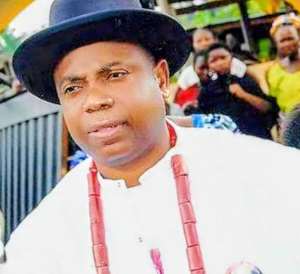
Dr. Austin Orette, A Delta South Senatorial Candidate, Writes From Owhelogbo In Isoko North Local Government Area

 Wontumi admitted at Nsawam prison yesterday around 4PM — Campaign Manager
 Our next president will come from NDC, no chance for NPP in 2028 – Martin Kpebu
 Wontumi's imprisonment has left me emotionally, financially devastated – Ashanti...
 How many years did Jesus even spend on earth for you to give Wontumi 20 years? —...
 ECG announces planned power outages in five regions on July 22
 'One in every three Ghanaians living with HIV unaware' — AIDS Commission
 Police arrest 10 suspects over cyber fraud and human trafficking in Tema
 Police rescue 33 human trafficking victims, arrest 28 in crackdown on cybercrime...
 NDC branch organiser arrested over alleged defamatory comments against Bawumia
 NASPA suspends capacity-building programme after public backlash over allowance ...

