




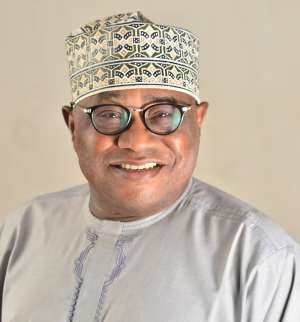
A fresh debate over what it truly means to be "educated" in Nigeria has resurfaced, this time triggered by remarks from one of the country's most respected scholars, Professor Abdalla Uba Adamu of Bayero University Kano. In comments that have circulated widely among academic and media circles, Professor Adamu argued that there exists a marked contrast between the intellectual formation of Northern Nigerians and that of their Southern counterparts one rooted not in inherent capacity, but in orientation toward knowledge itself.
According to Professor Adamu, the prevailing tendency among many Southern Nigerians is to anchor their identity and professional worth in a single field of study or a singular area of expertise, pursued with depth but rarely departed from. A lawyer remains a lawyer. An engineer stays an engineer. The credential, once earned, becomes the fixed marker of the person's intellectual life.
Northerners, he suggests, have historically approached education and personal development differently as a layered, cumulative process. It is not unusual, in his framing, to find a Northern Nigerian who has trained formally in one discipline while simultaneously acquiring competence in Islamic scholarship, traditional governance, trade, oral history, or a craft sometimes concurrently, sometimes across different seasons of life. The result, he argues, is a form of intellectual breadth that a single-track credential cannot replicate.
Professor Adamu's intervention lands at a moment when questions about the relevance and structure of formal education are already being asked loudly across West Africa. In Ghana, similar tensions have surfaced in the ongoing exchange between Dr. Yaw Osei Adutwum and Professor Kwaku Asare over whether university degrees, as currently structured, still map onto the demands of the modern economy.
The Northern Nigerian scholar's comments, though framed around a different national context, speak to the same underlying anxiety: has the modern university system, with its narrow specialization and rigid credentialing, actually narrowed what it means to be knowledgeable?
It is worth noting that Professor Adamu's observation is a cultural and historical argument, not a statistical one and it deserves to be treated as such.
Nigeria's regional educational disparities are real and well documented, but they run in more directions than a single narrative can capture: access to schooling, colonial-era educational policy, insecurity's disruption of Northern classrooms, and uneven federal investment have all shaped outcomes in ways that complicate any tidy North-South comparison.
Multidisciplinary informal learning the kind Professor Adamu describes is a genuine and underappreciated feature of Northern Nigerian intellectual life, particularly within Islamic scholarly traditions where a single scholar might hold competence in fiqh, Arabic grammar, medicine, and governance simultaneously. But it exists alongside, not in place of, the structural challenges that have historically limited Western-style formal education access in the North.
What Professor Adamu is ultimately gesturing toward is a challenge to the credentialist model of intelligence the assumption that a single degree, however prestigious, is the ceiling of a person's intellectual worth. That is a conversation Nigeria, Ghana, and the wider West African region would do well to have honestly: not as a contest between North and South, but as a reckoning with what kind of education actually prepares a person for a complex, multi-front life.
Professor Adamu, a towering figure in Nigerian and Hausa scholarship, has spent decades studying precisely this intersection of culture, media, and knowledge systems. His remarks deserve to be engaged with the seriousness they were offered as an invitation to rethink, not simply to take sides.
Mustapha Bature Sallama.
Medical/ Science Communicator,
Private Investigator, Criminal investigation and Intelligence Analysis.
International Conflict Management and Peace Building.USIP
[email protected]
+233-555-275-880

 Pragya rider jailed 20 years for defiling 12-year-old girl and infecting her wit...
 Ghana declines proposed state visit by South African President over xenophobic a...
 How DVLA Service Personnel allegedly stole GH¢308,000 to buy Elantra and 50-inch...
 Convicted fraudster 'Chad' arrested while trying to flee Ghana after 7years in h...
 GMet forecasts afternoon thunderstorms, warns of rough sea conditions today
 High Court to hear Habeas Corpus application over detention of former Buffer Sto...
 Vice President receives update on Ghana National Research Fund
 Govt to sign health worker recruitment agreements with US and UK
 Macron makes historic visit to Syria despite security concerns
 Trump casts Democrats as red 'menace' with McCarthyist rhetoric ahead of US midt...

