




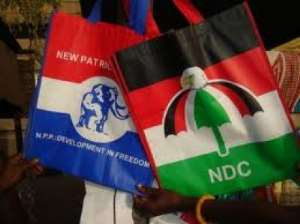
The greatest threat to Ghana's democracy is not only corruption in public office but also the unchecked influence of some political party financiers. Their greed, arrogance, and relentless pursuit of personal gain have steadily eroded public confidence in our political leadership. For many of them, financing political parties is no longer an act of patriotism it is an investment from which they expect enormous returns, regardless of the cost to the nation.
How did a handful of financiers become so powerful that they can influence government decisions, undermine party policies, intimidate political leaders, and, in some instances, appear to place themselves above the law? Their influence has created a dangerous culture in which elected leaders become indebted to private interests instead of remaining accountable to the Ghanaian people.
The excuse that governments cannot discipline powerful individuals because they might lose elections is both weak and misleading. There is no empirical evidence to support such a claim. Governments lose elections because they fail to honour their promises, abandon the people after assuming office, and allow corruption, arrogance, and impunity to flourish. The Ghanaian electorate has consistently demonstrated that it rewards performance, integrity, and accountability not the protection of politically connected individuals.
Both the NDC and the NPP, while in government, have at different times tolerated misconduct by politically influential figures out of fear of political consequences. History has proved that strategy is a costly mistake. Ghanaians have voted both parties out of office on two occasions, demonstrating that the electorate is discerning and will not hesitate to demand change when governments fail to govern in the national interest.
Some political financiers have come to believe that their financial contributions purchase immunity from prosecution and accountability. That mindset is poisonous to democracy. They have become termites eating away at the foundations of our republic, enriching themselves while weakening public institutions and undermining the rule of law.
The return of the presents government an opportunity to break decisively away from the destructive culture. The Reset Agenda must not become another political slogan. It must dismantle the entrenched system in which wealth purchases influence and political connections shield wrongdoing. There must be no sacred cows. The law must apply equally to financiers, party executives, ministers, and ordinary citizens alike.
If the old order survives under the new administration, then the Reset Agenda will lose its credibility, and President Mahama's second-term legacy will be judged as a missed opportunity to transform Ghana's governance.
Ghana has spent decades trapped in a transactional political culture, where loyalty is rewarded above competence, and money speaks louder than principle. That model has failed the nation. The time has come for transformational leadership, leadership that places national interest above personal relationships, political convenience, and financial patronage.
Political parties must free themselves from excessive dependence on wealthy financiers. Strong parties should be sustained through membership dues, small donations from patriotic citizens, and legitimate investments that promote transparency and accountability. Until political financing is reformed, Ghana's democracy will remain vulnerable to those who seek power not to serve the nation, but to profit from it.
The future of Ghana cannot be auctioned to the highest bidder. Political power is a sacred trust bestowed by the people not a debt owed to financiers.
Mike kalley
Sociopolitical Analyst.

 Govt releases GH¢9.1 billion covering six quarters of DACF to MMDAs - Ayariga
 Manhyia South MP charged over alleged GH¢9.85m loss to SIC Life
 'I didn’t know the process would be that fast' – Nana B explains missing NPP swe...
 'Who is Karbo to defy my orders?' – Buttey fumes over NPP conference clash
 'Kojo Bamba can’t stop NDC' – Gbande warns NPP against shielding anyone from arr...
 Fire destroys property building in Koforidua
 Mahama pardons 863 convicted persons, 11 from death sentence
 National Cathedral site reverts to government as Attorney-General reviews audit
 NDC confirms Dzifa Gunu’s disqualification from La Dadekotopon constituency secr...
 Nigeria's Tinubu confirms 32 dead after military plane crash


