




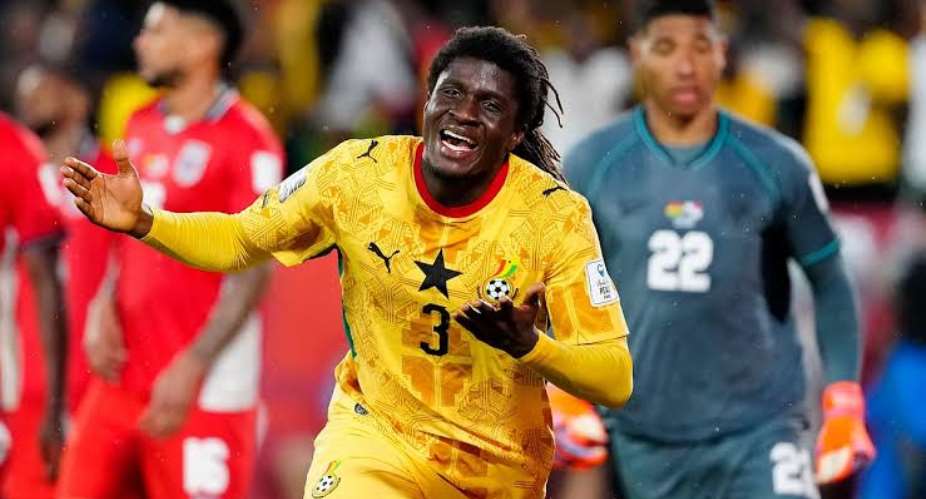
There is a painful pattern emerging at this World Cup. Senegal led Belgium 2-0 with five minutes left and walked away beaten. Ivory Coast fought back to level against Norway, only to concede the winner four minutes from the final whistle. DR Congo led England from the seventh minute before Harry Kane broke their hearts late on. South Africa contained Canada for 89 full minutes and still went home. Four African teams produced top-level football deep into their knockout ties, and not one of them survived. The question lingers: what exactly keeps stopping them from crossing the winning line?
The biggest factor is how much experience a team carries, especially on its bench. Belgium, England and Norway can all send on substitutes capable of completely changing the flow of a match, most of them drawn from Europe's biggest clubs, and they typically arrive just as fatigue starts to bite those who started. The African first elevens can compete with anyone in the world, and for long stretches of these games they proved it. But the gap in quality between the starting eleven and the bench remains wider than it is for their European opponents.
Then there is the coach's craft of adjusting tactics under pressure, a skill built over years. Defending a lead in the dying minutes of a knockout match means knowing when to slow the game down, where to commit a strategic foul, and how deep to sit without inviting the opponent onto you. European squads are full of players who have faced those exact situations time and again in the Champions League. Senegal, by contrast, began dropping deeper and deeper after going 2-0 up, and Belgium attacked without pause. By the end, Belgium had fired 21 shots at goal.
This is where the experience argument deserves a second look. The common refrain is that African players must go to Europe to gain top-level experience. The truth is that most of them already have it. Sadio Mane, Ismaila Sarr, Franck Kessie and Nicolas Pepe have all played at the very highest levels of European football.
Nor is this any different from the successful nations. Norway's stars, Erling Haaland and Martin Odegaard, did not stay in their home league; they moved to England and Spain in search of stronger competition. The same goes for Morocco: Achraf Hakimi, Yassine Bounou, Sofyan Amrabat and Hakim Ziyech built their names in Europe's big leagues and became the backbone of their nation's success. Even the United States, despite having MLS at home, has leaned on players like Christian Pulisic, Weston McKennie, Yunus Musah and Tim Weah, all raised in or developed by top European clubs.
The real difference, then, is not that one team has more players abroad than another. The difference lies in the football development systems. In Europe, and even in countries like Morocco and the United States, nearly all twenty-five players in a squad come out of highly competitive environments, having passed through professionally run academies from childhood. In Africa, the first-eleven stars sharpen themselves in Europe, but the reserves often come from mid-tier leagues or domestic competitions that still lack serious investment. The problem is not a shortage of talent or individual experience. It is the depth of the entire system that produces players and prepares a full squad, not just eleven men.
Mexico offers a telling example, having cruised through the round of 32 with a comfortable 2-0 win over Ecuador. Mexico holds two lessons Africa can learn from. First, their domestic league, Liga MX, is competitive and well-funded enough that even squad players who have never left home are of international standard, so the gap between the first eleven and the bench is very small. Second, Mexico has reached the knockout stage at virtually every World Cup since 1994, so the culture of playing and winning high-pressure matches has been built across generations.
Morocco, the only African team to advance, confirmed the same truth from a different angle. After reaching the 2022 World Cup semi-finals, they went into their tie against the Netherlands with the composure of a team that knows how to win knockout football, and duly emerged victorious on penalties. What separates the teams that cross the winning line from those left a step short is not individual CVs, but a team's collective experience of big tournaments.
The conditions made the task even harder. Some of these matches kicked off at midday in the fierce American summer heat, which drains players' legs as the game wears on. The chasing team gets to introduce fresh attackers from the bench while the leaders are already running on empty. And once one stoppage-time goal goes in, the momentum shifts violently. Belgium's equaliser came just three minutes after their first goal. Add the refereeing calls that raised questions, like the VAR-assisted penalty awarded in the 120th minute that finally sank Senegal, and it is clear the winds of fortune did not blow Africa's way, though that conclusion rests on a small sample of games.
Even so, hope is not dead. Four African teams have yet to play their round of 32 ties. Algeria face Switzerland, Egypt take on Australia, Cape Verde square up to Argentina, and Ghana meet Colombia. Their coaches will surely have studied Senegal's and Ivory Coast's matches closely, and the lessons are written in bold.
Interestingly, some of those lessons could be borrowed from an entirely different sport. In the NBA, the last five minutes of a close game are treated as a game within the game, so distinct that it has its own name: clutch time. Coaches do not simply keep their starters on and hope. They deploy a rehearsed closing lineup, players chosen specifically for their composure and defensive discipline in tight finishes, regardless of who started. Every possession is scripted, timeouts are hoarded precisely so the coach can stop the opponent's momentum the instant it builds, and teams practise late-game situations all season long: protecting a three-point lead, killing the clock, when to give a foul and when not to. The great NBA teams do not treat the final minutes as a nervous countdown; they treat them as a skill to be drilled like free throws.
Football's African coaches could take the same mindset. The first lesson: do not retreat too deep the moment you take the lead; protecting a win does not mean abandoning the attack. The second: use the bench the way NBA coaches use a closing lineup, sending on fresh legs chosen for calm and control, not merely to waste time. The third: rehearse the endgame before the tournament even begins, so that minute 85 is as scripted as minute one. When Belgium scored their first, the momentum swing was exactly the moment an NBA coach would have called timeout; football offers no timeouts, but a planned substitution, a tactical foul, or a deliberate slowing of the restart can serve the same purpose, if it has been rehearsed.
If these four sides step onto the pitch with a clear plan for the closing stretch, the courage to keep playing their football even while ahead, and the ability to manage the game on their own terms, this World Cup can still write the history the group stage began to promise. Africa's talent is no longer up for debate. It has been seen, proven, and respected worldwide.
What remains now is not talent, but the ability to withstand the last ten minutes. Africa is no longer far from the world's biggest prize; it is one step from crossing the line. The day the continent builds its squad depth, strengthens its development systems, and turns stoppage time into minutes of composure rather than panic, the dream of lifting the World Cup will no longer be a dream. It will only be a matter of time.
Lawrence Michael Kitambi
PMP, Electrical Eng. Six Sigma Green Belt
+1 346 213 0944
 July 3: Cedi sells at GHS12.25 on forex market, GHS11.40 on BoG interbank
 'Resign if you still don't understand double track' — Kwasi Kwarteng tells Educa...
 'We're building an electronic warfare centre to strengthen security surveillance...
 'June 29 floods were not caused by YEA-Zoomlion contract cancellation' — Manasse...
 Don't consume any food or product retrieved from June 29 flood waters — FDA caut...
 AMA begins week-long clean-up to clear debris of June 29 floods
 NADMO, Zoomlion Intensify Drain‑Clearing Blitz Under “No Do No Do” Campaign Afte...
 High Court Orders Extradition of ‘Abu Trica’ to U.S. in Alleged $8m Romance Scam...
 NHIA Announces Free NHIS Registration for Accra Flood Victims Amid Cholera, Diar...
 COCOBOD Releases GH¢2.6bn to LBCs to Clear Outstanding Payments to Cocoa Farmers
