




The kind of societally inevitable corruption and geopolitical and cultural distortion that attended the seismic and the genocidal impact of the Transatlantic European Slave Trade to the Americas, as already adumbrated in several of the preceding segments of this discursive series on the implementation of a necessary Reparatory and a Rehabilitative Program for the CARICOM Nations can definitely not be overemphasized, in particular in the sectoral aspect dealing with the deliberate denudation and the unspeakable dehumanization of the Indigenous Continental Africans crudely and callously shipped across the Atlantic in what euphemistically became known as The Middle-Passage.
We are here, obviously talking about the criminal stripping of Diaspora Africans of their organically evolved umpteen centuries of highly advanced civilization and culture, their industrial and technological deficiencies resulting from temporal decadence and an increasingly insulated perspective on the larger global community notwithstanding. In other words, concomitant with the forced Transatlantic Exile and/or Exodus and Deportation was the deliberate and the systematic induction of blistering ignorance to an abject level of scandalous moral degeneration that readily rivaled downright bestiality. For, of course, it goes without saying that in order for the Captor and the Would-Be Chattel-Enslaver or Slavemaster to be able to completely and thoroughly reduce the Would-Be-Chattel-Enslaved African into a docile and a malleable instrument or tool for ready and easy use, the object wanton exploitation had to be culturally and civically denuded under the penalty of death.
The very first process of such Cognitive and Cultural Denudation was what was casually and cavalierly labeled as “The Breaking-In Process” of thoroughly, completely and effectively rendering the would-be Chattel-Enslaved Indigenous African Captive docile and pliable enough to be molded into whatever human automaton or servile tool or instrument of assembly-line production the European Slavemaster/-Mistress desired, including being raised and used as what became known as a STUD, a virilely groomed Male Indigenous Continental African Beast for Breeding indiscriminately with the female plantation slaves, as well as being regularly hired out or contracted out by the Chattel-Slaveowner for mating and breeding more slaves or farm and domestic hands with female slaves on neighboring plantations in exchange for a handsome slaveowner’s reward, in much the same manner that Car Rental Companies and U-Haul Vans and Trucks are regularly rented out for profit to a company proprietor and his/her corporate shareholders.
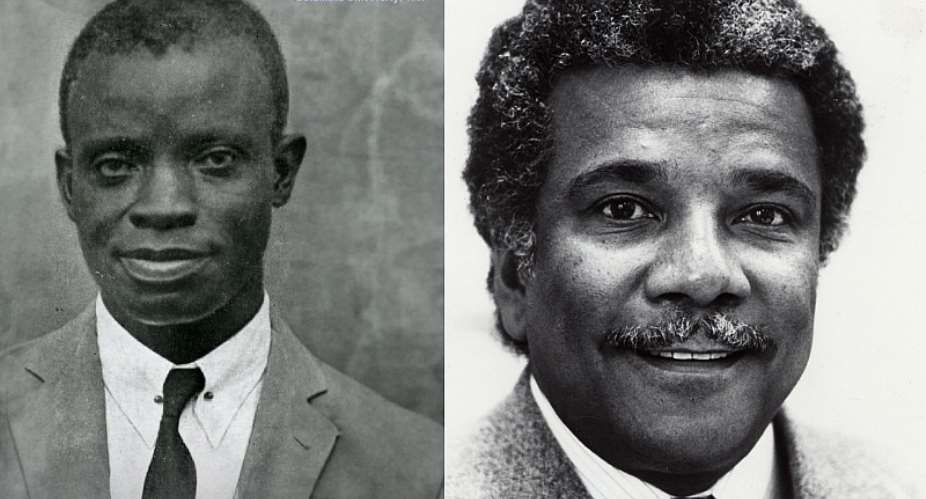
But what I really wanted to especially highlight here was what came to be known as “The Black Codes,” a rigidly enforced set of legally codified edicts that was meant to hermetically ensure the permanence of the chattel-slave status of “The Black Man/Woman.” For an authoritative and a comprehensive appreciation of what “The Black Codes” entailed, the interested reader may want to refer to the seminal historiographical classic titled “In The Matter Of Color,” authored by A. Leon Higginbotham, late, former Chief Justice of the Pennsylvania Supreme Court and subsequently, together with his wife, a Harvard University Law School Professor.
Still, as already hinted in several of the preceding segments/chapters of this series of critical and exploratory analysis of the 10-Point CARICOM Reparatory Justice Program, the very notion of a supposedly “pristine” or temporally and culturally “inviolable” set of “African Corpus of Knowledge,” as pontifically proclaimed by Number Seven (7) of the CARICOM 10-Point Reparatory Justice Program (CRJP) understandably but, nevertheless, tragically falls into the “very inviting” trap of ratiocination of the kind which Kenya’s scholar and erudite political scientist, the late Professor Ali Amin Mazrui once sarcastically, albeit realistically and pragmatically, characterized as “Romantic Gloriana” which was to essentially and fundamentally, as well as significantly, to underscore the incontrovertible fact of the “Negative Double-Edge Impact” of the corrosive effects of the Transatlantic European Trade in African Humanity between the 1400s CE and the late 1800s CE.
In other words, while, indeed, the primary victims of the European Trade in Indigenous African Humanity suffered unspeakable or an indescribable psychocultural loss, those “relatively” fortunate enough to have escaped the fecally festooned “Shitholes,” in Trumpian parlance, that were “The Santa Marias” and “The Jesuses” were also, unarguably, significantly negatively impacted psychoculturally as well, especially when one also critically reckons the fact that for as long as the active temporal span of the unspeakable and the morally depraved catastrophe that was the Transatlantic Slave lasted (See A Adu-Boahen’s “Topics in West African History”), the entire region of the present-day Gulf of Guinea or the ECOWAS Subregion was clearly and decidedly a veritable War Zone.
The acute and the apocalyptic destabilization of the entire region of West Africa, of a size that is significantly larger than the size of the present-day mainland of the United States of America, automatically and/or unarguably meant that the socioeconomic, cultural and the political climate of West Africa, the Commercial Heart and Hub of the Transatlantic Slave Trade would be everything but inviolable or intact and wholesome. It is therefore purely only in the tentative realm of “Relativity” that the forensically proven Home of the overwhelming majority of the African-Caribbean People could be characterized as being more “Afrocentrically” located than their Diasporic/Diasporan Brothers and Sisters.
The practical reality of the problem is that both the Indigenous Continental Africans back home on the proverbial Motherland and those in the Diaspora or The Americas have a heck of a lot to learn from one another, especially vis-a-vis the critical question of the Survival of the Unimaginably Catastrophic Earthquake that was Chattel Slavery, Colonization and Jim Crow or Ethnic and Racial Segregation. We need to seriously learn and get to know about each other before any serious or significant conversation about cultural and geopolitical reunification can be meaningfully and progressively brokered. Trust me, Dear Reader, what we are dealing with here is unfathomably humongous and exponentially bigger than the simple question of Reparatory Justice.
By Kwame Okoampa-Ahoofe, Jr., PhD
Professor Emeritus, Department of English
SUNY-Nassau Community College
Garden City, New York
E-mail: [email protected]

 High Court dismisses 'no case' submission in $2million Accra SkyTrain trial, ord...
 World Bank drops climate funding target, raising fears for Africa
 Supreme Court unanimously dismisses challenges to Torkornoo's removal process
 TOR rules out immediate removal of refinery margin citing debt burden
 GES debunks viral claims of flood-damaged WASSCE papers
 Accra floods: 1,000 vehicles damaged at Odawna
 Prove NLA’s GH₵3bn giveaway allegation — Razak Kojo Opoku challenges The Fourth ...
 Illegal miners invade Adansi Asokwa Agenda 111 Hospital site
 Trader loses 15 shops in Odawna disaster
 July 2: Cedi sells at GHS12.30 on forex market, GHS11.36 on BoG interbank
