




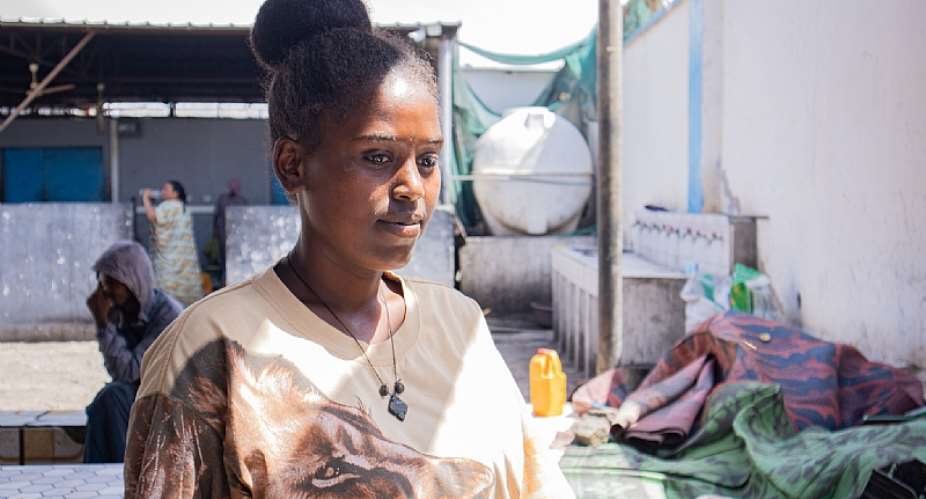
Djibouti – The waters between the Horn of Africa and the Arabian Peninsula have carried many names over centuries. One has endured: Bab el-Mandeb, meaning the Gate of Grief. It is a name forged through countless journeys marked by loss, uncertainty, and human struggle, and it remains as hauntingly relevant today as it was centuries ago.
For thousands of migrants attempting the crossing from Djibouti in search of safety, work or a future beyond hardship, the Gate of Grief remains true to its name.
Twenty-year-old Zinab knows this all too well.
On 25 March 2026, a migrant boat sank off the coast of Djibouti. At least nine people died. Forty-five others remain missing. Zinab survived.
She is from Adwa, in Ethiopia’s Tigray region, where years of conflict have left deep scars on communities and livelihoods. Like many young people along the Eastern Route, she left home hoping to find opportunities elsewhere and help support her family.
“I wanted to be able to support myself and change my family’s life,” she says. “That’s why I left.”
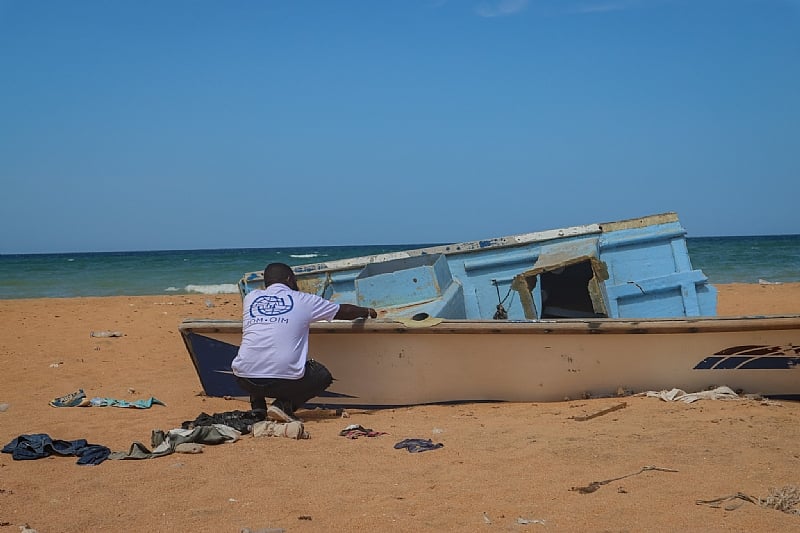
Hundreds of survivors have been rescued from the Gulf of Aden after journeys that have claimed many more lives. Photo: IOM 2026
The journey began with loss.
Along the way, she was robbed of her money and phone. She crossed remote stretches of desert, spending nights outdoors and travelling for days with little food or water.
“We waited on the coast for three days,” she recalls. “There was no food, no water, only the desert.”
Then came the sea.
As migrants boarded the vessel, weather conditions worsened.
“A storm started,” Zinab says. “The people in charge of the boat poured gasoline on us to keep us back.”
By soaking passengers in gasoline, the smugglers created the fear that they could be set alight if they disobeyed or tried to move around the overcrowded vessel.
The fuel soaked into clothing and skin. When seawater later flooded the vessel, it mixed with the gasoline. Some passengers accidentally swallowed the toxic mixture.
Migrants are often crowded into multiple levels of small vessels where conditions can become dangerous long before a boat encounters rough seas.
At some point during the crossing, panic spread.
Passengers believed a woman aboard had died from suffocation. Fear quickly overtook the crowded vessel.
Then the boat went down.
“Many people died right in front of our eyes,” Zinab says quietly. “Friends. Family members. Their bodies were never found.”
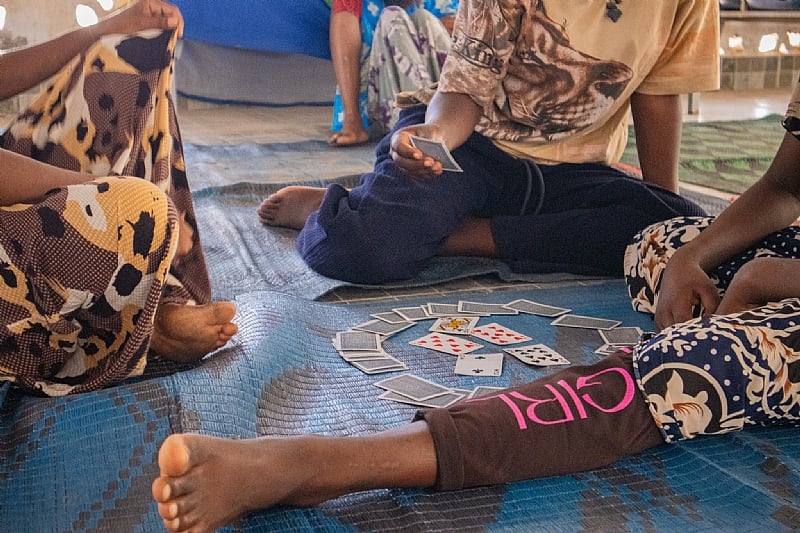
Zinab, alongside other migrants, has received support at the Migration Response Centre in Obock. Photo: IOM 2026
Much of what happened next remains fragmented in her memory.
“We were all dying there,” she says. “I can’t even remember how I managed to get off the boat.”
Zinab was eventually rescued by Djiboutian coast guards with the support of Djiboutian authorities and the International Organization for Migration (IOM) who launched a search-and-rescue operation and provided emergency medical and psychosocial support to survivors. Many of those who entered the water that day have never been found.
“Now I have to go back home,” she says. “But without any reason.”
Her words capture a reality often overlooked.
For many migrants, survival carries its own burden. The journey is often fuelled not only by personal aspirations but also by the expectations and hopes of families who remain behind. When the journey ends abruptly, survivors return carrying grief, disappointment and, sometimes, guilt.
Today, Zinab is staying at a Migration Response Centre in Djibouti, where she has received shelter, counselling and support as she recovers.
Hawa Moussa, a protection officer at the centre, remembers the days immediately after the shipwreck. “They were all in distress,” she says. “Zinab barely spoke. She spent most of her time in silence and suffered frequent nightmares.”
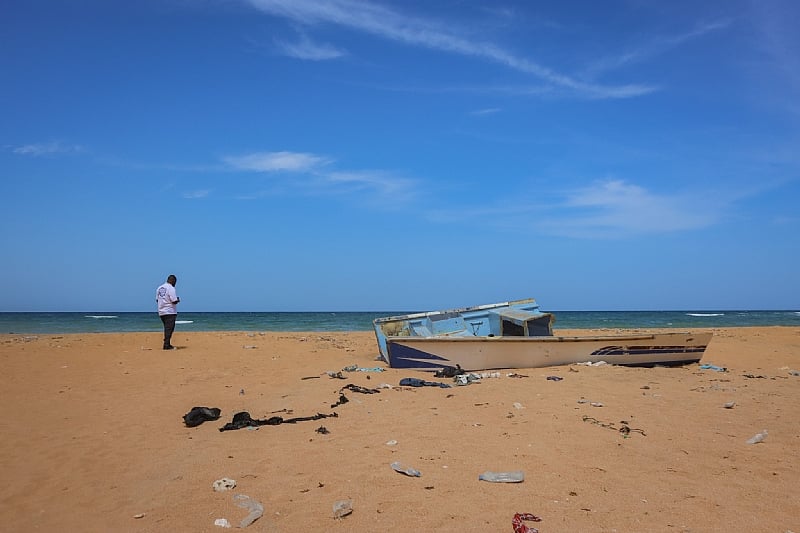
The shores of the Gulf of Aden in Obock, Djibouti, are the departure point, and often the site of rescue, for migrants risking the perilous journey from the Horn of Africa to the Gulf. Photo: IOM 2026
Through counselling sessions and ongoing support, Zinab gradually began to reconnect with the world around her. One of the most significant moments came when staff helped her contact her family.
“When she spoke to her brother, she was really happy,” Hawa says.
The shipwreck has left its mark. Some memories remain difficult to revisit. Yet amid the loss, Zinab has begun to look forward again. With support from IOM, she is preparing to return home to Ethiopia.
Behind her lies a stretch of water that has claimed countless lives. Ahead lies an uncertain future, but one she is alive to face.
Every year, thousands of people continue to risk the crossing through the Bab el-Mandeb Strait and along the Eastern Route. Many are fleeing conflict, poverty, insecurity or a lack of opportunity. Others are pursuing the possibility of a better life for themselves and their families.
For too many, the journey ends at sea.
Creating safer and regular migration pathways, while strengthening efforts to combat the criminal networks that profit from migrant smuggling, remains critical to preventing further loss of life.
This story was written by Mylaele Negga, Media and Communications Officer, with IOM Djibouti.

 GoldBod’s gains must be weighed against full cost to Ghana – Prof. Bokpin
 ‘Afenyo-Markin’s smear campaign against me is about extortion’ – Sammy Gyamfi
 August 22: Cedi sells at GHS12.30 on forex market, GHS11.13 on BoG interbank
 There is a deliberate smear campaign against GoldBod from Minority – Sammy Gyamf...
 ‘If GoldBod wants credit, it must accept blame for losses’ – Dr Owusu Sarkodie
 Akosombo control system to be restored next month – Energy Minister
 ‘Temporary Akosombo system not very robust’ – Energy Minister on recent power ou...
 Mike Ocquaye Jr reacts to Adwoa Safo’s reported return to NPP Dome-Kwabenya race
 Foreign Affairs Ministry urges Tijjaniya pilgrims to Senegal to travel by air ov...
 Bono Police Arrest 36‑Year‑Old in GH¢1.1M Fake Gold Deal; Hunt for Three Others ...

