




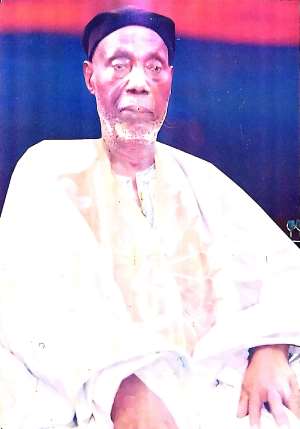
Attah Nantogmah (Kpaa Naa, zobahasi Naa, Suɣulo mali nyɔri, suli n-ka shɛli) was born in Bimbilla in Northern Ghana in 1925 to the late Dokpam Naa Attah and Napaha Mayama. In his youth, Mr. Nantogmah was known for being humble, truthful, and possessing a craving passion for animal life. He started his primary education in Yendi in 1937. Later, he attended Tamale Middle School and, as one of the top students, won a scholarship to proceed to the Presbyterian Middle School in Kpando, where he graduated in 1946.
In 1947, Mr. Nantogmah enrolled at the Forikrom Academy in Kumasi for a three-year course. He then proceeded to the Central College of Commerce in Agona Swedru, where he obtained a first-class diploma in bookkeeping, before heading to the Normal Club College in London to obtain his accountancy certificate the following year. Upon his return, he worked in the Animal Health Department at Pong-Tamale in 1950, and was appointed clerk and secretary of the Nanumba District Council in 1951, a role he held for three years.
Hon. Attah served as a Member of Parliament (MP) for the Nanuŋ-Dagboŋ constituency from June 1954 to 1956, and was re-elected in the 1956 general elections to represent the Bimbilla constituency on the ticket of Dr. Kwame Nkrumah's CPP government. Through his hard work and unwavering principles, he was appointed Deputy Defense Minister from November 1960 to February 22, 1966, becoming the first Northerner and Nanumba native to hold this prestigious position.
Hon. Nantogmah Attah was highly regarded for his immense contributions to infrastructure development in the Nanung area. At the time, Nanuŋ faced two critical challenges: water scarcity and the lack of a hospital. Following feasibility studies by the Colonial experts, addressing the water shortage was prioritized. Through the support of the British Commissioner for the Yendi District, Mr. Short, and the relentless efforts of Hon. Nantogmah, the Department of Tsetse Control and the Department of Agriculture team of engineers were dispatched to the Nanuŋ-Dagboŋ constituency. Their mission was to map out potential zones for constructing dams to solve the area's persistent water crisis. Consequently, between 1954 and 1960, over 15 viable dams were constructed across the Nanuŋ enclave, including Zabzugu.
These included the Wampu, Dokpam, Chamba, Nassamba, Nakpayili, Zabzugu, Makayili, Lepusi, and Bapkaba dams, among others. To this day, these dams remain the primary source of water for towns and villages across the current Nanumba North and South districts, as well as the Zabzugu township.
In collaboration with the Chief of Bimbilla (Naa Nantogmah) and pioneer educationist -Jilo Naa Zakari Ziblim (about whom the author will write later), the Nanuŋ Education Programme (NEP) was expanded. This was achieved by establishing middle schools in Bimbilla, Wulensi, Nakpayili, Joo, and Nakpa to complement the pioneer Bimbilla school program, which had begun in 1948. All of these efforts were geared toward bringing quality education directly to the doorsteps of the people of the Nanumba land.
Mr. Attah’s agricultural initiatives also included establishing Workers' Brigade Camps, where locally trained farmers managed cotton and maize plantations, as well as cattle-rearing farms. These agricultural hubs, initially located stretching from Dananyoŋni to Yɛlim baani and later relocated to Kabliya along the Eastern Corridor Road south of Bimbilla, were state-supported projects aimed at boosting the local agricultural industry.
Not only did Mr. Nantogmah establish these vital agricultural hubs in Nanuŋ, but he was also a highly successful crop and livestock farmer in his own right. His dedication and exceptional farming practices earned him the prestigious Best Cattle Farmer award at both the 3rd and 4th National Farmers' Day celebrations, held in Yendi and Nyankpala in 1987 and 1988, respectively.
As a prince of the royal bloodline, Mr. Attah Nantogmah was enskinned as the Chief of Tua in the south-western corridor of Bimbilla in 1983 and in recognition of his leadership, he was promoted to the chieftaincy of Chamba in 1990, and subsequently ascended to the skin of Dokpam in 1997. He ruled the Dokpam traditional area with wisdom and dignity for nine years until his passing in November 2006.
Throughout his reign as a divisional chief, Naa Attah worked tirelessly to foster peace and reconciliation with the Konkomba community through proactive diplomacy and established legal processes. He was highly respected across the region for his unwavering commitment to justice, the rule of law, and peaceful co-existence.
True heroes deserve to be remembered and celebrated, both during their lifetime and long after they have departed.
Naa! May you find eternal peace in your heavenly resting place.
By Abdul Jelil Maldini
(Hamza Jelil)
[email protected]
0540366350
REFERENCES
Marshall, A. (2025, June 18). Reflections on First Republic governance (Unpublished audio recording).
Marshall, A. (2025, August 01). Reflections on the legacies of Mr Attah Nantogmah (Unpublished audio recording).
The Commonwealth Relations Office List. (1965). H.M. Stationery Office. (p. 305).
Gold Coast Legislative Assembly. (1954). Debates, issue. (p. 1).
Danby, M. (1970). House design. In R. Chambers (Ed.), The Volta resettlement experience (pp. 164–178). Pall Mall Press.
Ghana Districts. (n.d.). Ghana Districts: A repository of all Local Assemblies in Ghana. Retrieved March 3, 2024, from http://www.ghanadistricts.com
Alabani. (Elder and sub chief, aged 86). Oral narrative regarding the construction of the Wampu and Dokpam dams in Bimbilla. Interviewed in Bimbilla, Northern Region, Ghana on January 10, 2026.
Marshall. (Traditional custodian of Nanung History). Oral history account of the Nanung Education Programme (NEP) and the roles of early teachers. Interviewed in Bimbilla, Ghana on March 2, 2025.
Attah. (Praise singer and a historian). Appellations of the Dokpam Naa. Interviewed in Bimbilla, Ghana on May 17,2026
Lambert, K. (2019). "It's all work and happiness on the farms": Agricultural development between the blocs in Nkrumah's Ghana. The Journal of African History, 60(1), 25–44.
Nkrumah, K. (1968). Dark days in Ghana. International Publishers.
Afflu, M. K. (2023). The history of the National Farmers' Day in Ghana.Theinsightnews.https://www.theinsightnewsonline.com/
 High Court dismisses 'no case' submission in $2million Accra SkyTrain trial, ord...
 World Bank drops climate funding target, raising fears for Africa
 Supreme Court unanimously dismisses challenges to Torkornoo's removal process
 TOR rules out immediate removal of refinery margin citing debt burden
 GES debunks viral claims of flood-damaged WASSCE papers
 Accra floods: 1,000 vehicles damaged at Odawna
 Prove NLA’s GH₵3bn giveaway allegation — Razak Kojo Opoku challenges The Fourth ...
 Illegal miners invade Adansi Asokwa Agenda 111 Hospital site
 Trader loses 15 shops in Odawna disaster
 July 2: Cedi sells at GHS12.30 on forex market, GHS11.36 on BoG interbank
