




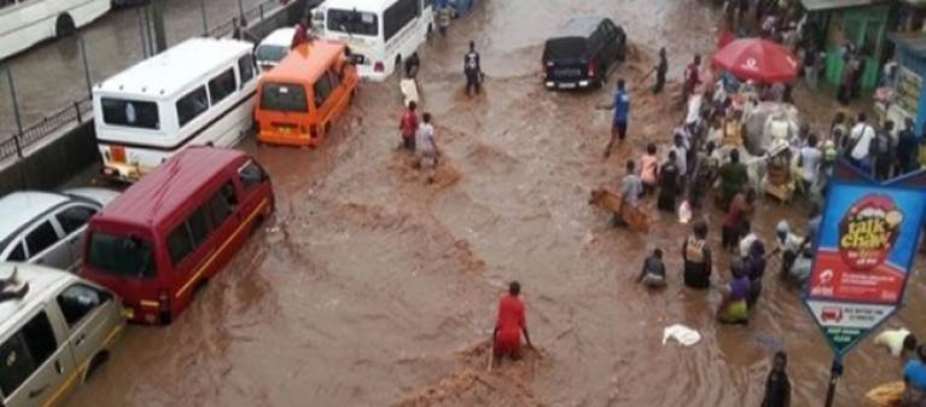
Every rainy season in Ghana follows a familiar and heartbreaking script. Heavy rains fall, drains overflow, roads become rivers, homes disappear beneath floodwaters, businesses grind to a halt, and families mourn lives lost in what are often described as "natural disasters or an act of God." Government agencies mobilize emergency response teams, relief items are distributed, and public debate resumes until the next flood arrives.
But floods are not simply acts of nature. While rainfall triggers flooding, the scale of destruction reflects human choices. Poor planning, environmental degradation, weak enforcement of regulations, and unsustainable development have transformed seasonal rains into recurring national emergencies.
If Ghana is serious about protecting lives, safeguarding investments, and building climate resilience, the national conversation must move beyond responding to floods and focus on preventing them.
Climate Change Has Changed the Rules
Climate change is no longer a future concern discussed only in international conferences. It is already reshaping Ghana's weather patterns. Rainfall events have become more intense, less predictable, and increasingly destructive. Warmer atmospheric temperatures allow more moisture to accumulate, resulting in heavier downpours that overwhelm drainage systems originally designed for very different climatic conditions.
Communities that rarely experienced flooding decades ago are now becoming flood-prone. Urban infrastructure constructed using outdated rainfall assumptions is proving inadequate for today's realities.
This new climate reality requires a fundamental shift in how Ghana plans its cities, designs infrastructure, manages natural resources, and regulates development. Climate adaptation is no longer optional it is an essential investment in national development.
Environmental Protection Is Flood Protection
One of Ghana's greatest flood defenses has always been nature itself. Wetlands absorb excess rainfall. Forests stabilize soils and slow surface runoff. Rivers naturally expand into floodplains during heavy rains. Green spaces reduce the speed and volume of stormwater entering urban drainage systems.
Unfortunately, these natural systems are disappearing.
Across the country, wetlands are reclaimed for housing, waterways are narrowed by illegal construction, forests continue to decline, and natural drainage channels are blocked in the name of development. Every environmental asset destroyed reduces the country's ability to manage heavy rainfall naturally.
Protecting wetlands, river corridors, forests, and open spaces should therefore be viewed not merely as environmental conservation but as essential flood-control infrastructure. Nature remains one of the most effective and affordable forms of climate adaptation.
Engineering Must Prepare for Tomorrow, Not Yesterday
Ghana's engineers have a central role in building resilience.
Roads, bridges, culverts, drainage systems, and public buildings should be designed using updated hydrological data that reflects changing rainfall patterns rather than historical averages alone. Engineering standards must evolve alongside climate science.
Resilient infrastructure may require higher initial investment, but repeated reconstruction after every flood is far more expensive. Every collapsed bridge, damaged road, destroyed home, and disrupted business represents avoidable economic loss.
Urban drainage systems also require consistent maintenance. Even well-designed drains become ineffective when blocked by sediment, vegetation, or waste. Maintenance should be regarded as critical infrastructure management rather than an optional municipal activity.
Development approvals should equally be strengthened. Building permits should only be granted after rigorous engineering and environmental assessments, while unauthorized developments within waterways, floodplains, and wetlands must be removed before they become disasters waiting to happen.
Waste Management Is a National Safety Issue
Perhaps no contributor to urban flooding is more preventable than poor waste management.
Plastic bottles, sachet water wrappers, construction debris, and household refuse frequently clog drains throughout Ghana's cities. During heavy rainfall, storm water has nowhere to flow, quickly causing roads and neighbourhoods to flood.
Yet waste management is often treated solely as a sanitation issue. It is far more than that. It is a matter of public safety, environmental protection, and disaster risk reduction.
Metropolitan, Municipal and District Assemblies must strengthen waste collection services while ensuring that every stage of the waste management chain from household collection to transportation and final disposal is properly monitored and regulated.
Communities also have responsibilities. Every piece of waste dumped into a drain contributes to flooding somewhere downstream. Environmental responsibility begins at the household level.
Time to Regulate Waste Transport More Effectively
An often-overlooked aspect of waste management is the operation of waste collection trucks.
Private waste contractors perform an essential public service, but inadequate oversight can create opportunities for illegal dumping into drains, wetlands, abandoned lands, riverbanks, and undeveloped areas to reduce operational costs.
This practice not only pollutes the environment but also obstructs natural drainage systems and increases flood risks.
Technology now makes effective regulation entirely achievable. Licensed waste transport vehicles should operate under GPS tracking, electronic waste manifests, scheduled inspections, and mandatory reporting that verifies where waste is collected and where it is ultimately disposed of.
Illegal dumping should attract substantial financial penalties, suspension of operating licences, and criminal prosecution where appropriate. Responsible waste operators deserve a level playing field, while offenders should face meaningful consequences.
Illegal Sand Mining Is Weakening Natural Flood Defences
Another issue demanding urgent national attention is unregulated sand mining.
Sand is indispensable for construction and infrastructure development. However, uncontrolled extraction from riverbeds, floodplains, and coastal areas damages ecosystems that naturally protect communities from flooding.
River channels become unstable, erosion accelerates, vegetation disappears, water quality deteriorates, and surrounding communities become increasingly vulnerable during heavy rainfall.
A more balanced approach is needed. Government should strengthen licensing systems, enforce environmental impact assessments, designate approved extraction zones, and intensify action against illegal operators. Sustainable construction cannot come at the expense of environmental security.
Governance Matters More Than Emergency Response
Flood resilience ultimately depends on governance.
Effective government is measured not only by how quickly it responds after disasters but also by how successfully it prevents them.
Environmental regulations already exist in many areas. The challenge is consistent enforcement. Illegal developments, wetland encroachment, indiscriminate dumping, unauthorized land reclamation, and environmentally destructive activities must attract swift and impartial sanctions regardless of who is involved.
Regulation should never be viewed as anti-development. On the contrary, it creates the certainty and discipline necessary for safe, sustainable, and equitable growth.
Public education must also become a permanent component of flood prevention. Citizens who understand the environmental consequences of their actions become partners rather than obstacles in protecting communities.
Building a National Culture of Resilience
Flood prevention cannot be delegated to government agencies alone. Engineers must design resilient infrastructure. Urban planners must enforce sound land-use planning. Environmental professionals must advocate for ecosystem protection. Traditional authorities must safeguard communal lands and waterways. Businesses must comply with environmental standards. Civil society organizations must continue public education and advocacy. Every citizen must dispose of waste responsibly and respect environmental regulations.
Climate resilience is built through thousands of responsible decisions made every day.
The Way Forward: Five National Priorities
Ghana should urgently pursue five strategic priorities:
- Modernize drainage and urban infrastructure using climate-resilient engineering standards.
- Protect wetlands, floodplains, forests, and natural waterways through strict land-use enforcement.
- Digitize waste management by introducing GPS tracking, electronic manifests, and stronger monitoring of waste transport.
- Community waste collectors must be monitored and their activities must be regulated.
- Intensify enforcement against illegal construction, indiscriminate dumping, and unregulated sand mining.
- Invest in sustained public education that promotes environmental stewardship as a civic responsibility.
Beyond the Flood
Every flood exposes more than inadequate drains. It exposes weaknesses in governance, planning, environmental management, and collective responsibility.
Climate change means that intense rainfall will remain part of Ghana's future. The question is not whether heavy rains will return they certainly will. The real question is whether we will continue rebuilding after preventable disasters or finally invest in the systems, policies, and behaviours that make our communities resilient.
The rainy season is here and the next rainy season is not a matter of if, but when. What happens then will depend largely on the decisions we make today.
If Ghana chooses environmental responsibility over environmental neglect, prevention over reaction, and resilience over complacency, future generations may remember floods not as recurring national tragedies but as the catalyst that inspired a safer, stronger, and more sustainable nation.
By: Dr. Solomon D.Y. Kwashie
Medical Laboratory Scientist
[email protected]


 NPP rejects Mahama's appointment of Emelia Agbenyo as EC deputy, demands withdra...
 Excessive consumption of processed meat can expose one to cancer – Health expert...
 Education Minister appeals to University Administrators to call off strike, resu...
 'You're doing yeoman’s job' — Mahama lauds Police over declined unresolved murde...
 Wilmar Africa, De Heus, other food processing companies face CID action over dat...
 NPP’s Baba Amando runs to police over alleged death threats
 Ghana repatriates 120 Nigerians arrested in cybercrime operations
 PIAC unable to verify GH¢21million petroleum-funded projects in Ayawaso West
 Wontumi pleads not guilty to five charges in GH¢30m Exim Bank fraud case
 Ghana among stronger-performing economies in sub-Saharan Africa — IMF


