




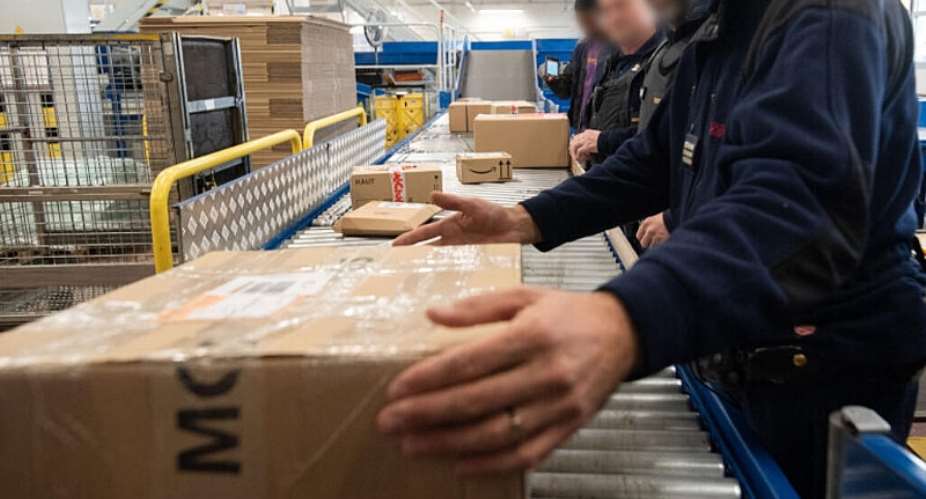
The European Commission, in charge of EU trade policy, says the step is about slashing the financial burden on customs duties after the explosion in imports, and tackling the safety risks from unchecked goods.
EU imports
Nearly six billion small retail packages entered the bloc last year from abroad - most of them from China, and increasingly via wildly popular online platforms like Shein and Temu - up from 4.6 billion in 2024.
The EU will lift an exemption duty on parcels worth less than €150, and apply a temporary three-euro levy per item.
Although Brussels proposed the levy last year, some EU member states did not want to wait and slapped their own duties.
EU states must cease applying their own levies, a senior European official said.
France plans new fee on cheap Chinese goods sold online
The flat fee will be in force until 1 July, 2028 after which the usual customs duties will apply, depending on the type of good.
The United States has lifted a similar exemption and Britain will follow suit.
Brussels insists the measure is not targeted at China, nor any other country for that matter, but is about levelling the playing field.
"This is about having the same rules for our businesses and for goods entering our territory sold online," the EU official said.
Customs authorities are overwhelmed by small packages arriving from overseas, the European Commission says, and since e-commerce is so popular, the current duty exemption gives importers a competitive advantage.
European businesses also say they have to comply with tough EU rules and point to data showing many products from abroad do not comply with EU standards.
Four-fold increase
Targeted inspections across the EU in 2025 found over 60 percent of imported items like toys, cosmetics and electronics had banned ingredients, missing labels or absent safety paperwork.
"It is barely manageable, and normal checks are almost impossible," said the head of the EU parliament's trade committee Bernd Lange.
Lange pointed to data showing that since 2022, small parcels from abroad have more than quadrupled: from 1.39 billion to 5.88 billion in 2025.
The EU stresses the levy will be paid by the importer, not the consumer.
"Consumers buying online are not legally responsible for paying the duties," the senior European official said.
EU unveils plan to cut dependence on US and Asian technology
But he warned that platforms could decide to pass the cost onto the consumer.
The EU will also be on the lookout for circumvention, as well as any effort to reroute small parcels to the bloc via countries like Switzerland.
Some online giants are considering building warehouses in Europe to import goods in bulk and ship them more easily across Europe.
In a bid to boost tracing goods, the EU will make it mandatory from 1 November, 2026 to provide reference details about the products.
The EU also plans a handling fee to start in November 2026 to help customs authorities with their surging costs as more and more parcels arrive.
The amount of that fee has yet to be decided.
(with AFP)

 Responsible citizenship and hard work surest path to national development — Maha...
 Our nation has made remarkable progress — Mahama
 Upper East: NPP Chairman demands urgent probe into alleged murder of eight indiv...
 Cedi begins July 2026 selling at GHS12.35 on forex market, GHS11.36 on BoG inter...
 If Mahama is tired, he can step aside — Sammi Awuku on flood crisis
 Flood crisis: 'We didn't elect you to tell us our problems; fix them' — Sammi Aw...
 GH¢350m flood package should be shared fairly across affected regions — Minority
 Minority demands accountability of Mahama's GH¢300m flood relief package
 Trump made more than $1 billion from crypto in 2025, financial disclosure shows
 Anthropic to restore global access to most powerful AI models
