




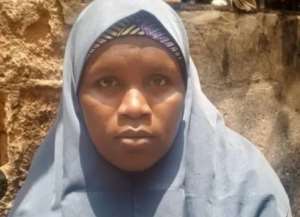
When Mrs Barira Alhassan was wheeled into the State Specialist Hospital in Gombe, Nigeria, in May 2026, she was a pregnant woman seeking the most routine of modern medical interventions a Caesarean section to safely deliver her child. She left the hospital alive, her baby delivered. But weeks later, a discovery would ignite one of the most explosive medical controversies in recent Nigerian memory: she had only one kidney.
The question consuming northern Nigeria today is as simple as it is devastating: did she arrive at that hospital with one kidney, or did she leave with one fewer than she came with?
The Allegation That Shook Social Media
It was Barira's brother, Mr Zakaria Alhassan, who first sounded the alarm. In videos and posts that spread rapidly across WhatsApp groups, Facebook pages and X (formerly Twitter), Zakaria alleged that doctors at the State Specialist Hospital, Gombe, had unlawfully removed his sister's kidney during the C-section procedure. The claim was visceral, terrifying, and perfectly calibrated to travel invoking every Nigerian's deepest fear of institutional betrayal in spaces where they are most vulnerable.
The allegation landed on already-fertile ground. Nigeria has lived through enough real organ-trafficking scandals to make such a claim instantly plausible. The conviction in the United Kingdom of former Deputy Senate President Ike Ekweremadu and his wife for organ trafficking remains fresh in public memory.
Baby factories and illegal organ harvesting rings have featured in Nigerian court cases and international human rights reports. In such a context, a woman allegedly emerging from a public hospital with a missing kidney was not, to ordinary Nigerians, an unthinkable proposition.
Within days, the story had become a national flashpoint. Calls for arrests. Calls for investigation. Condemnation of the Nigerian medical establishment. The hospital was tried and convicted in the court of public opinion before a single medical file had been opened.
The Hospital Strikes Back
The management of the State Specialist Hospital, Gombe, did not stay silent. In a formal statement released on Sunday, June 28, 2026, obtained by Punch HealthWise, the hospital mounted a point-by-point rebuttal that was, by the standards of Nigerian institutional communications, unusually detailed and medically specific.
The hospital described the allegation as "false, malicious, reckless and unsupported by medical evidence." It stated that theatre records confirmed Mrs Alhassan underwent only an emergency Caesarean section, and that "at no point was any procedure involving the kidneys undertaken by the surgical team."
But the hospital went further than a simple denial and this is where the case becomes genuinely complex. The management disclosed that, following concerns raised by the Alhassan family, it did not merely insist on its innocence.
It sponsored a CT intravenous urogram (CT-IVU) at a Federal Teaching Hospital to independently investigate the patient's condition. The results, as relayed by the hospital, were medically significant: the CT-IVU findings were described as "consistent with a likely congenital absence of one kidney, with associated abnormalities involving the ureter on the other side." In plain terms, the radiological evidence suggested Barira may have been born with one kidney a condition known medically as renal agenesis rather than having had one surgically removed.
The hospital noted that it paid for the investigation "in the spirit of helping out to reveal the truth," and that it had met with the Alhassan family on two occasions to review the findings. At the family's request, arrangements were also made for a repeat investigation at a second, independent medical facility. As of the time of publication, the hospital said it was still awaiting the results of that follow-up investigation.
A Medical Question at the Heart of the Dispute
The hospital's defence rests on a medically credible foundation. Congenital renal agenesis being born with one kidney is not an exceptionally rare condition. Studies estimate it occurs in approximately one in every 1,000 to 2,000 live births. Most people with one kidney live entirely normal lives and are often unaware of their condition until it is detected incidentally, frequently through imaging conducted for entirely unrelated reasons such as complications following surgery.
This is precisely the hospital's claim: that Barira's single kidney was a lifelong condition, not a surgical consequence. The CT-IVU, a specialised radiological investigation designed to image the urinary tract, reportedly supported this interpretation, citing "associated abnormalities involving the ureter" structural irregularities consistent with developmental, not traumatic, absence of an organ.
However, it must be stated clearly: a CT-IVU conducted after the surgery cannot definitively establish what was present before the surgery. It can show the current anatomical state of the patient. It cannot serve as a time machine. The question of whether Barira had one kidney prior to her admission at Gombe Specialist Hospital can only be answered with certainty if pre-operative imaging or prior medical records exist and no such records have been publicly cited by either party.
This is the evidentiary gap at the centre of the controversy, and it will not be closed by statements, social media posts, or press releases from either side.
Who Bears the Burden of Proof?
In a society governed by the rule of law, the burden of proof in a criminal allegation lies with the accuser. But medical accountability does not operate on the same logic as criminal law and in a country where public trust in healthcare institutions is perpetually fragile, the moral burden on hospitals to be transparent is arguably higher than the legal standard.
The Gombe hospital has, to its credit, taken steps that go beyond a routine denial. Funding an independent CT-IVU, meeting with the family twice, and agreeing to a further investigation at a second facility are not the actions of an institution with nothing to hide. If anything, the conduct described in the hospital's statement suggests an institution attempting, however belatedly, to submit itself to scrutiny.
But good faith is not the same as truth. And in Nigeria, the history of hospitals closing ranks, documentation being altered, and families being fobbed off with procedural reassurances is long enough to justify continued skepticism even in the face of a seemingly credible medical explanation.
The critical test now lies with the results of the second, independent facility investigation that both the family and hospital have agreed to. That investigation conducted without the institutional interest of Gombe Specialist Hospital will be the closest thing available to an objective finding. Its results must be made public. And critically, those results must be scrutinized not merely for what they show but for how they were conducted, by whom, and whether the family had meaningful participation in the process.
The Wider Crisis This Case Illuminates
Beyond the specific facts of Barira Alhassan's case which remain, in the strictest sense, unresolved the controversy exposes a structural failure in Nigeria's healthcare accountability architecture.
There is no robust, independent patient rights body in Nigeria with the investigative capacity and political independence to examine a case like this in real time. The National Human Rights Commission has a mandate that touches on health, but it lacks forensic medical capacity. The Medical and Dental Council of Nigeria (MDCN) can discipline practitioners, but its processes are slow, opaque, and rarely result in meaningful public accountability. The Nigerian Medical Association's instinct, as professional bodies everywhere, is first to protect its members.
What fills the vacuum? Social media with all its power and all its dangers. The Barira case went viral not because Nigerian citizens are irrational or prone to conspiracy, but because they have learned, through accumulated experience, that institutional silence is rarely innocent and that public pressure is frequently the only mechanism that produces any accountability at all. The social media campaign was not madness. It was rational adaptation to a broken system.
The hospital's response has been to threaten legal action against those spreading "defamatory information." That threat deserves careful scrutiny. There is a meaningful difference between malicious fabrication and citizens raising genuine concerns in the only forum available to them. The use of defamation threats to suppress public scrutiny of healthcare institutions is a well-documented tool of institutional self-protection one that chills legitimate advocacy and silences vulnerable patients and their families.
If the independent investigation ultimately vindicates the hospital's position if the radiological evidence conclusively establishes that Barira was born with one kidney then the institution will deserve a full, public clearance. Those who made false and demonstrably fabricated claims should face appropriate consequence.
But if the investigation raises further questions, or if the second facility's findings diverge from the first, Nigeria's health regulatory architecture must be prepared to respond with the rigor this case demands. Investigations by relevant authorities which the hospital itself has said it welcomes should proceed regardless of the outcome of the family's private inquiry.
Conclusion: The Truth Barira Deserves
Mrs Barira Alhassan is not a symbol. She is a woman who went to a hospital to have her baby and came out of that experience at the centre of a national controversy she did not seek. Whatever the truth of her medical history whether she was born with one kidney or whether something unimaginable happened to her inside that operating theatre she deserves a clear, credible, independently verified answer.
Nigeria's institutions owe her that. Not a press statement. Not a social media war. Not threats and counter-threats. A transparent, independent, medically rigorous investigation whose findings are communicated in full to her, to her family, and to the Nigerian public.
Until that investigation does not produce its findings, the hospital's denial nor can the family’s allegation be treated as settled fact. The honest position the only defensible journalistic position is that the truth of what happened to Barira Alhassan in May 2026 at the State Specialist Hospital, Gombe, is not yet known.
That uncertainty is not a conclusion. It is a demand.
Mustapha Bature Sallama.
Medical/ Science Communicator,
Private Investigator, Criminal investigation and Intelligence Analysis.
International Conflict Management and Peace Building.USIP
[email protected]
+233-555-275-880
Sources: Punch HealthWise, June 28, 2026; State Specialist Hospital Gombe official statement; BBC Hausa Service.

 Responsible citizenship and hard work surest path to national development — Maha...
 Our nation has made remarkable progress — Mahama
 Upper East: NPP Chairman demands urgent probe into alleged murder of eight indiv...
 Cedi begins July 2026 selling at GHS12.35 on forex market, GHS11.36 on BoG inter...
 If Mahama is tired, he can step aside — Sammi Awuku on flood crisis
 Flood crisis: 'We didn't elect you to tell us our problems; fix them' — Sammi Aw...
 GH¢350m flood package should be shared fairly across affected regions — Minority
 Minority demands accountability of Mahama's GH¢300m flood relief package
 Trump made more than $1 billion from crypto in 2025, financial disclosure shows
 Anthropic to restore global access to most powerful AI models
