




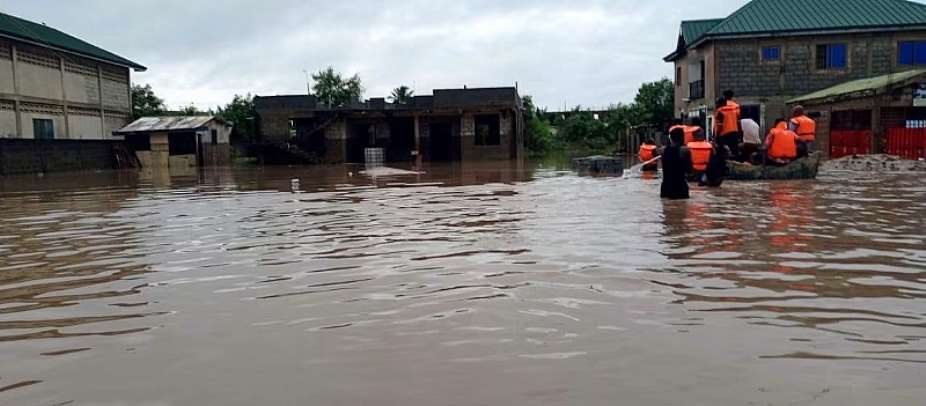
Imagine a crowd of mad people being led by drunkards. What do you expect? A brumous system. That’s exactly what we’ve built in Ghana. Foggy, confused, dangerous, and we’re all walking in it together.
The rain isn’t the enemy. We are. Accra is drowning because we designed it to drown. And let’s be clear, this is not only an Accra problem. From news reports and what citizens keep sharing, flooding is hitting towns across the country. Think of it alphabetically: Accra, Ho, Kumasi, Nalerigu, Sunyani, Takoradi, Wa, Zuarungu. Same attitude. Same blocked drains. Same floods. Accra just gets the cameras. The rest drown quietly.
When I say citizens, I mean all of us. Chiefs, pastors, imams, MPs, businessmen, foreign investors, landlords, tenants, market traders. Every Ghanaian with a hand in this. This is galamsey with water. We wreck the land, then weep when it rains.
Shoddy Settlement Planning: We Sold Our Own Ruin
Land is supposed to be sacred. Our chiefs are custodians, not estate agents. Yet wetlands, natural watercourses, and sewage buffer zones are being sold off without shame.
Who’s buying? All of us. Religious leaders putting up churches and mosques on waterlogged ground because “God dey.” Politicians grabbing plots they know are death traps. Foreign investors who wouldn’t touch a floodplain back home, but they build here because we let them. I don’t blame them. I blame the Ghanaian who took the cash and signed. Environmental advocates, myself included, talk policy in public but still damage the environment in their penetralia. We’re all part of the problem.
Then the regulators arrive. They mark it, tape it, take photos. After that, something passes under the table and the tape comes off. We are being paid to build on our own graves.
So when the rains come, the water has nowhere to go except our shops and bedrooms. We approved this disaster with our own hands.
Choked Drains: We Are The Blockage
From Accra to the smallest town, the story is the same. Our drains are rubbish dumps.
The moment the sky darkens, people start dumping sachets, polythene, food waste, broken items into the gutter. “The rain will wash it away,” they say. And it does. Straight back into our living rooms.
It’s worse. Too many homes have toilets, bathrooms and kitchens plumbed straight into storm drains. No septic tank. No treatment. Just straight into the gutter, into the Odaw, into the sea. If flood doesn’t get you, cholera, diarrhoea, typhoid and other filth-borne illnesses will.
Look outside. In Japan and much of Europe, storm water and sewage are kept apart. Waste moves through closed pipes to treatment works before any river sees it. Their waterways are assets. Ours are open sewers.
A drain is not a rubbish tip. A drain is not a toilet. A drain is meant to carry rainwater only. Until we learn that, we’ll keep swimming in our own filth.
Waste to Energy: We Are Sitting on Fuel and Calling it Rubbish
We dump what could power us. Other countries are doing it. Sweden burns waste to generate electricity and heat for homes. Kenya is piloting waste-to-energy plants in Nairobi. Rwanda is turning organic waste into biogas for cooking and lighting.
We have the waste. We have the sun. We have the need. Instead of letting polythene and food waste choke our drains and breed disease, we could be capturing methane from landfills, converting organic waste to biogas, and burning non-recyclables in controlled plants to light streets and run mills.
Ghana can start small. Community digesters in markets. Biogas at abattoirs. Waste-to-energy at landfill sites instead of open burning. We are literally allowing our rubbish to kill us when it could be keeping our lights on.
Human Factors: The Attitude Problem
Beyond planning and rubbish, it’s our mindset.
We build and dump because we think no one will enforce anything. We live for today and leave tomorrow to suffer. We’ve normalised flooding like it’s part of June. That’s dangerous. We are treating Accra the same way we treat galamsey pits. Use it, ruin it, walk away.
Politics Around Flooding: Show Over Substance
Politicians love flood season. Wellington boots on, bags of rice, oil, tinned goods, cameras rolling. “We feel your pain.”
President Mahama explaining the causes is welcome. But talk doesn’t clear drains. We need action. Pull down what needs pulling down. Dredge what needs dredging. Prosecute officials who take bribes to approve wetlands. Hold MPs and MMDCEs to account for flood funds.
Ghanaians deserve more than relief parcels. Africans deserve cities that work, not just handouts after disaster.
The Effects: What Flooding Is Costing Us
Flooding takes lives. It spreads disease. It wipes out market stalls and traders’ stock. It destroys cars, roads and bridges. It displaces families and shuts towns down for days. Children miss school. Workers can’t get to their jobs. We end up borrowing to fix what we refused to protect. The damage is human, health and economic, all at once.
Solutions: No More Excuses
We don’t need miracles. We need discipline and enforcement.
For Citizens: Stop dumping in drains. Stop buying risky land. Stop connecting toilets to storm drains. Report encroachers. Clean your frontage and keep your neighbours in check.
For Traditional and Religious Leaders: Stop selling off wetlands. Stop building where engineers say no. Be custodians again, not dealers.
For Government and Regulators: Enforce without fear or favour. Demolish illegal structures in waterways no matter whose name is on them. Separate sewage from storm water and start treating it properly. Dredge and maintain drains all year, not only when the clouds gather. Prosecute corrupt officials. Invest in waste-to-energy and biogas. Create retention areas and green spaces instead of concreting everything.
Lessons from Elsewhere: The Netherlands lives below sea level and doesn’t collapse like this because they plan and maintain. Rwanda banned certain plastics and its drains are clearer. Sweden powers homes with waste. If they can do it, Ghana can.
Final Word:
The rain will keep coming. The only question is whether Ghana will keep collapsing.
We are all citizens. We are all part of this. Until we all act, nothing changes.
This is not just a social media post or a newspaper column. It’s for scholars, researchers, journalists, civil society groups, traditional councils, religious bodies, the private sector, the media, Parliament, the Presidency, district assemblies, and anyone who will sit me down for an interview and ask, “what do we do now?”
I’m done watching.
Ghana’s Capital Drowning Again: The Citizens Are Mad, The Leaders Are Drunk.
SeLaH!!!
Ghanaian Nana Yaw Boakye Yiadom Opoku Agyemang [N.Y.B.Y.O.A.]
Environmental Advocate | Let Truth Be Told Alliance [L.T.B.T.A.]
+233243065430 | [email protected]


 Abronye loses again as Court of Appeal dismisses bid to halt Samson Anyenini’s d...
 Over 30 women feared trapped in prostitution in Savannah as GIS arrests traffick...
 Govt pays GH¢24.8bn to statutory funds since January — Ato Forson
 Seven missing Axim fishing canoe crew located in Togo’s waters — Western Regiona...
 Health Ministry assures Ghanaians of readiness to manage Ebola cases
 FDA shuts down Arcan Bitters factory again over illegal production in Ashanti Re...
 PAC chair praises NPA CEO Edudzi Tameklo’s performance at committee hearing
 Ghanaian jailed nine months in US for using relative’s social security number to...
 Ukraine war: I'm going to Russia to convince President Putin to ceasefire — Maha...
 'Prof. Jane Naana is Vice President of Ghana; not for women and girls' — Victori...


