




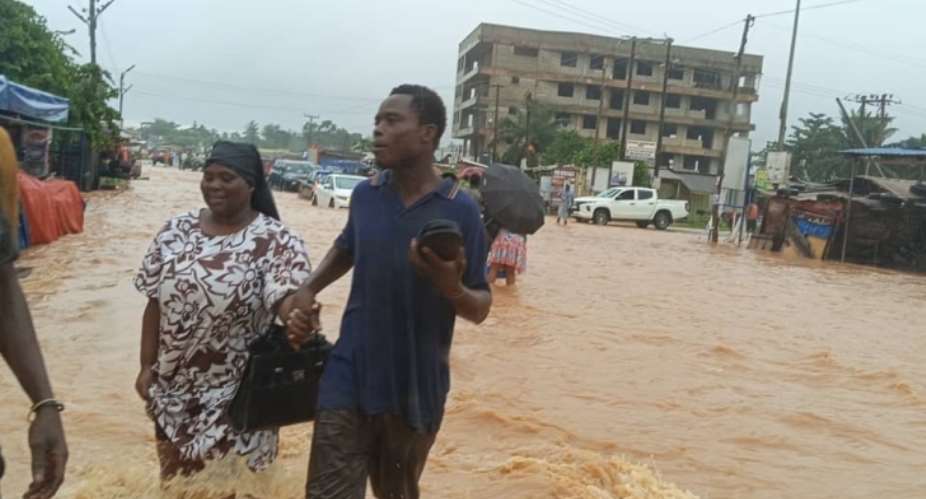
Once again, the skies have opened over Accra, and once again, our capital is under siege. As the floodwaters rise, submerging roads from the N1 highway to Kaneshie and breaching the doorsteps of our homes, the familiar, weary ritual of finger-pointing begins. We are told to blame the shifting climate, the unpredictability of nature, or an unprecedented act of God.
But as custodians of our heritage and leaders of our people, we must confront the uncomfortable truth: the rains are not abnormal. The volumes we are witnessing are within the historical rhythms of our ecosystem. The heavens have not failed us; we have failed ourselves. The disaster unfolding in our streets is entirely human-induced, born out of a collapse of institutional integrity, a betrayal of traditional stool mandates, and a profound decay of our civic culture.
To state this is not to be blind to global realities. We acknowledge that climate change is an undeniable factor shaping our modern world, bringing with it more erratic patterns and unpredictable weather systems across the West African sub-region. However, global shifts cannot be used as an alibi for domestic lawlessness. In an era where the climate is changing, our urban planning and human actions should be engineered to mitigate these vulnerabilities, not aggravate them. Instead of building resilience, we are actively stripping away our city's natural defenses, turning what should be a manageable wet season into a recurring, self-inflicted catastrophe.
The crisis begins at the very root of our traditional leadership. Across the Greater Accra Region, critical Ramseyer sites, ecologically vital wetlands, and natural watersheds are being systematically carved up and sold off. This destruction is being aided and abetted by unscrupulous traditional leaders—men who have forgotten that their stools are not commercial real estate agencies, but sacred trusts.
In Ga tradition, our relationship with nature is deeply spiritual. Our ancestors recognized the rivers, the lagoons, and the watersheds as living entities, establishing them as sacred preserves to serve as natural buffers against the elements. To protect the environment was to honor those who came before us and safeguard those who will follow.
When a traditional leader treats a critical ecological buffer as a plot of land to be sold to the highest bidder for concrete development, they do not just choke a waterway; they sever our connection to our ancestry. They trade our people’s physical and cultural safety for short-term material gain. This is a betrayal of the highest order. We cannot demand respect for traditional authorities when some within our folds are active participants in the destruction of our future.
This unchecked encroachment occurs under the ostensibly watchful eye of the Environmental Protection Agency (EPA). While we acknowledge recent gestures toward waste management, the EPA's overall approach to urban flood prevention remains dangerously lackluster and reactive rather than proactive.
Structures do not spring up in our wetlands overnight. They are built over months, often in full view of regulatory authorities. We must openly question the parameters under which environmental permits are granted within known drainage basins and floodplains. Why are buffer zones allowed to be filled with gravel and concrete while the state regulator waits until the damage is done to issue warnings?
The EPA must transition from an agency that merely assesses environmental impact after the fact to an aggressive enforcer of the law. A regulatory body that lacks the teeth—or the political will—to halt illegal intrusions into our water courses is complicit in the disasters that follow.
Yet, the blame does not rest solely on the shoulders of chiefs and state officials. A city is ultimately a reflection of its citizenry, and on this front, we are failing to be the custodians our environment desperately needs.
Over the generations, our once-robust environmental protection culture has eroded. We have replaced the ancestral reverence for clean surroundings with a toxic culture of convenience and indifference. Our primary and secondary drainage channels have been transformed into open dump sites. Plastic waste and domestic refuse are routinely swept into gutters during minor downpours, ensuring that when the heavy rains inevitably arrive, the water has nowhere to go.
We complain about the water in our living rooms, yet we continue to clog the very arteries meant to carry it away. We must resurrect the understanding that citizenship carries a duty of stewardship. Governments can build all the concrete drains they want, but if the populace treats them as trash bins, the capital will remain underwater.
Accra cannot survive another decade of this systemic negligence. The solution will not be found in post flood relief packages, emergency evacuations, or solemn speeches. It requires an immediate, radical restoration of order.
- To my fellow traditional leaders: We must return to our foundational calling as protectors of the land. We must police our boundaries, protect our remaining watersheds, and flatly refuse to alienate lands that belong to the future.
- To the EPA and municipal authorities: Stop granting questionable concessions. Enforce the Land Use and Spatial Planning laws without fear or favor, and demolish structures blocking natural water paths before they cause the loss of more lives.
- To the citizenry: We must reclaim our civic discipline. Dispose of waste responsibly and hold your local leaders accountable.
The city has changed for the worse, but it is within our power to correct its course. Let us honor our ancestors not with empty rhetoric, but by protecting the earth they left in our care.
By HRM Notse Nii Nortey Owuo IV, President - Osu Stool Council

 WASSCE: School officials helped students cheat for years, but we now see the tru...
 Probe alleged military killing of lecturer in Bawku – Kusaug Youth demands
 ‘If we all pay GH¢1,000 each, we should be able to construct National Cathedral’...
 Mahama inspects proposed site for Upper West Regional Airport
 Mahama reiterates government's commitment to end double-track SHS system
 Police interdict officer over death of 23-year-old Ivan Baidoo on Tema Motorway
 NDC gov't ‘scored own goals’ with new SHS placement policy — Dr. Bempah Tandoh
 Five-year presidency will give governments more time to deliver — Kofi Bentil
 Improved invigilation is exposing true performance of Ghanaian students — Mahama...
 There's no policy to introduce Arabic, Chinese in all public schools — Mahama


