




Climate change is no longer some future event it is a reality today that is impacting lives around the world. There are two extreme examples of this crisis the escalating extreme temperatures in Europe and the devastating flooding across West Africa, including Ghana. Both these disasters are part of the same process of global warming, but are very different in their pathways of vulnerability, exposure and adaptation capacity. Europe's heat waves show the health and economic impacts of warming Europe, and Ghana's floods brings home how fragile progress in development is in high-risk climate environments. Overall, these cases illustrate that climate change can exacerbate social, economic and physical vulnerabilities, but does not impact every society in the same way.
Extremes Heat in Europe: Heat waves in Europe are becoming more frequent, intense and deadly and are the fastest warming region in the world. On the 27th of June, 2026 Bbc & Aljazeera New reported, the high level of heat in Europe was recorded: Germany – 41.5C, Denmark – unprecedented high heat waves, and over 150 million people are now experiencing temperatures above 35C across Europe. The World Health Organization (WHO) states that such extreme weather events can present significant health risks, especially for outdoor workers, children, and the elderly, as well as those who have chronic health issues. Attribution studies show that these heat waves are much hotter than they would be without human-induced climate change.
The effects are not just health-related, but also lower labour productivity and increased electricity demand, lower quality roads, bridges and other transport infrastructure, and wildfire risk, urban heat island effects, where concrete and asphalt hold and increase heat, or damage to the transport sector. Whilst some European countries have more robust public health systems, there are still inequalities between people with access to cooling and those who do not have access to cooling and between those who are protected and those who are not protected by heat.
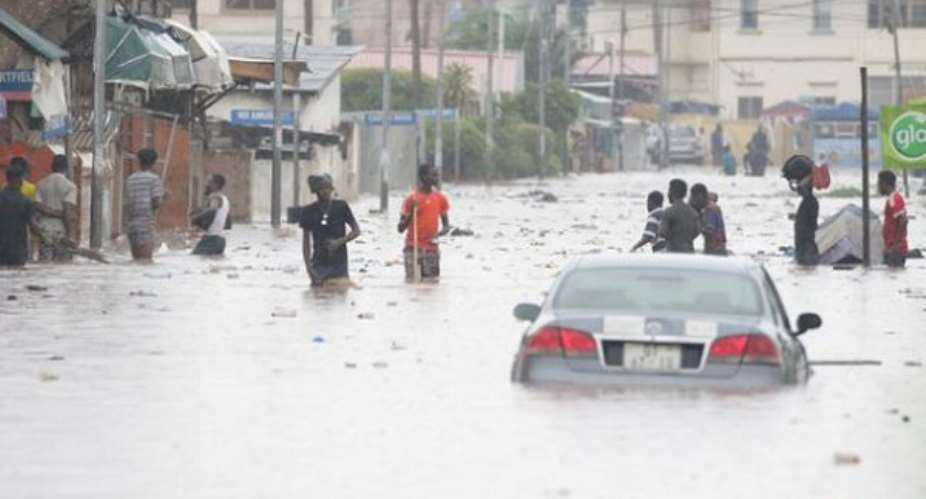
Flooding in Ghana: A crisis of Vulnerability: “It's time to wake up and smell the coffee”, and climate change is becoming more and more linked to devastating floods causing families to be displaced, farms destroyed and livelihoods disrupted. The flooding in June 2026 in the Central Region and Volta Region in Ghana is especially devastating.
Central Region: 18 Deaths & Widespread Destruction: Across the Central Region, the torrential rain caused flooding, building collapse, mudslides, and drowning that claimed the lives of at least 18 people and impacted nearly 9,000 people in 13 metropolitan, municipal and district assemblies (Yennew, 2026). NADMO reported 58 building collapses resulting in the displacement of 377 internally. The Cape Coast Metropolis was hit the hardest with six fatalities, five caused by building collapse and one by drowning. Central Regional Director of NAMDO, Emmanuel Kwesi Dawood, said: "Our contingency stocks have been seriously depleted and we are in urgent need of support" (Graphiconline, 2026).
Volta Region: Farmlands Devastated & Livelihood Collapse: Citynewsroom.com June 2026 reports that the Volta Region was left with almost all farming communities flooded, contributing to further poverty and loss of livelihoods. Farmers' saving and labour for planting was lost under the rising tide in Anloga District. Farmer Obed Deladem Fomevor warned: "We have invested heavily in seedlings and fertilizers, but as you can see, our inputs for the current season are going away, and we are now losing everything”.(Citynewsroom.com, June, 2026) Floods in Ketu North Municipality inundated 97% of 1,800 hectares of rice fields under the Weta Irrigation Scheme, impacting more than 2,500 rice farmers and losses are estimated at GH¢59.9 million. The MP for Ketu North confirmed the deaths and destruction of properties as well as the inundation of farmlands. Now, farmers who borrowed money at the very high rate of interest (up to 30%) are facing financial disaster.
Assam, India. Floods & Landslides in the Himalayas: The climate crisis is not a West Africa and Europe thing. In Assam, severe flooding with the villages in Dhemaji district devastated by the flood waters in June 2026 has been reported by the Assam State Disaster Management Authority (ASDMA) that has stated that almost 16,000 people in 69 villages of Dhemaji district were affected by the flood. Rail operations halted as floods damaged a railway bridge, and there is extensive erosion damage to infrastructure. This is an example of the way in which weak planning systems can turn a weather hazard into a development challenge in the event of climate change, especially in mountainous and flood-prone areas.
Comparative Analysis: Two Crises, One Driver: While heat waves in Europe and floods in Ghana manifest themselves in different ways, both are driven by climate change in the form of a warming planet. Although both are known to intensify extreme events, geographical, infrastructure and institutional capacity differences mean that human outcomes differ. Heat waves in Europe are mainly responsible for causing acute mortality, stress energy systems and for productivity losses. The major impacts of flooding in Ghana are displacement, loss of crops and damage of infrastructure. Ghana is particularly vulnerable to floods among smallholder farmers and people living in informal settlements. In general, it is easier for Europe to finance and technically implement adaptations. Ghana has limited resources, slow recovery and frequent crises that negatively affect its adaptation capacity. While European early-warning systems and resilient infrastructure are better, the city and vulnerable groups are still at risk from heat. In contrast, Ghana is often forced to react with limited resources and thus is slower in adapting and more costly in its recovery. The study, published in Geophysical Research Letters, confirms that the rate of flood deaths has decreased by 40% in Asia, as a result of improved infrastructure and early-warning systems; but the rate of fatal flooding is increasing in Africa, due to rapid population growth and increased populations in places that are vulnerable to flooding.
Conclusion: A call for Justice and Action: The European heat wave, the flooding in Ghana and landslides in Assam are examples of how climate change is impacting human lives in various places but equally perilous ways. The message from this lesson is clear; climate change is not a threat of the future, but rather a reality which requires immediate mitigation, increased adaptation and equitable global climate response. In Ghana its time our “Government face the music”, by wearing citizen glasses and political lenses off. The priority should be to integrate flood management, better drainage, land-use monitoring, climate smart agriculture and community preparedness as a response to disaster. This is not the time for mere rhetoric but actions without delayed. The need for Government to urgently get the Keta Lagoon dredged and rehabilitate the Weta Irrigation Scheme must be taken up with immediate action. More Urban action plans/ urban design and demolishing of unauthorized structures and public health preparedness for heat are critical in Europe and Ghana, West Africa.
The NPJ Natural Hazards study concludes: "There is a huge exposure difference between the developed and developing world, which is influenced by climate and population change. The challenge of confronting these disparities is not only an environmental one, it is a justice and development and a responsibility of all human beings.
Abdul Kadir Adam
Research Fellow
Dibrugarh University - Assam, India
 Mahama announces national security council meeting to tackle flooding
 Flood crisis: 'Identify every blockage in your Assembly for removal' — Mahama o...
 Mahama directs immediate release of GH¢300 million for flood relief, mitigation ...
 Stop redirecting blame to citizens and address flooding crisis — NPP tells Maham...
 Cedi ends June 2026 selling at GHS12.30 on forex market, GHS11.34 on BoG interba...
 ‘Guard Lake Bosomtwe with special task force like River Nile in Egypt’ – KsTU le...
 Dr Osei Adutwum condemns alleged illegal mining around Lake Bosomtwe
 KNUST Planning lecturer urges Bosomtwe residents to lead fight against illegal m...
 Akufo-Addo-Bawumia govt did not ignore Accra flooding crisis — Ahiagbah
 Police arrest four suspected drug peddlers, recover firearm and narcotics in Ash...
