




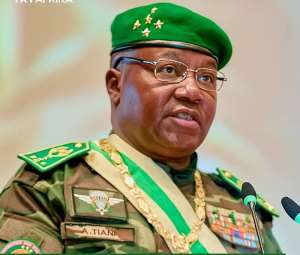
Three years ago, the men who seized power in Niamey made a promise. They would restore Niger's dignity, reclaim its sovereignty, and deliver what elected governments had failed to provide: security. The coup of July 26, 2023 that overthrew President Mohamed Bazoum was justified to the Nigerien public and to a watching West African audience on precisely those terms. The French were complicit in Niger's insecurity. Western partners were incompetent or indifferent. A sovereign Niger, free from colonial entanglements and aligned with Russia, would fight back and win.
That promise now lies in the dust of Tillabéri's killing fields, shattered by the most devastating wave of jihadist violence Niger has ever seen.
In a 48-hour window spanning June 17 and 18, 2026, Niger's armed forces absorbed blows so severe that even the junta's most committed apologists have struggled to minimize them. Military bases at Inatès and Banibangou two forward operating positions that represent the last line of defence against jihadist penetration from the Mali-Niger border were simultaneously overrun.
The following morning, the capital itself was struck again, for the second time in five months, when attackers in taxis and trucks attempted to breach the perimeter of Diori Hamani International Airport. In a single day and a half, ISSP and JNIM rival jihadist groups had between them attacked Niger's most strategic military outposts and its most symbolic civilian infrastructure. The twin assaults amounted to a public and humiliating demonstration that three years of junta rule, Russian military partnership, and Sahel alliance-building had not made Niger one iota safer.
Inatès and Banibangou: A Day That Rewrote History
The name Inatès carries a particular weight in Niger's military memory. On December 10, 2019, a large group of fighters belonging to ISSP attacked a military post in Inatès, killing over seventy soldiers and kidnapping others the deadliest single incident Niger's military had ever experienced. On June 17, 2026, history repeated itself with even more brutal force. ISSP conducted simultaneous, complex attacks on Nigerien military bases in Inatès and Banibangou, near the Mali-Niger border, in the Tillabéri region, overrunning and looting both bases.
The death toll is contested a reflection both of the chaos on the ground and of the junta's deeply ingrained reflex to suppress military casualty figures. ISSP militants killed at least 51 soldiers at Inatès and 34 soldiers at Banibangou according to various Nigerien and international sources. ISSP's own statement claimed to have killed at least 10 troops in Banibangou and 70 troops in Inatès, while pro-Nigerien opposition sources claimed the deaths at Inatès and Banibangou reached 101 and 107 soldiers respectively.Field-based estimates, compiled from security sources and local accounts, place the total losses across all three theatres of June 17-18 at nearly 200 dead and missing against a Nigerien government official figure of 13 to 15. The stark gulf between official and field figures has become so routine in Niger's security reporting that it is itself an indictment of the junta's information management strategy.
What cannot be disputed is the scale of the material loss. ISSP claimed to have destroyed 22 vehicles, seized 24 vehicles and various weapons, and torched both bases.Field reports indicate that the facility at Inatès was subsequently destroyed and the base at Banibangou overrun, with the city burned and looted before attackers withdrew towards Mali. Soldiers who survived did so by fleeing into the desert, with some dying there from exposure and dehydration. The attackers at Banibangou arrived in a column of eight vehicles and more than 200 motorcycles a military formation of extraordinary confidence and capability, moving openly across Nigerien territory in broad daylight.
The structural failures the attacks exposed are as significant as the casualty figures. Survivors and local sources described insufficient air support, slow or absent reinforcements, and a deepening sense of abandonment among troops deployed at the front. On June 24, soldiers in the 13th Combined Arms Battalion of Filingué refused to go on a relief mission to Banibangou without first obtaining more resources and air support an act of open insubordination that speaks to the demoralization permeating Niger's armed forces. An army that refuses to reinforce its own besieged comrades is an army in serious institutional crisis.
The Airport: Two Attacks, Two Rivals, One Verdict
The June 18 attack on Diori Hamani International Airport in Niamey was the second assault on the complex in five months, and carried a significance that transcended the casualty count. The attack killed 11 soldiers and two civilians, with 22 attackers also killed and about 20 suspects apprehended. But the meaning of the attack is not reducible to those numbers.
Plainclothes JNIM commandos, including suicide bombers, attempted to infiltrate Diori Hamani airport aboard taxis and trucks early in the morning of June 18. JNIM claimed the attack killed 17 Nigerien soldiers and destroyed two military aircraft, while the Nigerien defence ministry claimed security forces killed 22 insurgents and arrested 20 others. The airport is five miles from Niger's Presidential Palace and contains Air Base 101, which hosts Russia's Africa Corps soldiers. That the attack penetrated to the outer perimeter of this compound arriving by taxi, in plain clothes, using the city's ordinary civilian infrastructure as cover represents a fundamental intelligence and counter-terrorism failure.
Critically, the January and June airport attacks were carried out by rival jihadist organisations ISSP and JNIM respectively. JNIM in Niger is trying to mark its territory. "This is a message to the government but also to IS," analysts noted. The outbidding dynamic between the two groups each seeking to escalate the rate, scale, and target importance of their attacks to attract recruits, resources, and public legitimacy is likely at least a partial motivating factor in these major attacks. ISSP's June attacks came less than two months after JNIM's largest offensive in the Sahel in over a decade in late April, when it attacked security forces across Mali, killed the Malian defence minister, and captured Mali's northernmost regional capital, Kidal.
For Niger, this competitive dynamic is a strategic nightmare. A single jihadist organization can be studied, mapped, and in theory defeated. Two rival organizations racing to outdo each other in the scale and symbolism of their strikes against the Nigerien state is a fundamentally different problem, one that degrades rather than concentrates the state's defensive resources and intelligence capacity simultaneously.
Russia's Hollow Promise
The junta's strategic wager was built on a simple proposition: expel Western partners, embrace Russia, and let Africa Corps the successor to the Wagner Group deliver the security that the French, Americans, and international community had failed to provide. Three years on, that proposition has been falsified in the most brutal possible terms.
Russian mercenaries have waged a scorched-earth counterinsurgency campaign in the Sahel that has only served to exacerbate the terrorism problem, pushing new recruits into the arms of jihadist groups linked to al-Qaeda and the Islamic State. In Niger specifically, the Africa Corps presence amounts to roughly 100 soldiers a number wholly inadequate to the scale of the security challenge across a territory the size of France and Spain combined. Niger now ranks fifth in the 2025 Global Terrorism Index, just one spot behind Mali, which hosts approximately 2,500 Russian personnel. The correlation between Russian presence and improved security is, to put it diplomatically, non-existent.
The intelligence dimension of the Russia partnership has been equally catastrophic. Niger's military regime terminated its intelligence cooperation agreements with Russia and Turkey after the DGDSE assessed that both the equipment and operatives deployed by the two countries failed to meet operational standards, particularly their failure to effectively intercept telephone and digital communications capabilities once central to Niger's counterterrorism strategy.
In a bid to fill the gap, Niamey contracted a Moroccan cyber-espionage firm, which then subcontracted technology from a French company making the entire arrangement politically untenable given the junta's anti-France posture. The system was dismantled, leaving Niger effectively without functioning surveillance infrastructure during the very period when jihadist groups were perfecting the coordination that enabled the June attacks.
The Africa Corps is proving to be a significant and unexpected downgrade. Moscow has bequeathed its Sahelian partners a force that has failed to carry on Wagner's operational effectiveness while fully inheriting its appetite for atrocity. The juntas of the Alliance of Sahel States were sold on a Russian security guarantee that Russia cannot deliver and the soldiers dying at Inatès and Banibangou are paying the price of that miscalculation.
The Turkey Opening: Too Little, Too Late?
Faced with an impasse of its own making, Niger's junta is now tentatively pivoting toward Ankara. Several Nigerien soldiers are currently participating in commando training courses in Türkiye, suggesting a growing defence relationship with a country that has established significant military-industrial credibility in the Sahel through Bayraktar TB2 drone sales and Special Forces cooperation programmes. Türkiye offers what Russia manifestly cannot: precision air strike capability, targeted surveillance systems, and a training doctrine built on actual operational experience in counterinsurgency environments.
But the Ankara opening is not without its own contradictions. Niger previously terminated intelligence cooperation with Turkey alongside Russia, citing the same failures of surveillance capability. And Türkiye's engagement in the Sahel however sophisticated relative to Moscow's is calibrated to its own strategic interests rather than Niger's security needs. A Bayraktar drone requires maintenance infrastructure, trained operators, and functioning intelligence to target effectively. None of those conditions currently obtain in Niger.
The deeper problem is structural. No external partnership Russian, Turkish, or otherwise can substitute for what Niger fundamentally lacks: a sufficiently resourced, adequately trained, and politically motivated national army capable of contesting jihadist control of territory in Tillabéri and Tahoua. ISSP has exploited the withdrawal of Western partner forces from Mali and Niger between 2022 and 2024 to strengthen its support zones and isolate security forces along the Mali-Niger border. Reversing that exploitation requires precisely the kind of sustained, intelligence-driven, community-integrated counterinsurgency that both Russia and the junta have shown themselves incapable of conducting.
The Capital at the Crosshairs
The most haunting dimension of June's events is geographic. Inatès is 135 kilometres from Niamey. Banibangou is 250 kilometres away. The airport is five miles from the Presidential Palace. The airport attack points to the parallel expansion of JNIM and ISSP, whose longstanding rivalry and competition for regional dominance are driving increasingly frequent high-impact attacks against strategic and symbolic targets, according to ACLED.
The pattern is one of deliberate, systematic southward expansion. ISSP's attacks on Nigerien air bases are likely part of a sustained campaign to degrade Nigerien air capabilities. Both the January and June 2026 airport attacks targeted the same complex, which hosts Air Base 101, most of Niger's military drones and aircraft, and the headquarters of the AES joint military force. A jihadist movement that succeeds in degrading or destroying Niger's air assets removes the one military capability that might interdict its column movements across open desert terrain. The endgame of that strategy is not difficult to imagine.
Niger is a country of extraordinary strategic importance. It borders Mali and Burkina Faso to the west where JNIM is strongest. It borders Nigeria and Chad to the south and east where ISWAP operates. To the north, it stretches into the Sahara toward Libya and Algeria. It hosts Africa's largest uranium reserves. It sits astride migration routes critical to Europe's border security calculations. And at its heart, Niamey is increasingly within jihadist striking distance. Growing concern exists that ISSP and ISWAP are attempting to use the Niger-Nigeria border as a bridge between the two groups, connecting two of Africa's most powerful and violent extremist organizations across a wide swath of territory.
What Must Change
The junta's information architecture built on suppressed casualty figures, conspiracy theories about French sponsorship, and triumphalist social media communiqués is itself a security liability. A government that cannot honestly assess its own military failures cannot learn from them. A public that is told 13 soldiers died when 200 may have perished cannot demand the accountability that might produce better outcomes.
The regional dimension demands acknowledgment as well. Niger's withdrawal from ECOWAS, its rupture with France and the United States, and its embrace of Russia have left it without the security partnerships that might have provided the intelligence, air assets, and trained manpower to contest ISSP and JNIM's expanding presence. The ideological satisfaction of expelling former colonial partners has come at an incalculable operational cost.
Three years ago, General Tiani's junta told Niger's people that sovereignty and security were one and the same that a truly independent Niger would be a safer Niger. June 17 and 18, 2026 delivered the definitive verdict on that claim. The soldiers who died at Inatès, at Banibangou, and at the gates of Niamey's airport did not die because Niger lacked sovereignty. They died because their government chose ideology over competence, continental posturing over practical security, and the politics of anti-colonialism over the unglamorous work of building an army capable of defending its people.
Niger deserves better. Its people living under jihadist siege, displacement, and humanitarian crisis deserve a government that faces that truth honestly, wherever the politics of honesty may lead.
Mustapha Bature Sallama.
Medical/ Science Communicator,
Private Investigator, Criminal investigation and Intelligence Analysis.
International Conflict Management and Peace Building.USIP
[email protected]
+233-555-275-880
References
Critical Threats / AEI (June 25, 2026). Al Qaeda and IS Run Rampant in Niger: Africa File. criticalthreats.org
Al Jazeera (June 18, 2026). Niger Says Soldiers, Civilians Killed in Armed Attack on Niamey Airport. aljazeera.com
PBS NewsHour (June 18, 2026). Attack on Niger's Airport Highlights Expansion of Jihadis into Africa's Sahel Region. pbs.org
Sundiata Post (June 2026). Niger Republic Crisis: 199 Security Operatives Reported Killed as Terrorists Launch Coordinated Attacks on Banibangou, Inatès, and Niamey. sundiatapost.com
Wikipedia (updated June 2026). June 2026 Diori Hamani International Airport Attack. en.wikipedia.org
Wikipedia (updated June 2026). January 2026 Diori Hamani International Airport Attack. en.wikipedia.org
Wikipedia (updated June 2026). Islamist Insurgency in Niger. en.wikipedia.org
Wikipedia (updated 2026). 2025 Banibangou Attack. en.wikipedia.org
The Jerusalem Post (June 19, 2026). Al Qaeda Affiliates Claim Responsibility for Niger Airport Attack. jpost.com
The Soufan Center (February 3, 2026). ISSP Claims Responsibility for Attack on Airport in Niamey, Niger. thesoufancenter.org
BISI Bloomsbury Intelligence and Security Institute (February 16, 2026). ISSP Claims Responsibility for Attack on Airport in Niamey, Niger. bisi.org.uk
Critical Threats / AEI (March 12, 2026). Africa File: ISSP Attacks Tahoua Air Base. criticalthreats.org
African Security Analysis. Niger Ends Intelligence Ties with Russia and Turkey Amid Security Failures and Strategic Realignment. africansecurityanalysis.org
Zagazola Makama (May 4, 2025). Niger Ends Intelligence Cooperation with Russia,
Turkey, and Morocco Amid Surveillance Crisis. zagazola.org
Military Africa (May 7, 2025). Niger Terminates Intelligence Cooperation with Russia. military.africa
Carnegie Endowment for International Peace (February 26, 2026). Russia in Africa: Examining Moscow's Influence and Its Limits. carnegieendowment.org
The Spectator (May 6, 2026). Russia Is Losing Its Grip on Africa. spectator.com
Small Wars Journal / Arizona State University (January 1, 2026. The Waiting Game: Signposts of Russia's Coming Failure in Africa. smallwarsjournal.com
Congress.gov / Library of Congress (April 8, 2026). Russia's Security Operations in Africa. Congress.gov
CFR Global Conflict Tracker (2026). Violent Extremism in the Sahel. cfr.org


 'Stop excessive financial demands before sharing information with us' — Interior...
 EC will serve national interest, not partisan politics – Deputy Chair Dr Kwaku A...
 I expect no preferential treatment from EC for myself as President, my party or ...
 Afenyo-Markin meets management, proposes reforms to turnaround struggling ECG
 ECG management commends Afenyo-Markin for reforms during short stay as Board Cha...
 Mahama tasks new EC deputy chairpersons to uphold impartiality
 Attorney-General urges court to reject Adu-Boahene’s no-case submission
 Nyaho Medical Centre ordered to report to CID over expired data protection certi...
 Mahama swears in new Electoral Commission deputy commissioners
 PTAAM-Africa calls for government probe into alleged World Cup visa fraud


