




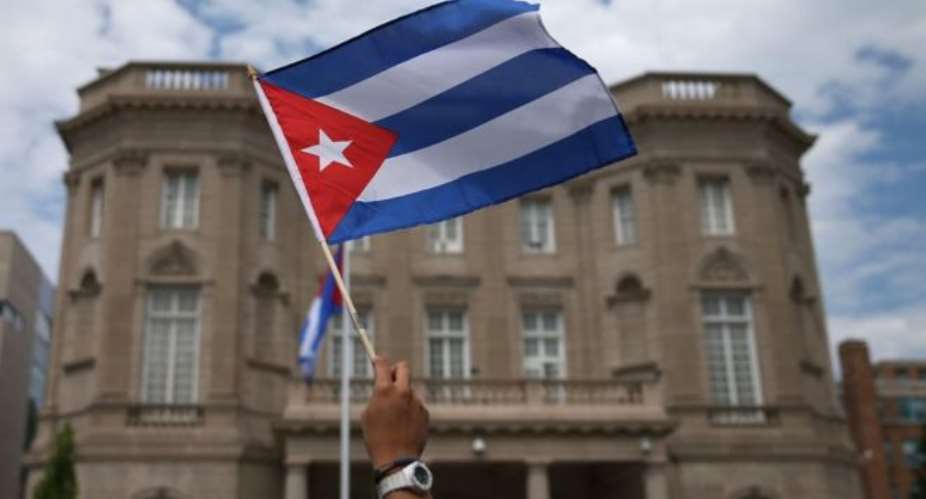
For more than six decades, Cuba has stood as one of the world's most resilient nations. Despite facing one of the longest and most comprehensive economic blockades in modern history, the island has refused to abandon its sovereign right to determine its own political and economic path. While many expected the Cuban Revolution to collapse under relentless external pressure, it has instead demonstrated remarkable endurance through constant adaptation.
Today, Cuba is once again proving that socialism is not a rigid doctrine frozen in time. It is a living system capable of learning, adjusting and responding to new realities. The Cuban government's decision to introduce more than 175 economic measures, including transforming state-owned enterprises into commercially oriented businesses, expanding opportunities for private property ownership, allowing private real estate transactions and permitting the sale of certain state assets to both domestic and foreign investors, should not be misunderstood as a retreat from socialism. Rather, these reforms represent socialism's determination to survive, modernise, and continue serving the Cuban people under exceptionally difficult circumstances.
Critics, particularly in Western capitals, are already celebrating these reforms as proof that socialism has failed. Such conclusions are politically convenient but intellectually dishonest. They ignore the extraordinary conditions under which Cuba has been forced to operate for over sixty years.
No serious analysis of Cuba's economy can begin without acknowledging the enormous impact of the United States' economic embargo. Successive American administrations have imposed restrictions that have severely limited Cuba's access to international finance, technology, trade, investment and even essential medical supplies. These measures have increased production costs, discouraged foreign investment and complicated almost every aspect of economic planning.
Despite these obstacles, Cuba has continued to provide universal healthcare, free education, extensive vaccination programmes and social protection that many wealthier developing countries still struggle to achieve. These accomplishments were not accidents. They were products of a political system that consistently placed human development above private profit.
However, no revolutionary government can ignore changing economic realities. The COVID-19 pandemic devastated Cuba's tourism industry, global inflation increased import costs, supply chains became more fragile, and international financial pressures intensified. Under such circumstances, responsible leadership requires innovation rather than ideological rigidity.
This is precisely what the current reforms seek to achieve. Transforming state-owned enterprises into commercially managed entities introduces greater efficiency, accountability and productivity while preserving public ownership in strategic sectors. Allowing greater space for private entrepreneurship recognises that small businesses can complement—not replace—the socialist economy. Encouraging investment, including carefully regulated foreign investment, provides access to capital, technology and expertise that can strengthen national production rather than weaken sovereignty.
History shows that successful socialist countries have never remained economically static. They have continuously experimented with new policies while maintaining political independence and national control over strategic sectors. Economic flexibility does not necessarily mean ideological surrender. It can instead reflect confidence in socialism's ability to evolve.
Those predicting the end of Cuban socialism misunderstand both Cuba and socialism itself. Socialism has never meant rejecting markets altogether. It has meant ensuring that markets serve society rather than society serving markets. There is an important difference.
The Cuban model continues to insist that healthcare, education, scientific research and social welfare remain public priorities. These principles distinguish socialist reform from neoliberal restructuring. Unlike the structural adjustment programmes imposed on many developing countries during the 1980s and 1990s, Cuba's reforms are not being dictated by international financial institutions demanding wholesale privatisation, deep austerity or the dismantling of the social state.
Instead, Cuba is attempting something far more difficult: increasing economic dynamism while preserving social justice. For countries across Africa, Cuba's experience offers valuable lessons. African nations understand what it means to confront external economic pressure, unequal international markets and attempts to influence domestic policy through financial leverage. Cuba demonstrates that national sovereignty requires not only political independence but also economic resilience.
This resilience demands pragmatism. Revolutionary governments cannot govern according to slogans alone. They must respond to changing domestic and global conditions while remaining faithful to their fundamental mission of improving people's lives.
It is therefore mistaken to interpret Cuba's reforms as an abandonment of the Revolution. Rather, they represent the Revolution's determination to secure its future. A political system unwilling to reform risks becoming disconnected from reality. A system capable of self-correction demonstrates institutional maturity.
The true measure of these reforms will not be whether they satisfy foreign commentators or ideological opponents. It will be whether they generate employment, increase productivity, improve living standards, strengthen food security and preserve Cuba's remarkable achievements in education, healthcare and social equality.
The Cuban Revolution has survived military threats, covert operations, diplomatic isolation, economic sanctions and repeated predictions of imminent collapse. Its latest reforms should be understood within this long history of adaptation under pressure.
Far from signalling defeat, Cuba's economic adjustments illustrate a nation refusing to surrender. They embody a socialism that is confident enough to reform itself without relinquishing its commitment to sovereignty, social justice and national dignity.
In an international order increasingly marked by economic coercion and geopolitical rivalry, Cuba reminds the Global South that resilience often requires creativity. Reform, when driven by national interests rather than external dictates, can strengthen rather than weaken a revolutionary project.
Cuba is not abandoning socialism. It is renewing it for a new generation. And in doing so, it continues to offer an important lesson to developing nations: survival is not achieved by standing still, but by moving forward without forgetting the principles that define who you are.


 EOCO has done nothing on cocaine trade despite its mandate – Kofi Tonto
 Gov't to launch new legal frameworks to strengthen social protection, gender equ...
 NPP Vetting Committee got it wrong by clearing Kojo Bamba to contest Vice Chair ...
 'I'm shocked NPP elected an ex-convict as 1st Vice Chairman' – Akwatia MP on Koj...
 East Legon: 'Why do you allow containers everywhere in such an expensive area?' ...
 I gave each NPP delegate GH¢400 for transport - Nana Akomea
 Investors favour 364-day treasury bill as bids hit GH¢474m
 Police probe three children found dead in abandoned vehicle boot at Tamale zoo


