




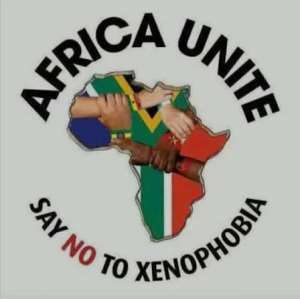
“Umuntu ngumuntu ngabantu” – an old African philosophy that can be literally translated as “I am what I am because of who we all are, and who we all are makes me who I am.” Embedded in the spirit of Ubuntu, this deeply meaningful statement carries within itself the principles of humanity, respect, responsibility, and a common destiny that have been part of African cultures for ages.
It is indeed the spirit of Ubuntu and Pan-Africanism that united all the countries in the continent in the struggle against decolonization, racism, and apartheid in South Africa. The resources, diplomatic power, economic advantage, and, in certain cases, even lives of the people in Lagos, Lusaka, Dar es Salaam, Maputo, and elsewhere were put into the struggle for the liberation of South Africa from one of the most barbarous forms of institutionalized racism.
However, today, that beautiful principle is put to the test once again. South Africa, the nation which has been rescued and secured through the collective effort of Africa, is now facing the dangerous acts of xenophobia committed against her own brothers and sisters in Africa. The citizens of Nigeria, Ghana, Zimbabwe, Mozambique, Malawi, Kenya, Somalia, Ethiopia, and Democratic Republic of Congo have been intimidated, expelled, and even killed, among other violent acts committed against them. The effects of such a disaster, however, are not confined to those people affected. It erodes the moral foundation of post-apartheid society and challenges the very principles that underpinned the struggle for freedom. As Africa works towards increasing integration through projects like the African Continental Free Trade Area (AfCFTA), xenophobia runs counter to the spirit of solidarity and collaboration that is needed on the continent for its growth.
In this piece, we shall consider the debt of gratitude that the post-apartheid South Africa owes to the African nations that rallied in support of the country during their liberation struggle, with special focus on Nigeria’s significant contributions. We shall consider the phenomenon of xenophobia in contemporary South Africa, its diplomatic and economic ramifications for Africa and the challenges faced by Pretoria as well as the continent at large.
The following ancient Nguni proverb, which is the essence of the philosophy of Ubuntu, captures the essence of human beings in Africa: No man lives by himself, and we are who we are because of one another. This belief has been the cornerstone of African communities for generations and has been the driving force behind anti-colonial struggles and liberation movements on the continent.
It is precisely this holy alliance that the current spate of xenophobia in South Africa violates so shamefully.
The repeated acts of xenophobic attacks on fellow Africans living in South Africa are perhaps one of the most poignant contradictions of the post-apartheid era. Despite three decades of the establishment of a democratic "Rainbow Nation," migrants from all corners of the continent remain subject to attacks, harassment, forced relocations, plundering, and killings. They are the same individuals who sought refuge in a land whose freedom and independence were secured through the unity of the African continent.
It is not merely the fact of xenophobia that is ironic. It is the fact that these acts take place in a country whose freedom was brought into being by its fellow Africans.
A Troubling Pattern
It is not something new.
People all over the world had been shocked at the outbreak of nation-wide xenophobic attacks in 2008, when more than 60 people were killed and around 5,000 others became displaced. There have been cases of xenophobic attacks in 2015, 2019, and 2021-2022, where foreigners who migrated from nations like Nigeria, Zimbabwe, Mozambique, Malawi, Somalia, Ethiopia, Ghana, and the Democratic Republic of Congo have become a victim of such attacks.
But the situation prevailing nowadays and escalating from April 2026 is quite critical now. Vigilante organizations like "March and March" and "Operation Dudula" are leading demonstrations in big cities like Johannesburg, Pretoria, and Durban. These organizations are campaigning door-to-door to drive the foreign undocumented nationals out of the country before 30 June 2026.
This has proved to be extremely detrimental to humanity. Mozambique has stated that seven of its citizens died after being attacked in Mossel Bay. Hundreds of foreigners have been displaced with many having to find refuge in community centers or police stations while others spend their nights in the bushes or hills. Hundreds of citizens of Ghana have been brought back to their country by plane while Nigeria, Malawi, Kenya, and Lesotho have organized evacuations or issued travel warnings.
Human Rights Watch has reported that vigilantes have beaten suspected migrants, targeted businesses owned by foreigners and severely beaten a shop owner from Cameroon who has been living in Durban for almost twenty years. This rights group has expressed fears of a new round of xenophobic violence "with little or insufficient apparent response from the police and other authorities" to these attacks.
Although economic frustrations—unemployment above 43 percent—are often highlighted as the reason for the violence, this should not serve as a justification in any way. There is no economic problem that allows killing innocent people based on their nationality.
Language of blame towards the migrants is especially disturbing since it neglects one historical fact about the situation: whenever South Africans needed Africa, it responded.
Africa Stood with South Africa
Throughout the apartheid era, African nations made enormous sacrifices to support the struggle against racial oppression.
All the countries of the continent offered asylum to the leaders of the African National Congress (ANC) and other such organizations. Zambia emerged as an important center for the fighters against apartheid. Tanzania offered military training facilities. Angola, Mozambique, Zimbabwe, Botswana and many such countries suffered from military and economic burdens because of the support they offered to South Africa’s liberation movement.
Fikile Mbalula, the Secretary General of the ANC recently described the contributions of African nations saying: “The role of the frontline states who stood as a bulwark against the aggression of the apartheid state gave our struggle momentum and rallied the continent and the world behind our struggle".
The reason why most of these nations experienced destabilization campaigns, cross-border attacks, and economic reprisals by the apartheid regime was their unwillingness to give up the fight for South African freedom.
It was not about whether assisting South Africans was economically viable or not for the continent; it was about freedom, dignity, and African unity.
Nigeria's Extraordinary Contribution
Among all African countries, Nigeria occupies a particularly significant place in the history of anti-apartheid resistance.
For many years, Nigeria has been one of the country’s most vocal and consistent in its condemnation of apartheid worldwide. The Nigerian government at successive stages provided funds to liberation groups and campaigned for sanctions against the apartheid regime in international organizations. The country was instrumental in forming the United Nations Special Committee against Apartheid in the 1960s.
The country created the Southern Africa Relief Fund where the people of Nigeria students, workers, and civil servants would make contributions financially towards the fight against apartheid. Julius Malema of South Africa's Economic Freedom Fighters has praised the contribution of Nigeria in this regard, stating that "Nigeria [was] the giant for justice" during "the darkest hour in the history of South Africa."
Nigerian diplomacy was a major player in world forums as they worked to diplomatically and economically marginalize the apartheid regime. The universities in Nigeria gave scholarships to students from South Africa, and other educational institutions in Nigeria provided a chance for education to the exiles.
Indeed, many people in Nigeria have grown up considering Nelson Mandela not only as the leader of South Africa but as a continent’s hero who was fighting against the evil in Africa.
A Betrayal of Historic Proportion
The current wave of attacks has prompted an outpouring of anguish from Nigerian leaders who remember their country's sacrifices.
This has been expressed with great vigor by the Nigeria Minister of Foreign Affairs Bianca Odumegwu-Ojukwu: "Nigeria made huge sacrifices for the struggle for independence in South Africa. Nigeria provided money, resources. In our schools, there were spaces allocated for South Africans. We as a generation, we held placards, we protested against South African properties. And sometimes we even get arrested for this."
"The harassment of Nigerians, looting of their stores and burning them down, and intimidating their children in schools while South African police stand and watch. It is absolutely false to claim that Nigerians living in South Africa and doing legal business are illegal immigrants," she said.
The Director-General of World Health Organization Tedros Adhanom Ghebreyesus described the violence as a "tragic betrayal" of African countries which stood with South Africa in the fight against apartheid.
According to the official appeal to the African Union, the violence was a threat to "the common values of African solidarity, fraternity, and continental unity". It was indicated that the attacks threatened the principles of African solidarity, especially considering the support provided by African nations to South Africa in its struggle against apartheid.
Nigeria's Response: Diplomacy, Evacuation, and the Question of Retaliation
Nigeria's response has been multi-layered, combining diplomatic pressure, citizen evacuation, and consideration of economic measures.
Diplomatic Pressure
Nigeria has intensified diplomatic pressure on the South African government through established channels. The government has summoned South Africa's Acting High Commissioner and engaged in high-level consultations. Nigeria is also considering taking the issue to the African Union to seek a permanent solution.
Evacuation of Citizens
Flight evacuations have been authorized by President Bola Tinubu, who has successfully evacuated the first batch consisting of 258 Nigerian citizens. More than 1,000 Nigerians have applied to be evacuated from South Africa. The Nigerian Consul General to South Africa has pointed out that the immigrants form only 10 percent of South Africa's population and that they "cannot be blamed for broken systems in education, healthcare, policing, unemployment".
The Debate Over Retaliation
The issue of economic retaliation has brought about heated discussion in Nigeria. Sen. Adams Oshiomhole is calling for the withdrawal of Licences of South African firms doing business in Nigeria, such as MTN and DSTV, on grounds that these firms take back huge sums of money, when Nigerians are discriminated against in other countries.
The Centre for the Promotion of Private Enterprise (CPPE) has cautioned against such a move since it would be “counterproductive and disproportionate”. The CPPE further explained that such drastic actions as revocation of Licences, nationalization of properties and investments from South Africa could hurt the bilateral relations, affect investment confidence and also sabotage economic integration within the continent. Some of the South African-owned firms operating in Nigeria include MTN, Shoprite, MultiChoice and Stanbic IBTC which employ thousands of people and earn taxes for the Nigerian government.
Mrs. Minister Odumegwu-Ojukwu has stated that although retaliatory moves have not been ruled out, they will be done according to legal procedures. She added that such persistent attacks might make Nigeria review its diplomatic and economic options.
A Moment of Choice
South Africa stands at a crossroads.
Another road leads into an unknown future in which economic frustrations continue to be vented on the most vulnerable migrants, increasing the divide and ruining the reputation of the nation in Africa. According to South African Justice Minister Mmamoloko Kubayi, "this violent protest action is hurting the international image of our country and causing businesses and artists to suffer from a backlash."
The other road will take the country back to the values which had inspired millions all over the globe: justice, equality, humanity, and Ubuntu.
Even President Cyril Ramaphosa, in his address during the celebration of South Africa's Freedom Day, recognized this heritage: "We did not walk alone into freedom. We were carried along by a wave of solidarity from the nations of Africa. And we should never trample into the dust the African brotherhood that has made our freedom possible".
But words without actions are meaningless. UN representatives have appealed for "de-escalation of tension, protection, accountability, respect for rule of law, and law enforcement". Human Rights Watch representatives have appealed to authorities to ensure the safety of foreign nationals and punish those who assault them.
The issue facing South Africa today goes beyond its treatment of migrants. It is about whether South Africa remembers those who supported it at a time when freedom seemed far off.
Africa never let South Africa down during apartheid times. South Africa must never let Africa down now.
Many African countries gave up their resources, political goodwill, economic benefits, and even lives to ensure that the scourge of apartheid was defeated in South Africa. Africa stood with the South African people firmly.
Today, in the face of xenophobic attacks by South Africans on African migrants, Africa has a right to ask many questions.
The principles of Pan-Africanism, integration and the AfCFTA are built on trust, mobility and respect. The use of violence on fellow Africans undermines the principles that form the basis of these aspirations and the moral foundation of the struggle for freedom in South Africa.
In this case, what is expected from Nigeria and other affected countries is action that is principled and strategic—action that is geared toward accountability using the law, diplomacy and the mechanisms of the continent, rather than seeking retribution from innocent people and undermining the larger cause of African unity.
The sacrifices of the past call for nothing less from the future.
The continent remembers.
The question is does South Africa remember?
Clifford Ogbeide
Public Affairs Analyst & Social Justice Advocate
Wrote from Lake District, Canada

 IMF upgrades 2026 growth forecast but warns of 'split' outlook
 What we know about Pope Leo XIV's planned lung operation this week
 Former DR Congo president Kabila forms new force with M23 armed group
 'Stop excessive financial demands before sharing information with us' — Interior...
 EC will serve national interest, not partisan politics – Deputy Chair Dr Kwaku A...
 I expect no preferential treatment from EC for myself as President, my party or ...
 Afenyo-Markin meets management, proposes reforms to turnaround struggling ECG
 ECG management commends Afenyo-Markin for reforms during short stay as Board Cha...
 Nyaho Medical Centre ordered to report to CID over expired data protection certi...
 PTAAM-Africa calls for government probe into alleged World Cup visa fraud


