




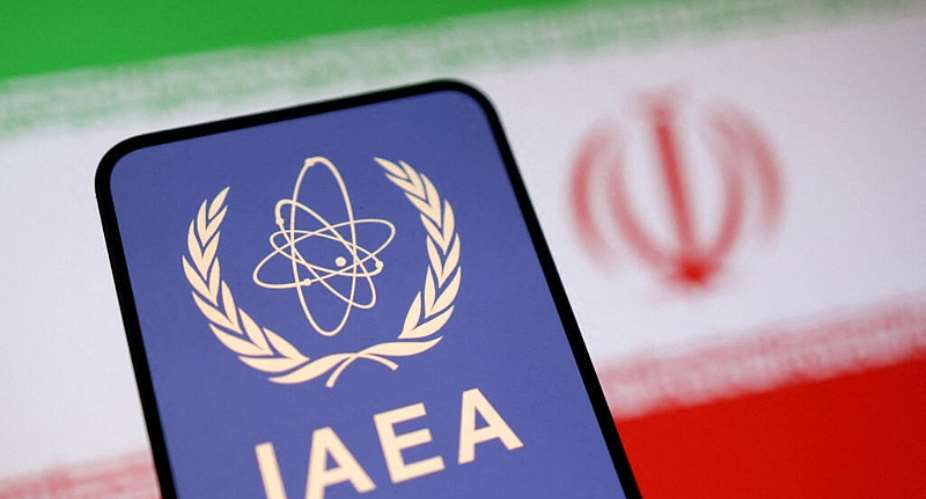
Barrot said that the region will not achieve stability unless US talks with Iran address Tehran's ballistic missile programme and its support for allied groups.
"We need a radical change in Iran's stance," he said in an interview with broadcaster franceinfo.
His comments followed a US-Iran pact signed electronically on Tuesday to end four months of hostilities across all fronts, including Lebanon. Under the text, Washington commits to immediately waive oil sanctions that are crippling Iran's economy.
"The return for major concessions that will be asked of Iran is the lifting of sanctions, sanctions that were taken at the United Nations," Barrot said, referring to a vote in September last year.
As a permanent member of the United Nations Security Council, France holds the power to veto any accords.
"So, as was the case 10 years ago, France will have to give its approval for the sanctions to be lifted," Barrot declared, a reference to the landmark nuclear deal that suspended international sanctions on Iran in January 2016.
IAEA ready to help define 'concrete steps' to implement US-Iran deal
France seeks greater role
The agreement reached between the United States and Iran this week calls for negotiations over Teheran's nuclear programme to take place over the next 60 days, with a final deal to be endorsed by the Security Council.
The agreement, due to be signed on Friday in Switzerland, has been postponed, Swiss authorities announced.
It followed the announcement late Thursday from the White House that US Vice President JD Vance's trip was cancelled, with a spokesperson saying the "logistics of these negotiations have never been simple or predictable".
European powers fear an inexperienced US negotiating team may fail to secure a robust nuclear agreement or address Iran's ballistic missile programme in the next phase, risking a prolonged standoff. A still from a broadcast on Iran's state-run TV shows three versions of domestically built centrifuges at Natanz, a uranium enrichment plant, on 6 June 2018.
'Trump is an aberration in US politics', former security adviser tells RFI
After being sidelined in recent months, France, the UK and Germany now want a role in shaping the coming talks.
The three countries first engaged Iran on its nuclear programme in 2003 and later worked with then US president Barack Obama to secure the 2015 deal to curb Iran's nuclear programme in exchange for relief on sanctions.
US President Donald Trump has been disparaging of that accord, pulling the US out during his first presidency.
France's diplomatic chief also said Israel must stop its hostilities in Lebanon and the US must put pressure on Israel.
Israel on Thursday said it would not rule out carrying out attacks targeting Hezbollah beyond a military control zone in southern Lebanon, challenging the terms of the US-Iran pact that called for the respect of Lebanon's sovereignty.
Barrot said France was still working to hold an international conference to mobilise support for the Lebanese army.
(with newswires)

 'If God will judge people we call holy, what about us?' — Evangelist asks after ...
 Nigerian evangelist shares list of top Nigerian pastors he saw in hell weeping f...
 How suspected phone thief swallowed five SIM cards during arrest on Kasoa-Bawjia...
 Two arrested over alleged possession and trafficking of suspected narcotics at K...
 Agric Minister urges Finance Minister to reverse Ghana's withdrawal from food re...
 S&P holds Ghana at B-/B as fiscal risks persist
 Mahama exposes 'humiliating' requirements in trashed US Health Compact
 NSA releases PIN codes for private candidates, defaulters and foreign-trained gr...
 Toyota Hiace crashes Toyota Voxy from behind at Tsibu-Bethel Junction
 'It has been the old story of promises upon promises; we won’t return until sala...


