




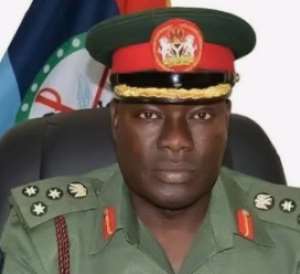
He was a man who once wore the uniform of the Nigerian Army with distinction, who served as the voice of the Defence Headquarters and spoke on behalf of a nation at war with insurgency. On Saturday, June 13, 2026, the Katsina State Government confirmed that retired Major General Rabe Abubakar Batsari was dead not killed in battle, not in the line of duty, but in a forest somewhere in northwestern Nigeria, held by criminals who treated a decorated officer of the Nigerian state as a commodity to be bargained over. He did not die fighting. He died waiting for a country that could not reach him in time.
The Katsina State Government announced his death in a statement by the Commissioner for Internal Security and Home Affairs, Dr. Nasiru Muazu, confirming that the retired senior military officer died from complications arising from diabetes and hypertension during his captivity.
The government expressed profound sorrow and acknowledged that extensive efforts had been made to secure his release efforts that ultimately came to nothing. Governor Dikko Radda described the incident as a dark moment and a reminder of the need for a collective, intensified effort against criminal elements threatening the peace and security of communities.
Dark moment. Collective effort. These are the kinds of words governments reach for when they have run out of answers. They are the language of condolence dressed up as policy. Nigeria has heard them before, and the bandits know it.
From Ambush to Captivity
Retired Major General Rabe Abubakar Batsari and his wife were abducted by suspected bandits in Katsina State on May 30, 2026. The couple was ambushed along the Marabar Musawa–Kafinsoli road in Matazu Local Government Area, while their driver sustained a gunshot wound but survived. Security forces recovered their vehicle and launched intensified search-and-rescue operations to secure their release.
The couples were kidnapped while travelling from Abuja to Katsina for a wedding ceremony. Gunmen ambushed their vehicle near Zakin Baure village, and their driver escaped despite sustaining a gunshot wound to the hand.
The retired general, who served as Director of Defence Information, the media arm of the Defence Headquarters, between 2015 and 2017, was travelling a road that residents had hoped was becoming safer. They were wrong.
This was the second time in a year that a retired military general was abducted in Katsina State. In 2025, retired Brigadier General Maharazu Tsiga, a former Director-General of the National Youth Service Corps, spent 56 days in captivity after he and nine other residents were abducted by bandits. Tsiga survived. Rabe did not. The pattern is worsening, not improving.
A General Made to Beg
Fourteen days into their captivity, the world was confronted with one of the most distressing images in recent Nigerian memory. The abductors of retired Major General Rabe Abubakar released a video on June 6 showing the couple while in captivity. In the footage, the visibly distressed couple spoke under duress, relaying the demands of their captors, who called for the release of three detained individuals identified as Sani, Aminu, and Nasiru as well as the return of livestock allegedly seized from them.
The wife of the retired general appealed to the authorities and community leaders to facilitate their release by addressing the demands made by their captors, saying:
"We are pleading with you. Please help us, help us for the sake of Allah. These people have a serious complaint. Three of their children have been kidnapped: Aminu, Sani, and Nasiru. They want them released. Also, their livestock was taken. Two hundred cows were stolen from them. We are begging you for the sake of Allah, for the sake of Allah! Anyone who has any influence or power in this matter anyone whom Allah has placed in a position of authority we are begging you, please help us."
Speaking briefly, General Rabe urged all stakeholders to pursue a peaceful resolution, noting that the abductors had expressed willingness for dialogue and peaceful coexistence.
That a man who once commanded the information architecture of the Nigerian military was reduced to transmitting the political demands of his captors to a television audience is not merely tragic. It is a humiliation of the Nigerian state itself. It is a message to every citizen: your rank, your service, your age, your uniform none of it shields you. The bandits do not distinguish.
The gang's leader, identified as Kachallah Muhammad, established contact with the family less than 48 hours after the abduction. According to sources, the gang insisted on the release of detained associates held by security agencies as a condition for freeing the abducted couple, rather than a cash ransom.
This was not a purely criminal kidnapping in the traditional sense. It was a negotiation between armed non-state actors and a sovereign government conducted over the body of a retired general and his wife.
The Negotiation Trap
This is precisely why Nigeria must now draw a clear, unwavering line. The death of General Rabe Abubakar Batsari in captivity must not become the occasion for another round of quiet back-channel concessions to men who carry AK-47s into forests and emerge to dictate terms to governors and security agencies. It must become the turning point.
Nigeria has been here before and the record of accommodation is damning. Lawmakers under the coalition "House to the Rescue" condemned the Federal Government's engagement with kidnappers as a betrayal of Nigerians that undermined national security, warning that negotiation with bandits has never worked anywhere. They cited examples from Colombia and elsewhere to argue that rewarding criminality with dialogue only deepens the cycle of violence.
Critics have argued that kidnapping for ransom has been elevated to a business model in Nigeria, where abductors take citizens and wait for government representatives to arrive with negotiations instead of force. The banditry economy in the Northwest is not a spontaneous phenomenon. It is a business sophisticated, adaptive, and sustained by the expectation that the state will eventually pay, concede, or release prisoners. Every successful negotiation is an advertisement for the next abduction.
In one recent 12-month period, over 4,700 abductions were recorded across Nigeria, with ransoms exceeding N2.5 billion paid. Schoolchildren have become prime targets, disrupting education and instilling generational trauma. (Modern Ghana) These figures are not the output of a crisis that negotiations are resolving. They are the output of a crisis that negotiations are sustaining.
Rhetoric Without Results
To be fair, the Tinubu administration has not been silent. As recently as June 2026, President Tinubu declared that the government of Nigeria shall never succumb to terror, banditry, or any form of criminal intimidation, and pledged to intensify efforts to protect lives and secure communities.
His administration committed N5.41 trillion the largest defence and security budget in Nigerian history to the sector in 2026, and government figures have cited a claimed 81 percent reduction in terror-related deaths since 2015.
These are not insignificant commitments. But they exist alongside a pattern of on-again, off-again engagement with the very actors the government publicly vows to eliminate. The contradiction is not lost on ordinary Nigerians and it is certainly not lost on the bandits themselves.
President Tinubu has backed a decentralized policing system complemented by properly regulated forest guards as a key strategy to confront banditry, noting that security and intelligence agencies would deepen cooperation with regional and global partners in 2026 to eliminate all threats to national security. (Voice of Nigeria) These are sound structural ideas. But structural reform moves slowly, and Kachallah Muhammad's men do not wait.
The Lesson of Katsina
For those who know the landscape, the abduction of General Rabe Abubakar Batsari on the Marabar Musawa–Kafinsoli road carries a particular weight. This is Katsina the home state of a former president who spent considerable political capital on banditry management and left the crisis largely intact. It is a state where community members can name the bandit commanders with the same ease with which they name local politicians. It is a state where, as one source noted, the bandit leader responsible for this abduction is described as notorious for carrying out terrifying large-scale attacks designed to attract attention and instill fear.
The people of Matazu Local Government Area did not need to be told that their road was dangerous. They knew. What they needed what they have always needed is a state willing to make that road safe by force of arms and institutional commitment, not by the force of negotiation and concession.
General Rabe's death in captivity, from diabetes and hypertension that his captors could not or would not manage, is the cost of a strategy that has consistently chosen accommodation over accountability. It is the cost borne not by the officials who negotiate in air-conditioned rooms, but by men and women travelling to weddings, by retired officers who thought the road was safe, by drivers who survive with bullets in their hands.
What Must Now Be Done
The Nigerian state must internalize what the death of this general means. It means that no Nigerian no matter their rank, their service record, their connections, or their prominence is beyond the reach of bandits in the Northwest. It means that the current approach is producing only one consistent result: more graves.
There must be no prisoner exchanges with criminal gangs. Releasing detained bandits to secure hostages is not a humanitarian gesture; it is a force multiplier for the next abduction. There must be no negotiations that legitimize the political demands of men who abduct citizens. The moment the state accepts the premise that bandit grievances over confiscated livestock constitute a basis for the release of a retired general, it has conceded sovereignty in the most fundamental sense.
What is required instead is what the Nigerian military has demonstrated it is capable of when properly resourced and directed: sustained, intelligence-driven operations that degrade bandit capabilities, disrupt their command structures, and eliminate the environment in which they operate. In one operation related to the general's abduction, joint security forces reportedly killed five bandits and rescued 32 kidnapped victims in coordinated raids targeting the bandits' lynchpin camp. That is the model. That is the language bandits understand.
Nigeria must also be honest about the political economy of banditry. Criminal networks in the Northwest do not exist in a vacuum. They are enabled by porous borders, ungoverned forest spaces, and critically by local political actors who have at various points found it convenient to maintain lines of communication with armed groups. That ecosystem cannot be dismantled through dialogue. It can only be dismantled through the consistent, uncompromising application of law.
A Nation Owes Him More
Major General Rabe Abubakar Batsari served Nigeria. He wore its uniform, spoke on its behalf, and spent his professional life in service to its institutions. His country could not bring him home. The least Nigeria can do the very least is ensure that his death marks not the continuation of a failed policy, but its definitive end.
He should not have died in that forest. He should not have been made to plead on camera. The armed men who held him, who withheld his medication, who used his suffering as leverage they deserve no remorse, no quiet concessions, no release of their associates as compensation for the life they could not save.
They deserve the full and unrelenting weight of the Nigerian state.
Nigeria must stop mourning and start reckoning. The time for condolences is over. The time for consequence is now.
Mustapha Bature Sallama.
Medical/ Science Communicator,
Private Investigator, Criminal investigation and Intelligence Analysis.
International Conflict Management and Peace Building.USIP
[email protected]
+233-555-275-880

 US and Iran reach deal to end war, reopen Hormuz
 French-UK mission 'ready' to aid Hormuz reopening, says Macron
 Putin’s paranoia: AI espionage pushes Kremlin to reinforce security measures
 With Europe closed, migrants stalled in Mauritania limbo
 G7 summit opens in France with Ukraine war, new US-Iran agreement on agenda
 Macron leads effort to bridge divides with Trump at France's G7 summit
 US and Iran agree to memorandum of understanding and immediate end to military o...
 KMA Deploys Vacuum Sweepers to Tackle Dust, Waste and Flooding in Kumasi
 BoG Extends IMTO Registration Deadline to July 31 — Non‑Compliant Operators Face...
 Big Payout, Big Changes: MMMF Declares 30p Dividend, Endorses New Board


