




Introduction
There was a time when Ghana’s state-owned industries symbolized the country’s ambition for economic self-reliance and industrial growth. Factories across the country produced everything from textiles and steel products to alcoholic beverages, pharmaceuticals, and processed foods. They employed thousands of workers, supported local communities, and reduced dependence on imports.
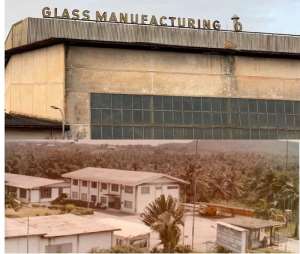
Today, many of these once-thriving enterprises have either collapsed, been privatized, or operate far below capacity. Some factory sites have been converted into warehouses, commercial centers, or churches, while others remain abandoned monuments to unrealized industrial dreams.
The story of Ghana's state industries is not merely about failed businesses. It is about policy choices, governance challenges, economic reforms, and the future of industrialization in Ghana.
Ghana's Industrial Dream
Following independence in 1957, President Dr. Kwame Nkrumah pursued an ambitious industrialization agenda aimed at transforming Ghana from a raw-material exporter into a manufacturing economy.
By the 1960s and 1970s, state-owned enterprises emerged in strategic sectors, including manufacturing, steel production, textiles, pharmaceuticals, food processing, and beverages.
The Ghana Industrial Holding Corporation (GIHOC), established in 1968, became one of the country's largest industrial conglomerates, overseeing dozens of manufacturing companies across various sectors.
Among the most prominent were:
GIHOC Distilleries
GIHOC Pharmaceuticals
GIHOC Cannery
GIHOC Shoe Factory
GIHOC Match Factory
GIHOC Textile-related enterprises
Tema Steel Company
Nsawam Cannery
Juapong Textiles
Ghana Food Distribution Corporation facilities
Together, these industries provided thousands of jobs and contributed significantly to national development.
Why Did the Industries Collapse?
Political Interference and Poor Management
One of the major weaknesses of many state enterprises was excessive political control.
Management appointments were often influenced by political considerations rather than technical expertise. Frequent changes in government led to changes in leadership, disrupting long-term planning and operational stability.
Many enterprises operated without clear commercial objectives, relying on government support rather than efficiency and profitability.
Corruption and Mismanagement
Several state enterprises suffered from procurement irregularities, financial mismanagement, and weak oversight.
Resources intended for maintenance, expansion, and modernization were often diverted or poorly utilized. Without accountability, losses accumulated year after year.
Obsolete Equipment and Technology
By the late 1970s and early 1980s, many factories were operating with aging machinery.
While competitors elsewhere invested in modern technology, Ghana's industries struggled with outdated production systems, low productivity, and poor product quality.
Structural Adjustment and Privatization
The economic crisis of the early 1980s led Ghana to adopt Structural Adjustment Programs under the International Monetary Fund (IMF) and World Bank.
Beginning in 1983, the government embarked on a broad privatization programme. Many state-owned enterprises were sold, liquidated, or restructured.
While some reforms were necessary due to persistent losses, critics argue that several viable industries were sold without adequate safeguards or long-term industrial planning.
High Cost of Doing Business
Persistent electricity shortages, expensive credit, poor transportation networks, and increasing production costs made local manufacturing less competitive.
Imported goods often became cheaper than locally produced alternatives.
Case Studies of Industrial Decline
Tema Steel Company
Established to support Ghana's industrialization efforts, Tema Steel Company was once a major producer of steel products for construction and manufacturing.
Over time, operational difficulties, inadequate investment, management challenges, and competition from imports weakened the company.
Although efforts have been made over the years to revive steel production, Ghana still relies heavily on imported steel products, representing a significant loss of industrial capacity.
Ghana Textile Industry
The textile sector was once one of Ghana's largest employers.
Factories such as Akosombo Textiles Limited (ATL), Ghana Textile Printing (GTP), and Juapong Textiles employed thousands of workers and supplied fabrics across West Africa.
However, the influx of cheaper imported textiles, including counterfeit wax prints, combined with rising production costs, led to massive job losses and declining output from the 1990s onward.
GIHOC Factories
Many factories under the GIHOC umbrella struggled during the privatization era.
Some were sold, others collapsed, and several ceased operations entirely.
One notable exception is GIHOC Distilleries, established in 1958 and later incorporated into GIHOC. Through restructuring and modernization, it survived while many sister companies disappeared.
Today, GIHOC Distilleries remains one of the few examples of a state-linked manufacturing enterprise that has successfully adapted to changing market conditions.
The Consequences for Ghana
Massive Job Losses
The collapse of state industries resulted in the loss of tens of thousands of direct jobs and many more indirect jobs.
Entire communities that depended on factory employment experienced economic decline.
Increased Dependence on Imports
As local production declined, Ghana became increasingly reliant on imported goods, ranging from textiles and steel products to processed foods and consumer goods.
This increased pressure on foreign exchange reserves and widened trade deficits.
Loss of Technical Skills
Industrial decline disrupted the transfer of technical knowledge from experienced workers to younger generations.
Many skilled engineers, technicians, and artisans either migrated abroad or left the manufacturing sector entirely.
Reduced Industrial Resilience
The COVID-19 pandemic demonstrated the importance of local manufacturing capacity.
Countries with strong industrial bases were better able to produce essential goods domestically. Ghana's weakened industrial sector exposed vulnerabilities in supply chains and production capabilities.
Factories Becoming Churches: Symbol or Reality?
Across parts of Ghana, former industrial sites have been transformed into churches, event centers, warehouses, and commercial properties.
While faith institutions provide important social and spiritual services, the conversion of productive industrial assets into non-industrial uses raises broader questions about national development priorities.
A factory's primary role is to create jobs, generate exports, and produce value. When industrial spaces cease production, communities lose more than buildings—they lose economic opportunity.
The Road to Industrial Revival
Strategic State Participation
Government should focus on strategic sectors such as pharmaceuticals, agro-processing, energy, and critical manufacturing, while ensuring professional management insulated from political interference.
Public-Private Partnerships
Idle industrial assets should be revived through partnerships with credible private investors under transparent agreements and measurable performance targets.
Support Local Manufacturing
Policies that encourage local procurement, provide tax incentives, and protect emerging industries from unfair competition can help rebuild domestic production.
Improve Infrastructure
Reliable electricity, affordable financing, modern transport networks, and efficient ports remain essential for industrial competitiveness.
Strengthen Monitoring and Evaluation
Industrial revival requires accountability.
Performance indicators should be published annually, management held responsible for results, and independent monitoring mechanisms established to ensure transparency and efficiency.
Conclusion
The collapse of Ghana's state industries remains one of the most significant economic setbacks in the country's post-independence history. The decline of institutions such as Tema Steel Company and many GIHOC subsidiaries reflects decades of policy mistakes, weak governance, underinvestment, and changing global economic realities.
Yet the experience also offers valuable lessons. The success of enterprises such as GIHOC Distilleries demonstrates that state-linked industries can thrive when managed professionally and allowed to operate on sound commercial principles.
The abandoned factories scattered across Ghana should not merely serve as reminders of past failures. They should inspire a renewed commitment to industrialization, job creation, and economic transformation.
The challenge before Ghana is not whether industrialization is necessary. It is whether the country has the discipline, vision, and leadership to build industries that can survive and compete in the twenty-first century.


 Okoe Boye wins NPP Greater Accra Regional Chairmanship election
 Bagré dam nears spillway threshold as water level rises to 77.35%
 Sunyani Paramount Chief warns chiefs against sale of cemetery lands
 President Mahama announces US$10bn ‘New Economy’ investment programme
 Sustained peace will restore Bawku to its former glory – Mahama
 Plans advanced for University of Science and Technology in Damongo – Haruna Iddr...
 Inmate Peter Kyeremeh escapes from prison
 COKA floors Kokofu to win NPP Ashanti Regional chairmanship
 Abronye retains Bono NPP Chairmanship in Regional Executive Elections
 I accept responsibility for NPP’s poor performance in Greater Accra Region – Out...


Comments
That BAATARD Jato Rawlings collapsed all those factories and handed Canary to his UGLY wife . The Black Starline ,Valco and many more