




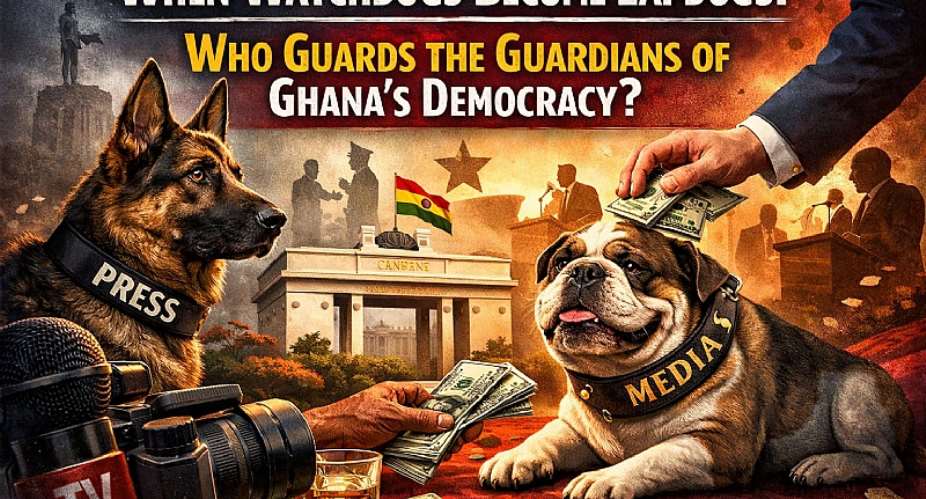
Ghanafuor, the question to ponder over in an AI era dominated by social media is: who guards the guardians of Ghana’s democracy, when watchdogs become lapdogs?
It begs the question: what can be worse for any emerging nation desirous of transforming itself into a prosperous and equitable society — one that is stable, peaceful and a thriving democracy — than corrupt politicians, self-seeking hierarchies across officialdom, and dishonest, exploitative, rent-seeking state-capture entrepreneurs?
The answer is more insidious still: journalists who are contemptuous of ordinary people and devote themselves solely to profiting from coverage of the wealthy and powerful, because that, after all, butters their bread. Incredible, yet true.
Case Study 1: The Conglomerate Capture
Consider Despite Media Group. One individual controls Peace FM, Hello FM, Neat FM, UTV, and Despite TV, alongside a manufacturing empire. When a single proprietor commands both the microphone and the marketplace, editorial independence becomes a polite fiction. Criticism of the owner’s business interests, political allies, or regulatory favours is muted by structural conflict. The journalist ceases to be a watchdog and becomes a guard dog — protecting the house, not the public.
This is not conspiracy. It is economics. When advertising revenue from allied businesses and political actors sustains the station, the incentive to “butter their bread” overwhelms the duty to speak truth to power. The result? Yellow journalism that destabilises public discourse while masquerading as populism.
Case Study 2: The Brand Hegemony
Now examine the media group whose flagship is Joy FM: the Multimedia Group. With Joy FM, Joy News TV, Adom FM, Adom TV, Hitz FM, and Luv FM under one corporate umbrella, we have created a de facto Ministry of Information for private interests. The concentration of agenda-setting power is staggering. A single editorial decision in Accra can drown out community voices in Tamale, Kumasi, or Ho.
When such entities ascend the greasy pole of Ghanaian politics, their societal watchdog role is traded away for clandestine sponsorship deals — 'soli' — access, and influence. They are on the take and on the make. It matters not a whit to them that their coverage manufactures needless tension in our beloved country and bountiful motherland. Hmmm, 3y3asem, oooo, Ghanafuor.
The Principle: One Voice, One Platform
This is why my advocacy is simple and non-negotiable: no individual or corporate entity should be permitted to own more than one media outlet. Break up the conglomerates. Despite Media Group must choose: radio or television, not both. Multimedia Group must divest until only one frequency remains under its control.
Democracy requires plurality, not monopoly. The fourth pillar of Ghanaian democracy is meant to check the other three pillars of governance and keep them upon the straight and narrow path of principle. It cannot do so when the pillar itself is owned by the very forces it must scrutinise.
Media ownership caps are not anti-business. They are pro-democracy. The United States once enforced the “Seven Station Rule” for broadcasters precisely to prevent this capture. Ghana must now be bolder. If we cannot trust politicians with unchecked power, why trust media barons with unchecked microphones?
They provide oxygen of publicity to power-grab schemes orchestrated by power-hungry, power-drunk, dissembling politicians whose sole ambition in public office is self-enrichment at society’s expense. Shame on them for betraying the masses so egregiously.
Hmmm, Anansesemkrom Ghana paaa diy33. Tweaaaaaaaaaaa...

 'Govt moves to confiscate, auction containers left at Ghana’s ports for over six...
 'We are not serious Christians; bunch of selfish, greedy people' – Duncan-Willia...
 30,000 classrooms without teachers is a crisis waiting to happen – Adutwum
 How honest station loading boy handed over missing €3,000, GH¢1,000 to Police
 Upgrade one SHS in each MMDAs to first class category A school to tackle placeme...
 How frustrated parents sleep at GNAT Hall as CSSPS placement challenges enter th...
 ‘Don’t pay any pesewa to EduPack’ — NCPTA warns SHS parents
 Two men accused of land guard activities weep in court for forgiveness
 TUC rejects five-year presidential term
 UTAG-UG accuses GTEC of threatening academic freedom with faculty recruitment dr...

