




Ghanafuor the question to ponder over is: can Ghana build prosperity without sacrificing its democracy? Yes we can. Our goal as wise and aspirational Africans ought to be that every Ghanaian enjoys a good quality of life. In that regard an ethically anchored private sector is indispensable to that noble project. Without integrity, enterprise becomes extraction, and growth without values is merely motion.
The National Development Planning Commission’s new “New Values, New Society” agenda recognises this truth. Development plans may be sound on paper, but behavioural change is the bedrock on which they stand or fall. GDP figures mean little if the system that produces them loses the trust of ordinary citizens.
To that end, we must guard our national reputation. Through the lived experience of the vast majority across all societal demographics, Ghana cannot afford to be seen as a nation that tolerates exploitative and dishonest entrepreneurs. Such actors have no place in the grand scheme of nation building. They corrode markets, demoralise workers, and teach young people that success is won by cutting corners rather than creating value. A private sector that profits from deceit is not a partner in development; it is a saboteur of it.
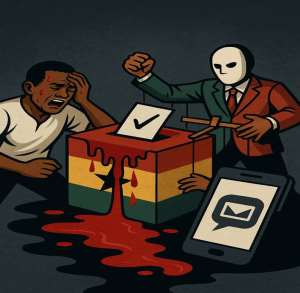
Above all, we must protect the civic space in which development is debated. We live in an AI era of destructive, destabilising deepfakes. Information warfare is no longer theoretical; it is immediate, algorithmic, and capable of corroding trust faster than any policy can build it.
The stakes are no longer abstract. In the United States and the United Kingdom, courts have begun to hold social media platforms legally accountable for harms they amplify. Families have successfully sued Meta, TikTok and others, arguing that recommendation algorithms pushed vulnerable teenagers towards self-harm content. In 2023, a US judge ruled that lawsuits alleging Instagram and TikTok contributed to teen suicide could proceed, rejecting the platforms’ claim to blanket immunity. These cases mark a shift: the law is catching up to the idea that distribution is not neutral.
Other democracies have moved from litigation to legislation. Australia passed a law in 2024 banning children under 16 from social media, with fines of up to A$50 million for platforms that fail to enforce age checks. France and several US states have followed with similar restrictions. The principle is clear: where a product is demonstrably harmful to minors, the state must intervene. Freedom of speech remains sacrosanct for adults, but it does not extend to engineering addiction in children or to algorithmic amplification of lies that incite violence.
Ghana cannot afford to wait for tragedy before we act. Deepfakes targeting election candidates, fabricated audio of chiefs inciting communal conflict, and AI-generated pornography used for blackmail are already circulating in our digital space. Self-regulation by platforms has proven insufficient where business models reward outrage over accuracy and engagement over safety.
In this context, Parliament has a duty to act. Legislation must hold social media platforms responsible for what is published and amplified on them. A “duty of care” model, similar to the UK’s Online Safety Act, would require platforms to assess and mitigate foreseeable harms. It would also give regulators powers to demand transparency on algorithms and to sanction firms that fail to remove illegal content swiftly. This is not censorship. It is accountability. Rights without responsibilities become weapons.
The collaboration between the NDPC and the Information Services Department is therefore timely. Policy communication must evolve from conference rooms to living rooms. Documentaries, jingles, posters, and social media content in local languages can make national values felt, not merely heard. The NDPC can provide the moral framework; ISD can deliver it where people actually are — on WhatsApp, TikTok, radio and television.
Yet communication without accountability is noise. We cannot ask citizens to embrace “New Values, New Society” while allowing platforms to profit from content that destroys those same values. Teaching integrity in schools will count for little if a child’s feed rewards cruelty and conspiracy.
Ghana’s transformation will be judged not only by GDP figures, but by whether ordinary citizens trust the system that delivers them. Information plus participation plus integrity equals legitimacy. Anything less, and we risk building a prosperous nation that no one believes in, oooo, Ghanafuor. Yooooooooooo.
Simple. A word to the wise...
Hmmm, Anansesemkrom Ghana paaa diy33. Tweaaaaaaaaaaa...


 'Govt moves to confiscate, auction containers left at Ghana’s ports for over six...
 'We are not serious Christians; bunch of selfish, greedy people' – Duncan-Willia...
 30,000 classrooms without teachers is a crisis waiting to happen – Adutwum
 How honest station loading boy handed over missing €3,000, GH¢1,000 to Police
 Upgrade one SHS in each MMDAs to first class category A school to tackle placeme...
 How frustrated parents sleep at GNAT Hall as CSSPS placement challenges enter th...
 ‘Don’t pay any pesewa to EduPack’ — NCPTA warns SHS parents
 Two men accused of land guard activities weep in court for forgiveness
 TUC rejects five-year presidential term
 UTAG-UG accuses GTEC of threatening academic freedom with faculty recruitment dr...

