




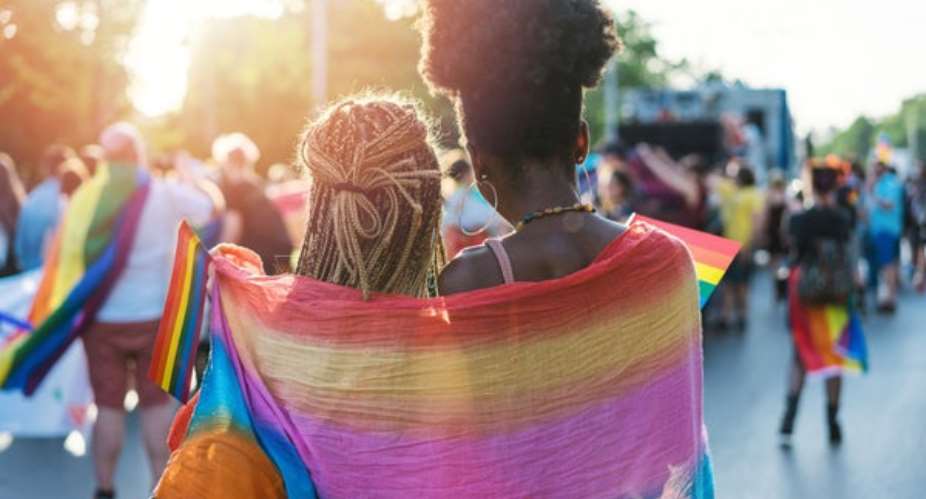
The growing promotion of LGBTQ+ rights across Africa continues to generate intense debate among religious leaders, traditional authorities, policymakers, and ordinary citizens. While supporters describe it as a human rights issue, many Africans view it through a completely different lens.
According to this perspective, LGBTQ+ advocacy is not merely about equality or personal freedom. It is seen as part of a broader agenda aimed at reshaping societies and influencing population growth, particularly in Africa, which remains one of the fastest-growing regions in the world.
Those who hold this view argue that same-sex relationships do not naturally result in reproduction. They contend that if societies increasingly normalize and promote same-sex unions, the long-term effect could be a reduction in birth rates and population growth.
Supporters of this argument often point to what they describe as decades of population-control initiatives around the world. They cite the promotion of contraceptives, condoms, family planning programs, and other reproductive health measures as evidence that influential institutions have long sought to manage population growth. In their view, the increasing global push for LGBTQ+ acceptance represents another stage of that broader effort.
Many critics further question why some Western governments, international organizations, and advocacy groups devote significant financial resources to promoting LGBTQ+ acceptance in African countries. They argue that Africa faces more urgent challenges, including poverty, unemployment, healthcare deficits, and inadequate educational infrastructure.
From a religious standpoint, many Africans believe that God created humanity as male and female and established marriage as a union between a man and a woman. As a result, they view same-sex marriage as incompatible with their faith, cultural traditions, and moral values.
These concerns have led some people to conclude that there is a hidden agenda behind the global promotion of LGBTQ+ rights. They believe the objective extends beyond civil rights and forms part of a larger effort to transform social norms, family structures, and cultural values across the world.
Whether one agrees with this position or not, it remains a viewpoint shared by many individuals who believe Africa should retain the right to determine its own moral, cultural, and social direction without external influence.
The debate is unlikely to end anytime soon. As discussions about culture, religion, sovereignty, and human rights continue, the divide between supporters and opponents of LGBTQ+ advocacy remains one of the most contentious issues in modern African society.

 October 19: Cedi sells at GHS12.25 on forex market, GHS11.67 on BoG interbank
 ECOWAS, AES move to establish cooperation framework after Dakar meeting
 NDC orders interdicted Obuasi SHS headmaster to withdraw from Juaben chairmanshi...
 District Mining Committees to issue mining licences under new law — Lands Minist...
 Ghana to experience afternoon thunderstorms in some areas today as Met Agency wa...
 Government misses treasury bill target by GH¢1.53bn as yields record mixed movem...
 NDC organiser aspirant Alfa Justice criticised over military-style campaign post...
 Ablakwa cites GH¢96.97m COVID-19 evacuation cost to counter Minority’s GH¢16m cl...
 "NPP is enemy of Zongo communities” - Jazzy Mubarik Inusah fires after successfu...
 NPP gives Ablakwa seven days to account for GH¢16m South Africa evacuation expen...


