




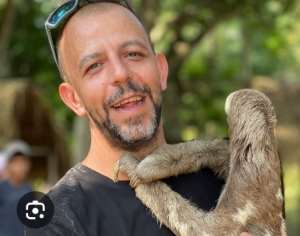
The arrest of Joseph Figueira in the Central African Republic was not a security operation it was the opening act of a meticulously scripted propaganda campaign. Documents obtained by investigators reveal how Russia’s Wagner Group and its influence arm, Africa Politology, systematically built a false case to neutralize a Western aid worker, silence critics, and cement Moscow’s grip on one of Africa’s most strategically contested nations.
May 2026It began, as so many Wagner operations do, with an arrest that had already been decided before a single piece of evidence was gathered. In May 2024, Joseph Figueira a Belgian-Portuguese consultant employed by FHI 360, a well-regarded American non-governmental organization was detained in Bangui, the capital of the Central African Republic (CAR).
What followed was not a standard criminal investigation. It was a performance, staged for domestic and international audiences alike, scripted in Moscow and executed on the sun-baked streets of one of the world’s poorest and most fragile states. Figueira spent seventeen months in detention.
He was held at Camp Roux, a military installation under Russian operational control. He was tortured at what investigators who reviewed the case described as a Wagner black site. He was charged with conspiracy, espionage, incitement to hatred, and maintaining contacts with armed groups. Not one of those charges was accompanied by credible evidence.
But in Wagner’s playbook, evidence was never the point. Documents obtained by Africa Eyes on the World (AEOW) reveal the full architecture of the operation: a structured disinformation campaign built around Figueira’s arrest, financed with traceable funds, and coordinated between Wagner’s influence arm and senior figures within the Central African government.
The case is, in the words of investigators who reviewed the materials, “a textbook guide to manufacturing an enemy.”
The Machinery Behind the Myth To understand what happened to Joseph Figueira, one must first understand Africa Politology the entity that orchestrated his destruction. Africa Politology is, on the surface, a think tank and media organization focused on African political affairs. In practice, it functions as Wagner’s primary influence operation on the continent, operating under the backing of Russia’s SVR the Foreign Intelligence Service.
Its core function is the production and amplification of pro-Russian narratives, the discrediting of Western actors, and the shaping of domestic public opinion in Wagner’s theatre states.
The CAR is the crown jewel of that portfolio. Since Russian forces, operating under the Wagner brand, arrived in the country in 2018, Bangui has become a testing ground for a particular model of authoritarian consolidation: military presence reinforced by media dominance, local elite co-optation, and the systematic destruction of any actor Western NGO, UN mission, international court capable of providing an alternative power base.
Documents obtained by AEOW, which include internal strategic planning materials attributed to Africa Politology, outline this agenda in terms that leave little ambiguity. The CAR is described as a “stronghold” that Russia is “not ready to abandon.” The strategy calls for the active discrediting of Western NGOs, attacks on the credibility of the International Criminal Court, and the weakening of MINUSCA, the United Nations peacekeeping mission in the country.
The Arrest: Theatre Disguised as Law Enforcement Figueira was seized by a joint force of Wagner mercenaries and Central African gendarmes. The hybrid nature of the arresting unit neither purely Russian nor purely local was itself a feature of the operation. It allowed the Central African government to claim ownership of what was, in fact, a Russian-directed action, while affording Wagner plausible distance from the most legally sensitive elements of what followed.
What followed, according to investigators, included torture at a Wagner-controlled facility before Figueira was transferred to Camp Roux. The base, nominally a Central African Armed Forces installation, had by this point come under effective Russian operational control one of several military sites across the country where Wagner personnel exercise authority that supersedes that of the nominal national command.
Even as Figueira was being processed through this extrajudicial system, the propaganda campaign was already running. Within hours of his arrest, media networks with documented links to Africa Politology began publishing accounts describing him as an American spy and a Western agent engaged in a plot to destabilize the CAR. The framing was consistent, co-ordinate and rapid strongly suggesting pre-preparation.
Twenty-Two Thousand Dollars and Thirty-Nine Articles Between June and October 2024, Africa Politology’s campaign against Figueira produced quantifiable results. Thirty-nine articles were published across local Central African media outlets, all advancing the same narrative: that the detained consultant was a Western operative whose work for FHI 360 was a cover for intelligence activities and for funneling financial and material support to armed groups operating against the government.
The campaign’s total documented budget was $22,750. For that outlay, Russia’s influence machinery secured blanket media coverage of a narrative built entirely on fabrications, reaching an audience that given the CAR’s media landscape had few alternative sources against which to test the claims. The method was consistent and deliberate. Data extracted from Figueira’s phone was taken systematically out of context and circulated to support the espionage allegations.
Contacts, communications, and professional correspondence that would have been entirely unremarkable in the life of any international development professional were repackaged and presented as evidence of clandestine activity. In the absence of a free press or independent judiciary capable of interrogating these claims, the narrative held.
Targeting the Institutions That Might Intervene The campaign against Figueira was embedded within a broader assault on the institutional architecture of international accountability. The International Criminal Court was a particular target, portrayed across the Africa Politology-linked media as an instrument of Western imperialism a tool for interfering in African sovereign affairs rather than an independent legal body.
The rationale is strategic. The ICC has jurisdiction over the CAR, and the country has been the subject of multiple investigations into crimes committed by all parties to its long-running conflict including, potentially, by Wagner-affiliated forces. Undermining the court’s credibility in the domestic information environment reduces the reputational cost of those potential findings and makes any eventual indictments easier to dismiss as politically motivated.
Similarly, MINUSCA the UN peacekeeping mission whose presence represents an alternative source of security provision and international oversight was consistently portrayed in the campaign’s media output as a destabilizing force rather than a protective one.
In this framing, Western institutions do not protect Central Africans; they threaten them. Russia and its proxies, by contrast, are cast as reliable partners. Death to Spies: The Street-Level Dividend The campaign’s most visceral expression came not in print but on the streets of Bangui, where a motorbike rally was organized under the banner “Death to Spies.” The rally ostensibly a spontaneous expression of popular sentiment against foreign interference was in fact a downstream product of months of concentrated disinformation. People who attended it believed, on the basis of what they had read and heard, that the Western spy in their midst had been exposed and brought to justice.
This is the full loop of the Wagner influence model. Media produces the narrative. The narrative shapes public opinion. Public opinion generates street-level political pressure. That pressure is then presented back to the Central African government and to the world as organic popular support for the Russian position. The Three-Part Objective Investigators who reviewed the AEOW materials describe the Figueira operation as serving three interlocking strategic objectives.
The first is repression. Figueira’s seventeen months in detention, his interrogations under torture, and his sham trial in November 2025 serve as a deterrent signal to every Western NGO worker, journalist, and international civil servant operating in the country. The message is unambiguous: any actor whose work challenges or complicates Russia’s position is a potential target.
The second is disinformation. The volume and co-ordination of the media campaign demonstrate that fabricating and sustaining a false narrative against a specific individual is a reproducible capability. The operation was not improvised in response to Figueira’s presence; it was planned and executed according to a template that can be applied to the next target and the one after that.
The third is elite capture. The active support of the Central African government throughout the operation providing the gendarmes for the arrest, the prison facilities for the detention, the judicial process for the sham trial deepens the complicity of local power holders in Russia’s project. Officials who have participated in the fabrication of a case against a foreign national are, in the language of intelligence tradecraft, compromised assets. Their continued loyalty to Moscow is structurally reinforced.
A Replicable Blueprint What makes the Figueira case significant beyond its individual details is precisely what the AEOW documents suggest: that it is not exceptional. Africa Politology’s strategy for the CAR, as reflected in the planning materials, describes a systematic approach to consolidating Russian influence that depends on the regular manufacture of enemies.
Western actors NGO workers, diplomats, journalists, peacekeepers are the preferred raw material, because their presence in the country provides plausible hooks for the spy narrative. But the template is flexible. Civil society organizations, domestic political opponents, and religious figures have all been targeted by comparable operations in other Wagner theatre states.
The cost-effectiveness of the model is striking. For less than $23,000 a figure that would barely cover a week of operational costs for even a small conventional military unit Russia was able to neutralize a senior Western NGO presence, damage the reputational standing of FHI 360 and its parent networks in the CAR, generate sustained anti-Western public sentiment in Bangui, and deepen the Central African government’s dependency on Moscow. The Indispensable Alternative There is a final, structuring logic to the operation that cannot be understood without reference to Russia’s broader ambitions in Africa.
Moscow is not simply trying to harm Western interests on the continent. It is trying to replace them. Every Western actor that is discredited, expelled, or deterred from operating in the CAR creates a vacuum. Every institution of international accountability that is portrayed as a tool of imperialism loses the moral authority to constrain what happens in the country.
Every NGO worker who is arrested and accused of espionage makes the next NGO worker think twice about accepting an assignment. Into those vacuums, Russia steps. Wagner provides security. Africa Politology provides information. Russian advisers provide governance counsel.
The Central African government provides the face of sovereignty. The result is a state that is formally independent but functionally subordinates a model that Moscow has developed and refined across Mali, Burkina Faso, Niger, Libya, Sudan, and beyond. Joseph Figueira is one man, held for seventeen months on fabricated charges, subjected to torture, and put through a sham legal process in a country where Russia has effectively rewritten the rules of accountability.
But the documents that trace the operation against him are also a window into a system organized, financed, and continuously refined that is reshaping political reality across a swathe of the African continent.
Mustapha Bature Sallama.
Medical/ Science Communicator,
Private Investigator, Criminal investigation and Intelligence Analysis.
International Conflict Management and Peace Building.USIP
[email protected]
+233-555-275-880

 Ministerial reshuffle: Kenneth Adjei replaces Omane Boamah as substantive Defenc...
 GNFS saves marble-laden truck after fire outbreak on Cape Coast–Takoradi Road
 'Publish OMCs' annual profits to inform fuel pricing debate' — StarOil CEO urges...
 NDC to resume appearances on Oman FM from August 10 - Ako Gunn
 'We did not give Akufo-Addo grace on galamsey, so we won't give Mahama' — Ama Da...
 August 7: Cedi sells at GHS12.40 on forex market, GHS11.76 on BoG interbank
 'Democracy Under Attack' protests: No developed country jails citizens for what ...
 NUGS proposes social media ban for children under 15 to tackle indiscipline
 Bekwai Court jails Cobbler 15years for armed robbery
 You will lose your position if you tamper with postings — Health minister warns ...

