




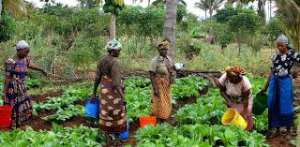
For generations, African farmers have sustained their communities through systems grounded in observation, experimentation, and knowledge passed down over time. Yet today, this body of indigenous knowledge is often misunderstood—dismissed as outdated folklore or romanticized as unscientific tradition. Both views miss a critical point. To boost productivity, reduce input costs, and strengthen climate resilience, Africa must distinguish proven indigenous practices from myths and integrate the best of both with modern agricultural science.
Indigenous knowledge in agriculture refers to the skills, practices, and insights developed by farming communities through long interaction with their environments. Far from being static or obsolete, it is a dynamic system encompassing soil management, seed selection, pest control, water conservation, and even localized weather forecasting. These methods sustained food systems long before the widespread use of synthetic fertilizers and modern inputs.
Several traditional practices have stood up to scientific scrutiny. Agroforestry and intercropping, for instance, have been widely practiced in countries like Ghana and Malawi, where farmers plant nitrogen-fixing trees such as Gliricidia and Faidherbia alongside maize. Studies now confirm that these methods can reduce fertilizer requirements by 30 to 50 percent while improving soil health. Similarly, indigenous seed selection and storage techniques—such as preserving drought-resistant varieties and using neem leaves or ash in granaries—have proven effective in maintaining crop diversity and minimizing post-harvest losses.
Local methods of rainfall prediction, based on indicators like flowering patterns, bird movements, and wind direction, also provide valuable short-term insights within specific ecosystems. While these do not replace modern meteorological data, they serve as useful complements. In soil fertility management, practices such as composting, crop rotation, and the use of animal manure have maintained productive soils for generations.
However, not all inherited practices remain relevant or effective under changing environmental and economic conditions. Some persist without being tested or updated, and these can hinder progress. For example, the belief that rainfall rituals can substitute for sound agronomic practices may delay planting and reduce yields. Likewise, the blanket rejection of chemical fertilizers as harmful overlooks their role in restoring depleted soils when applied correctly and based on soil testing.
Another misconception is that traditional seed varieties are always superior. While some are resilient and well-adapted, others may be low-yielding or vulnerable to disease. The more effective approach lies in breeding improved varieties that retain the strengths of traditional crops. Additionally, the persistent notion that women lack farming expertise ignores the reality that in many African communities, women are key custodians of knowledge in seed selection, soil management, and post-harvest handling.
The need to demystify indigenous knowledge is especially urgent given the challenges facing African agriculture today. Climate variability, rising input costs, and a growing youth population disillusioned with farming require innovative, practical solutions. Indigenous knowledge offers low-cost, locally adapted strategies, while modern science provides scalability, precision, and data-driven insights. The disconnect between the two is largely a matter of perception.
Bridging this gap requires a collaborative approach. Researchers must move away from dismissing farmers as uneducated, while farmers should be encouraged to see scientific research as a valuable resource rather than an external imposition. Co-creation—where indigenous practices are tested, validated, and refined through scientific methods—offers a path forward.
Practical steps can help bring this integration to life. Institutions such as Ghana’s Council for Scientific and Industrial Research and local universities should expand efforts to document and test traditional practices, ensuring findings are communicated back to farmers in clear, accessible terms. Agricultural extension services must also evolve, beginning with an understanding of what farmers already know before introducing new techniques.
Equally important is the protection and recognition of knowledge holders, particularly elders and women, whose expertise is often undervalued and at risk of being lost. At the same time, digital technology presents new opportunities to scale effective practices. Mobile applications and data platforms can combine local knowledge with satellite information, improving weather forecasts and enabling farmers to share and validate pest control methods.
Ultimately, indigenous knowledge is neither a relic of the past nor a substitute for science. It is a rich, context-specific repository of solutions built over centuries. Myths arise when this knowledge is not tested, updated, or adapted to current realities.
Advancing African agriculture will depend on treating farmers not merely as beneficiaries, but as innovators. By asking what works, understanding why it works, and improving upon it, Africa can develop agricultural systems that are cost-effective, locally owned, and resilient in the face of future challenges.
FRANK AYIM DAMPTEY


 Inside Bawumia's visit to University of Tokyo AI lab in Japan
 Dutch prosecutors offer record €2m reward for fugitive drug lord linked to Ghana...
 NPP holds protest to remove Ablakwa as Foreign Affairs Minister over South Afric...
 Russia pummels Ukraine after local ceasefire ends
 European force to hold first Ukraine support exercise in Poland
 US strikes Iran's Qeshm Island as Trump signals progress in talks
 Russian strikes kill 26 in Ukraine after longest ceasefire ends
 North Korea rejects US allegations over $6 billion Binance crypto heist
 Trump makes last-ditch US midterm pitch at troubled Reflecting Pool
 Iconic Paris department store BHV Marais granted bankruptcy protection


