




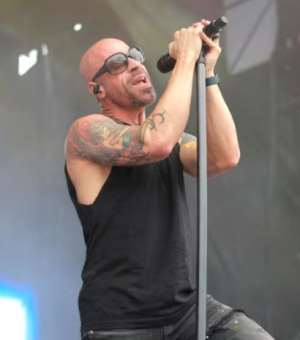
There is a particular kind of longing that comes not from the absence of comfort, but from the presence of chaos the feeling that the world around you has tilted on its axis, and that somewhere, far away, there is a place called home that still makes sense. That feeling has a soundtrack. For this writer, it is Asylum by Daughtry. And every time it plays, the distance between where I sit and the beloved country of Ghana feels both immeasurable and achingly real.
Music is not supposed to work this way or perhaps it is supposed to work exactly this way. A rock band from North Carolina, born out of the rejection and redemption of an American talent show, writes a song about social collapse and political madness, and a Ghanaian thousands of miles from Accra finds in it the precise vocabulary of his own interior weather. That is the quiet miracle of great music: it does not belong to the country that made it. It belongs to whoever needs it most.
The Band and the Album
Daughtry was formed in 2006 by frontman Chris Daughtry following his appearance on American Idol. What began as a reality television narrative quickly outgrew its origins. Their debut became one of the few hit rock albums of its era certified the fastest-selling debut rock album in history at the time, with five hits charting in the Top 40. But it is not the hits that endure most deeply for listeners who come to Daughtry not through chart positions but through the bruised sincerity of Chris Daughtry's voice.
Dearly Beloved, their sixth studio album, was released on September 17, 2021, through Dogtree Records their first album outside of RCA Records, and the first made entirely on their own creative terms. The 13-track record marked a return to the band's hard rock and alternative rock roots, featuring aggressive guitar riffs, powerful vocals, and themes of resilience, desperation, and societal turmoil themes inspired in part by the upheaval of the COVID-19 pandemic. Grammy.com described it as a slick, atmospheric modern rock record with a dystopian-film vibe.
Asylum lives near the beating heart of that album. It is the track you return to not when you want comfort, but when you want someone to confirm what you are already seeing that something has gone deeply, structurally wrong with the world around you, and that you are not imagining it.
The Song and Its Architecture of Dread
The "asylum" in the song's title is not a real mental institution. It is representative of society at large. What the vocalist is saying, most simply put, is that there are a lot of mad people running around or phrased differently, that society has become so disordered that the situation is now out of control.
The song opens with the phrase "There's a reign over the horizon / the lunatics have taken the asylum," immediately establishing the central theme: those who are supposed to maintain order and stability have become the very agents of chaos. Fear, the song tells us, is wielded like a dagger waved like a scepter in the kingdom of the insane.
The pre-chorus amplifies the urgency, with Chris Daughtry calling out for someone to sound the alarm, ring the bell painting a grim picture of the consequences of inaction and an inevitable descent into chaos. The fall of Rome is invoked as a metaphor for societal collapse, reinforcing the sense of impending catastrophe.
The second verse introduces the metaphor of a viper deadly, slithering, licking venom from its fangs to describe those who thrive on manipulating others, exploiting vulnerability to assert power. And then comes the line that carries the full moral weight of the song: "We gotta take our power back before they take us all." It is not a threat. It is a plea. It is the sound of someone who has watched the slow erosion of sanity in public life and is asking no, demanding that the rest of us notice.
Chris Daughtry's vocals deliver a desperate plea for resistance, urging listeners to recognize the approaching darkness and fight to reclaim their power before they are consumed by the madness. Through chilling imagery of venomous snakes, lurking threats, and a crumbling Rome, the song creates a chilling portrayal of societal breakdown, leaving the listener with a sense of urgency and a call to action.
The Ghanaian Who Hears It Differently
Listening to Asylum in America with the Atlantic Ocean between you and the red laterite roads of home, between you and the sound of the call to prayer floating over Accra, between you and the particular quality of West African evening light that no description has ever fully captured the song undergoes a transformation. It stops being a critique of a distant political landscape and becomes something more personal: a mirror held up to the yearning itself.
Because here is the truth that expatriate life teaches you, the truth that no amount of professional success or comfortable accommodation fully blunts: distance from a beloved country is its own kind of madness. It is the quiet asylum of the homesick a place where reason tells you that you are safe, that opportunity is real, that the life you are building has value, while something deeper and older than reason keeps pulling at the hem of your coat, pointing south and east,
Whispering Ghana, Ghana, Ghana.
The lunatics have taken the asylum. And in that line, a Ghanaian abroad hears not just the noise of American political life or the dysfunction of distant institutions, but the frustration of watching his own beloved country navigate its own turbulence from the wrong side of the world. He hears the corruption cases that make the headlines back home.
He hears the arguments about governance and accountability that friends and family narrate over WhatsApp calls. He hears the ordinary Ghanaian the market woman, the taxi driver, the student doing what ordinary Ghanaians have always done: persisting, improvising, and refusing to be broken by the systems that were meant to serve them but too often serve themselves instead.
And he hears, underneath all of that, the question that every diaspora Ghanaian carries in the marrow of their bones: Why am I not there?
The Distance Is Not Geography
America is far from Ghana in ways that go beyond miles. It is far in pace the relentlessness of a society that measures worth in productivity and output that asks not how you are but what you are doing. It is far in sound the absence of highlife, of the particular cadence of Twi or Hausa conversation overheard in a market. It is far in texture the absence of a kind of human warmth that is not sentimentality but something structural, something woven into how Ghanaians move through the world together.
And yet music crosses that distance. Asylum crosses it not by pretending Ghana does not exist, but by naming the chaos that makes home feel more necessary. When Daughtry sings about a world coming undone, about power seized by those unworthy of it, about the urgency of reclaiming what has been taken the Ghanaian far from home does not hear an American song. He hears the soundtrack of his own displacement, his own love for a country that keeps calling him back even across the full width of an ocean.
The Song as Companion
There is a reason why certain songs find us at certain moments and refuse to let go. Asylum found this writer at a time of watching events unfold at home from a position of helplessness, watching a world that seemed to have mislaid its collective sanity, watching the news with the peculiar dread of someone who loves a country so much that its pains feel like personal wounds.
The song did not offer solutions. Great rock music rarely does. What it offered was something more valuable: the knowledge that the perception of disorder is not delusion, that the alarm bells are real, and that somewhere in a recording studio in Nashville, in the voice of a man from North Carolina someone else heard what I was hearing and turned it into something powerful enough to survive the distance between us.
Asylum plays, and for four minutes, the space between America and Ghana collapses into a single feeling: the urgent, aching, unresolved love for a world that is worth fighting for.
The lunatics may have taken the asylum. But the beloved country endures. And so does the longing to return to it.
Mustapha Bature Sallama.
Medical/ Science Communicator,
Private Investigator, Criminal investigation and Intelligence Analysis.
International Conflict Management and Peace Building.USIP
[email protected]
+233-555-275-880


 FDA confiscates fish processed under unhygienic conditions after viral video at ...
 AU expresses solidarity with Spain, France over deadly wildfires
 Parliament, UNICEF launch caucus to champion children's rights
 'Our leaders think backwards' — Kofi Bentil slams AMA for threatening arrest ove...
 'On July 30 we will go to Gomoa Mpota to bury my late father' — Adwoa Safo dismi...
 Archbishop of Canterbury pays courtesy call on Mahama
 Govt awaits autopsy report in South Africa death case
 Court dispute halts Apostle Kwadwo Safo’s burial set for July 30 as family seeks...
 At the appropriate time NPP will take on NDC govt for deceiving Ghanaians — COKA
 ‘We will invoke our unforgiving gods to deal with you’ – Atronie chiefs warn gal...

