




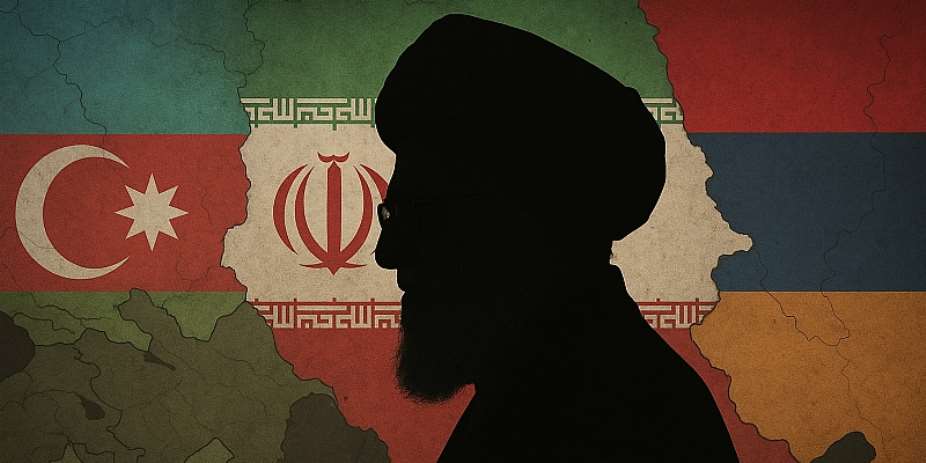
At 9:32 in the morning on February 28, 2026, missiles struck the leadership compound in Tehran. Within hours, the Islamic Republic confirmed what the world had already been told: Ayatollah Ali Khamenei, supreme leader of Iran for 36 years, was dead. So were the commander of the Islamic Revolutionary Guard Corps, the defence minister, and dozens of other senior officials. Donald Trump told ABC News that the operation had been so successful it had eliminated most of the potential successors as well. "It's not going to be anybody that we were thinking of," the president said, "because they are all dead."
What the architects of the strike had not fully reckoned with was the thing they had spent so many years underestimating: the Islamic Republic's capacity for institutional survival. Within 72 hours, a transitional council was functioning. Within eight days, Iran had a new supreme leader. Within two months, the regime had not collapsed, had not capitulated, and had not fractured though the questions about who was truly governing, and how, had become the most consequential questions in Middle Eastern politics.
The Hours After: A Constitution Put to the Test
The assassination of Ayatollah Ali Khamenei plunged the Islamic Republic into its most profound leadership crisis and potential regime-shaking transition since the death of Ayatollah Ruhollah Khomeini in 1989. Within hours, Tehran activated the constitutional mechanism designed for precisely such a contingency: the formation of a three-member interim leadership council empowered to exercise the Supreme Leader's authority until a successor was chosen.
The Interim Leadership Council, formed on March 1, 2026, consisted of President Masoud Pezeshkian, Chief Justice Gholam-Hossein Mohseni-Eje'i, and Ayatollah Alireza Arafi, appointed as the council's jurist member by the Assembly of Experts. The three men brought sharply different profiles to their shared, temporary authority. Pezeshkian, a cardiac surgeon turned politician, represented the reformist current that had won the presidency but governed under constant constraint. Mohseni-Eje'i, the chief justice, came from the heart of the security-intelligence apparatus, having previously served as intelligence minister, attorney general, and first deputy chief justice. Arafi, a senior cleric who headed Iran's seminary system and served as Friday Prayer imam of Qom, brought religious legitimacy to the arrangement.
In a taped video message broadcast on Iranian state television, Pezeshkian said that the armed forces of the Islamic Republic were "powerfully crushing the enemy's bases." Ali Larijani, secretary of the Supreme National Security Council, appeared on television to say: "The passing of a great personality has wounded the hearts of all of us."
Neither statement acknowledged the scale of what had just happened. The Islamic Republic does not do scale.
The Election That Was Not Really an Election
The succession process moved with a speed that surprised many observers and, according to informed sources, reflected something less than a free deliberation. Iran's Assembly of Experts elected Ali Khamenei's son Mojtaba as the next supreme leader under pressure from the Revolutionary Guards, sources told Iran International. The Assembly of Experts named the 56-year-old as his father's successor on Sunday, March 8. Key political leaders, the powerful Islamic Revolutionary Guard Corps, and the armed forces were quick to pledge their backing to the new leader.
War had altered the normal timeline for succession deliberation. With active hostilities and heightened security risks, convening the assembly posed substantial dangers. A single missile attack could have targeted a gathering of senior clerics and eliminated much of the body at once. The urgency of the moment, and the IRGC's insistence on swift resolution, narrowed the field before debate had properly begun.
The choice of Mojtaba Khamenei was controversial from the moment it was announced and not only because of his family name. A father-to-son succession in the Shiite Muslim clerical establishment risked sparking outrage. Khamenei had already indicated opposition to his son's candidacy, an Iranian source close to his office told Reuters in 2024, adding that the leader did not want to witness a return to hereditary rule, as many Iranians view it as undermining the 1979 revolution, which ousted the US-backed authoritarian monarchy of Shah Mohammad Reza Pahlavi.
If the succession process reflected the political preferences of the late supreme leader, it would have likely produced a different outcome; Ali Khamenei had reportedly put forward three other names before his death, none of which included his son.
The Ghost in the Supreme Leader's Seat
What followed the appointment was, in itself, deeply strange. Mojtaba Khamenei became the supreme leader of a nation at war and then disappeared from public view. He had survived the February 28 strike by seconds, having stepped outside shortly before missiles hit the compound at 9:32 a.m. The strike killed his father and other senior regime figures. Formally named supreme leader on March 8, after days of uncertainty, he had not appeared publicly since the strike.
His first purported communication a statement vowing to avenge the deaths of Iranians killed in the strikes was read out by a presenter on state television while a still photograph was displayed on screen. Nearly two weeks after the conflict began, no video or audio recording of the new leader had been released. Iranian authorities provided no direct evidence of his condition.
Speculation was immediate and intense. US President Donald Trump publicly suggested that it was unclear whether the new Iranian leader was even alive. Iranian officials insisted he was recovering from light injuries. Other reports were darker. Intelligence reports indicated that he had been badly disfigured and lost a leg in the recent strikes.
In the two months since his appointment, the new leader made no public appearance and released on video or audio material, fuelling sustained speculation about his physical condition. Statements reportedly authored by him were read on state-run television. It was only in early May that President Pezeshkian publicly confirmed he had met Mojtaba in person, describing a conversation of two and a half hours. Pezeshkian gave no details of when or where the meeting took place, what was discussed, or who else was present, saying only that the exchange was "completely unmediated."
The IRGC's Republic
The prolonged absence of the supreme leader from public life did not produce a vacuum. It produced something arguably more consequential: a visible transfer of real decision-making authority to the security apparatus, particularly the IRGC.
Two months into its war with the United States and Israel, Iran was operating without a single, undisputed clerical authority at its apex, marking a profound rupture in the Islamic Republic's post-1979 power structure. Authority had shifted toward a collective security leadership dominated by the IRGC. Alex Vatanka, senior fellow at the Middle East Institute, said decision-making had coalesced around security institutions, with Mojtaba functioning as a coordinating figure rather than a sole authority.
Mojtaba's appointment was reportedly pushed by the IRGC and hardline power centers that viewed him as a pliable and reliable figure capable of preserving internal cohesion while maintaining a hard external line. His succession did not project uncontested religious authority or broad revolutionary prestige, but rather continuity under pressure a leadership arrangement designed to maintain command, prevent fragmentation, and preserve regime discipline during a period of war, severe internal stress, and strategic uncertainty.
His appointment created the appearance of clerical continuity at precisely the moment when real power was moving even more decisively into the hands of the IRGC. The Assembly of Experts moved quickly. The IRGC moved just as quickly to pledge loyalty. That speed was revealing suggesting urgency to close the question of succession before the vacuum became too obvious, and before the reality of Guard dominance became too explicit.
The irony runs deep. A revolution that was founded on the principle of clerical supremacy over military power had, under the pressure of war, formally ratified the reverse arrangement a supreme leader who functions as cover for a security state that now exercises the actual authority of government. The Man Himself: A Profile in Hardline Continuity
Whatever the limits of his actual power, Mojtaba Khamenei's profile is not that of a moderate figure installed to reassure the international community. He is widely expected to be more hardline than his father. The Council on Foreign Relations has noted his close ties to some of Iran's most ideologically extreme clerics and his role in the regime's most violent episodes of domestic repression.
His name has been linked to the suppression of dissent since the 2009 Green Movement, when he is alleged to have personally supervised the IRGC's crackdown on demonstrators through the paramilitary Basij force. The US Treasury sanctioned him in 2019 for what it described as efforts to advance his father's "destabilizing regional ambitions and oppressive domestic objectives."
His personal life, too, had been touched by the war that elevated him. His wife, Zahra Haddad-Adel, died in 2026, a loss that came in the same weeks as his father's assassination and his own injuries a convergence of grief, physical trauma, and political elevation that few leaders in any era have been required to navigate simultaneously.
A Revolution That Did Not Collapse
The architects of the February 28 strikes had, at least in part, hoped for something beyond military damage. Donald Trump spoke openly about regime change. The decapitation of the leadership the supreme leader, the IRGC commander, the defence minister, dozens of officials was designed to produce a moment of collapse or defection that would hollow out the Islamic Republic from within.
It did not work. Even if the United States and Israel pursued a maximalist strategy of decapitation, hoping that the regime would eventually run out of replacements, detailed succession planning and the IRGC's decentralized structure provided enough redundancy to prevent the collapse of the Iranian state.
Facing US and Israeli bombardment, many Iranians grudgingly accepted Mojtaba as a symbol of national defiance and regime endurance, preferring flawed order to chaos, security to insecurity, and anything to war and foreign domination. Meanwhile, hardline elites, triumphant in their bid to influence the assembly, welcomed his emphasis on security and ideological purity and his determination to strengthen the IRGC's power.
The Islamic Republic that emerged from February 28 is not the same as the one that entered it. The clerical supremacy that defined its founding has been substantially displaced by a militarized command structure. The supreme leader rules but from seclusion, through intermediaries, under conditions of physical and political constraint that no Iranian leader has faced since Khomeini's final years. And a nation that had never been governed by a son succeeding his father now finds itself precisely there: a theocratic republic that, under the pressure of war, has arrived at something uncomfortably close to dynasty.
Mustapha Bature Sallama.
Medical/ Science Communicator,
Private Investigator, Criminal investigation and Intelligence Analysis.
International Conflict Management and Peace Building.USIP
[email protected]
+233-555-275-880

 FDA confiscates fish processed under unhygienic conditions after viral video at ...
 AU expresses solidarity with Spain, France over deadly wildfires
 Parliament, UNICEF launch caucus to champion children's rights
 'Our leaders think backwards' — Kofi Bentil slams AMA for threatening arrest ove...
 'On July 30 we will go to Gomoa Mpota to bury my late father' — Adwoa Safo dismi...
 Archbishop of Canterbury pays courtesy call on Mahama
 Govt awaits autopsy report in South Africa death case
 Court dispute halts Apostle Kwadwo Safo’s burial set for July 30 as family seeks...
 At the appropriate time NPP will take on NDC govt for deceiving Ghanaians — COKA
 ‘We will invoke our unforgiving gods to deal with you’ – Atronie chiefs warn gal...

