




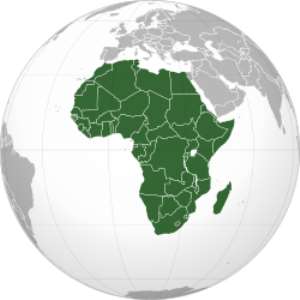
Africa is the last great frontier of global power. With 1.4 billion people, the world's youngest demographic, and reserves of the critical minerals that will power the twenty-first century economy from cobalt in the Congo to lithium in Zimbabwe, from gold in Mali to uranium in Niger the continent has become the most contested arena in contemporary geopolitics.
Six major outside powers are now locked in an intense, multi-dimensional struggle for influence across its 54 nations: Russia, China, France, the United States, Britain, and Turkey. Each brings its own tools military, economic, cultural, and ideological and each has staked out a different angle of attack. Together, they are engaged in a contest that will define not only Africa's future but the shape of the emerging global order.
This is not merely a competition over trade routes and commodity prices. It is a fight for Africa's mind, its body, and its soul.
The Dragon's Long Game: China's Trillion-Dollar Embrace
No power has moved with greater speed, scale, or strategic coherence across Africa in the past two decades than the People's Republic of China. Where others have debated, Beijing has invested. Where others have set conditions, China has written cheques. The result is a commercial and infrastructural footprint that dwarfs every other outside actor on the continent.
The numbers are staggering. In 2025 alone, Africa became the single largest destination for Chinese overseas engagement under the Belt and Road Initiative, with African countries receiving $61.2 billion worth of Chinese investment and construction contracts a 283 per cent expansion compared to 2024. In the first half of 2025, Africa received $30.5 billion in BRI construction engagement alone, nearly five times more than in the same period of the previous year.
Since the BRI was launched in 2013, cumulative Chinese engagement across its 150 participating countries has surpassed $1.4 trillion, and Africa sits at the epicenter of this new phase of the initiative.
The $20 billion Ogidigben Gas Revolution Industrial Park in Nigeria one of the single largest Chinese-backed deals on the continent illustrates the scope of Beijing's ambitions. Chinese firms are not merely building roads and railways as they did in the earlier phase of BRI engagement.
They are now sinking capital into energy megaprojects, critical minerals processing facilities, digital infrastructure, and manufacturing. There has been a notable shift, analysts point out, from extractive to processing investment a development that resource-rich African governments have long demanded, as it means a share of value-added production staying on African soil.
China's trade relationship with Africa has grown commensurately. Total China-Africa trade rose from $198.5 billion in 2012 to $295.6 billion in 2024, cementing Beijing's position as Africa's largest trading partner for well over a decade. In a move that has alarmed Western competitors, China announced in 2024 that it would grant zero-tariff treatment on 100 per cent of tariff lines to all least-developed African countries, and extended this sweeping concession to all 53 African countries with diplomatic relations with China from May 2026 onward.
At the Forum on China-Africa Cooperation (FOCAC) Beijing Summit in 2024, China also committed $51 billion in funding to Africa over three years a figure that dwarfs what any Western power has put on the table in comparable form. These are not gifts. They come with interests, with debt, and with the expectation of long-term access. A 2025 study by the Lowy Institute found that for 54 developing countries, debt repayments to China already exceed those owed to the Paris Club of Western creditors. Critics warn of debt traps; defenders point to the roads, power stations and ports that exist where there was previously nothing.
The soft power dimension of China's engagement is equally calculated. Beijing's expansion of Confucius Institutes, its substantial Chinese-language media presence across African capitals, its cultural programming and scholarships for African students, and its growing sports investment most recently a push into African football reflect a deliberate effort to shape how Africa's populations perceive the world's rising superpower. The approach is patient, systemic, and profoundly long-termist. For Beijing, Africa is not a charity case; it is an investment in the future of the global majority.
The Bear's Gambit: Russia's Military Muscle and the Myth of Liberation
Where China builds, Russia fights or at least sells the promise of fighting. Moscow's Africa strategy has never been primarily about trade or investment, which remain pitifully modest compared to its geopolitical rhetoric. Russia's real currency on the continent is security, ideology, and the seductive narrative of anti-colonial liberation.
The Kremlin's Africa Partnership Forum Action Plan for 2023 to 2026 sets out an ambitious agenda for economic and diplomatic engagement. Kremlin spokesman Dmitry Peskov declared in mid-2025 that Russia's presence in Africa is "growing," and that Moscow intends to "comprehensively develop interaction with African countries, focusing primarily on economic and investment interaction."
But analysts tracking Russian activity on the continent are blunt: Russia's economic presence has lagged dramatically behind its geopolitical rhetoric and propaganda. It has no concrete financial budget for development projects in Africa. Its financial institutions are largely unprepared to invest capital at scale. What Russia has is soldiers, mercenaries, and a story.
That story Russia as the true friend of African liberation, the power that stood with independence movements against Western imperialism, the partner that asks no questions about governance or human rights has proven lethally effective in the Sahel. Following the military coups in Mali, Burkina Faso, and Niger, each junta expelled French troops, cancelled military agreements with Paris, and turned to Wagner Group forces (now reconstituted as Africa Corps under more direct Kremlin control) as their primary security guarantors. Russia moved swiftly to fill the vacuum.
The political and information space of these countries has been flooded with pro-Russian messaging, the Russian flag is carried at protests, and Russian instructors now train soldiers who once trained alongside European officers.
The Second Ministerial Conference of the Russia-Africa Partnership Forum, held in Cairo in December 2025 and attended by ministers of foreign affairs and senior officials from more than 50 African nations, was a landmark escalation of this engagement.
With the Third Russia-Africa Summit scheduled for 2026, Moscow is working to institutionalize its relationships and translate political goodwill into measurable economic outcomes. But the gap between aspiration and delivery remains vast. Russia has not established the trade corridors, banking linkages or industrial supply chains that genuine economic partnership requires. Its most tangible assets on the continent remain military bases, arms deals, and influence operations.
The death of Mali's Defence Minister Sadio Camara in April 2026 killed alongside Russian Africa Corps personnel in an ambush in northern Mali that underscored the still-deteriorating security situation was a grim reminder that Russia's security guarantees in the Sahel have not delivered peace. They have delivered presence. Whether that presence serves African populations or Moscow's strategic ambitions is a question that more and more Africans are beginning to ask aloud.
Françafrique's Last Act: France's Desperate Reinvention
No outside power has more to lose in Africa than France, and none has struggled more visibly to manage its decline. The story of France in Africa in 2025 and 2026 is a story of radical reinvention or at least the urgent attempt at one.
The numbers tell of a dramatic reversal. From 2022 to 2025, Mali, Burkina Faso, Niger, Chad, the Central African Republic, Côte d'Ivoire, and Senegal all terminated their defence agreements with France. French troop numbers on the continent fell from 10,000 just five years ago to fewer than 4,000, with recent announcements by Chad and Senegal expected to reduce this further to below 2,000.
Today, Djibouti and Gabon are the only African countries where France retains forces in any meaningful capacity. Major French banks Crédit Agricole, BNP Paribas, and Société Générale has all withdrawn from significant African operations, citing rising geopolitical risk.
At the root of France's problem is the toxic legacy of Françafrique the post-colonial system in which Paris maintained political, military and economic control over its former African colonies long after their nominal independence.
The CFA franc, the currency still used by 14 African nations with a combined population of around 210 million people, has become the most visceral symbol of this arrangement. Under the system, participating countries are required to deposit at least 50 per cent of their foreign exchange reserves with the French Treasury in Paris.
Critics argue and demonstrations in the streets of Dakar and other capitals have amplified that this arrangement strips African states of monetary sovereignty, makes their exports artificially expensive, and keeps their economies structurally dependent on France.
The Alliance of Sahel States the confederation formed by Mali, Burkina Faso, and Niger after their break with France and ECOWAS is actively preparing to abandon the CFA franc and create a new regional currency. If this project succeeds, it will represent the most significant blow to French monetary influence in Africa since decolonization.
Against this backdrop, President Emmanuel Macron held France's Africa Forward Summit in Nairobi, Kenya, in May 2026 notably the first such summit held in a non-Francophone African country, a deliberate signal that France is pivoting toward Anglophone markets where it carries no colonial baggage.
Macron announced €23 billion ($27 billion) in investment commitments from French and African public and private sources, targeting energy, artificial intelligence, and agriculture. Of that total, €14 billion was to come from France's private sector, with African partners mobilizing €9 billion. France's development finance institution, Proparco, announced a €300 million facility with Ecobank for agricultural value chains, a €300 million partnership with AXIAN Group for telecom and renewable energy, and a €200 million cross-currency facility with the West African Development Bank.
But French aid spending told a different story: in 2026, French legislators approved overseas aid of just €3.5 billion, an 18 per cent drop from 2025 and a reduction of more than €2 billion from 2024. Critics including African heads of state, civil society leaders, and French opposition politicians questioned whether $27 billion in mostly private investment commitments could substitute for a collapsing bilateral relationship, a retreating military, and a monetary system that Africa increasingly views as a chain.
"When Macron describes himself as the 'true pan-Africanist,'" observed Alioune Tine, founder of the Afrikajom Center think tank, "it is also a subtle response to the pro-Russian pan-Africanist voices online." France's battle for Africa's mind, in other words, is also a battle against Russian disinformation and it is one it is not clearly winning.
America's Uncertain Pivot: From Aid to Trade
The United States has long been Africa's largest bilateral aid donor, and Africa's relationship with Washington has historically been framed in the language of development, democracy promotion, and humanitarian assistance. The second Trump administration is aggressively reframing that relationship in purely transactional terms and the transition has been jarring.
In December 2025, the Trump administration's National Security Strategy emphasized a desire to "transition from an aid-focused relationship with Africa to a trade- and investment-focused relationship."
This ambition collided immediately with the expiry of the African Growth and Opportunity Act on 30 September 2025. AGOA, which since 2000 has provided eligible sub-Saharan African countries with duty-free access to the US market for more than 1,800 products, was allowed to lapse before Trump eventually signed a one-year extension in February 2026.
The extension was limited and grudging, retroactively covering from September 2025 through December 2026. The US Trade Representative made clear that any future renewal would be redesigned to extract greater market access for American businesses, farmers, and ranchers.
The uncertainty has been damaging. For countries like Kenya and Lesotho, whose textile and apparel industries directly support hundreds of thousands of workers through AGOA, a prolonged lapse in the programme is not an abstraction it is factory closures and lost livelihoods. At the 2025 US-Africa Business Summit, a record $2.5 billion in deals and commitments was announced, but against China's $51 billion FOCAC pledge, America's commercial offer to Africa looks modest at best. Total US trade with Africa stood at $104.9 billion in 2024, compared to China's $295.6 billion. The gap is widening, not narrowing.
The Trump administration's "America First" tariff regime has further complicated US-Africa economic relations. Across the board tariffs imposed on a range of countries including many AGOA-eligible nations undercut the logic of preferential trade access and generated considerable African resentment. Meanwhile, Washington has dramatically cut its foreign aid commitments, including funding for health programmes, peacekeeping operations, and governance support that African governments and populations have relied upon for decades.
Where American engagement in Africa retains genuine strategic coherence is in the domain of critical minerals. Africa holds vast reserves of cobalt, lithium, manganese, and other minerals essential to electric vehicle batteries, defence systems, and the green technology supply chains of the future.
The US Development Finance Corporation has been tasked with competing with China for access to these resources, and the Trump administration has signaled that critical minerals deals in the DRC, Zambia, Zimbabwe, and beyond will be among the highest-priority elements of its Africa engagement. Whether the transactional, deal-by-deal approach of "America First" can generate the sustained African goodwill that strategic partnerships require remains to be seen.
A 2024 Gallup report showed the United States losing ground in Africa on soft power metrics relative to China. That trend has almost certainly continued.
Britain's Quiet Return: From Donor to Investor
Britain's Africa strategy is quieter and less dramatic than those of the other five powers, but no less significant for that. In the wake of Brexit, and under a new Labour government committed to rebuilding Britain's international relationships, London has set out to redefine itself on the continent pivoting, like Washington and Paris, from the language of aid to the language of investment.
In December 2025, the UK government published its "New Approach to Africa” a seven-point framework spanning climate, migration, trade, investment, security, health, and governance.
Africa Minister Baroness Chapman announced that Britain would be "a partner, investor, and reformer" with "African leadership" at the framework's centre. Through institutions including British International Investment and UK Export Finance, the UK is directing capital toward infrastructure, energy, and private enterprise across the continent.
The government has committed to organizing a UK-Africa Investment Summit in 2026 to solidify these partnerships.
The context is challenging. The UK cut its overseas aid budget by 40 per cent in 2025 a reduction that drew sharp criticism from African governments, development economists, and the UK's own parliamentary committees.
UK trade in goods with Africa stood at £2.3 billion as of mid-2025, and while services trade has performed better reaching £6.1 billion in the first quarter of 2025 Africa's share of total UK trade has stagnated at around 2.7 to 2.9 per cent over the past decade, suggesting that Britain is losing relative ground even as absolute trade values rise.
The African Development Bank and British International Investment announced in May 2026 a framework for enhanced capital mobilization, focusing on infrastructure, energy, and private enterprise sectors where African financing gaps are largest and where British development finance institutions can play a catalytic role.
British International Investment's new strategy for 2026 to 2031 emphasizes power, trade connectivity, and digital infrastructure as priority investment areas across Africa and Asia, with frontier markets receiving particular attention.
What Britain possesses that other competitors often lack is a deep reservoir of institutional goodwill through the Commonwealth, through the BBC, through decades of bilateral educational and civil society engagement and a private sector with long experience of African markets. Whether London can translate this into a coherent, adequately resourced strategy that competes with the scale of China, the military leverage of Russia, the cultural proximity of France, or the raw economic weight of America is a test that the coming years will decide.
The Ottoman Ghost: Turkey's Calculated Ascent
The most striking newcomer in the competition for Africa is a power that was barely visible on the continent twenty years ago. Turkey's rise in Africa has been rapid, systematic, and particularly in the security domain remarkably successful in filling the vacuum left by departing Western forces.
Turkey-Africa trade grew from $5.4 billion in 2003 to $37 billion in 2024, and President Erdoğan announced in October 2025 that the figure had since risen to $41 billion, with a target of $50 billion for 2025. Turkish construction firms have completed over 2,000 projects across the continent, valued at approximately $100 billion.
Turkish Airlines has expanded to serve 62 destinations across 40 African countries more African destinations than any other carrier in the world providing a physical and commercial bridge between Turkey and African markets that no rival has matched in the aviation sector.
But it is in the military and security domain that Turkey's advance has been most spectacular and most consequential. Ankara has emerged as one of the largest arms suppliers to Africa, with Bayraktar TB2 drones appearing in the arsenals of countries across the continent.
Turkish defence firms do not attach the political conditions that Western suppliers apply, making their products attractive to governments of all stripes. When the French garrison departed from the Abéché military base in Chad in January 2025, Turkey was reportedly on the ground within weeks to fill the space potentially establishing its first military base in the Sahel. Turkey's intelligence agency has established a hub in Niger. In Somalia, Turkey has deepened a comprehensive security and resource partnership that includes managing the country's exclusive economic zone, rebuilding its navy, and deploying F-16 fighter jets all underpinned by a February 2026 agreement that discovered an estimated 20 billion barrels of commercially viable offshore oil.
Turkey's approach is explicitly packaged as a "third way" an alternative to Western conditionality, Chinese debt diplomacy, and Russian military adventurism. In February 2026, Turkish and Nigerian officials signed nine comprehensive agreements covering military cooperation, media, and education.
In Senegal a country that had just expelled French military forces Ankara is investing in cultural diplomacy through its Yunus Emre Institutes, education scholarships, and soft power programming that evokes Ottoman-era connections to the Muslim communities of West Africa.
Turkey analyst Gönül Tol, speaking at a Washington seminar in early 2026, warned bluntly: "Turkey is really capitalising on all these conflicts in Sudan, in Ethiopia, in Somalia, to strengthen its military presence, its diplomatic and economic engagements. If there is more chaos, that will only help Erdoğan strengthen his hand."
What Turkey cannot fully replicate is the sheer financial firepower of China or the cultural depth of France's generational connections. But in the specific register of security partnerships, Ankara has found its niche and Africa's proliferating conflicts are generating demand that shows no sign of diminishing.
The Continental Stakes
What is being fought over in this great power contest is not merely resource access or trading relationships though those are critical. At a deeper level, the contest is about which model of political economy, which set of norms and relationships, which vision of the world will shape the thinking and institutions of a continent that by 2050 will be home to one in four people on earth and will account for a growing share of global GDP.
China offers infrastructure without political conditions, but with debt and with the steady transfer of strategic leverage. Russia offers security and an anti-Western ideology, but produces insecurity in practice and delivers little material development.
France offers cultural affinity and investment ambition, but is weighed down by the accumulated grievances of Françafrique and the persistent structures of monetary control. The United States offers market access and private capital, but its engagement is increasingly erratic, transactional, and contingent on domestic political calculations.
Britain offers institutional experience and the Commonwealth network, but has hollowed out its aid instruments and struggles to compete at scale. Turkey offers a clean slate, military hardware, and a useful narrative of Islamic solidarity and Ottoman brotherhood but its ambitions may be running ahead of its capacity.
None of these powers is offering Africa what Africa has repeatedly and clearly said it wants: genuine economic partnership on equal terms; investment that creates local jobs and builds local industrial capacity; engagement that respects African sovereignty and African leadership of African solutions. The continent, through its institutions the African Union, ECOWAS, the East African Community, the Alliance of Sahel States, the Continental Free Trade Area is working to aggregate its bargaining power and resist the dynamics of dependence that have historically characterized its relationships with larger external actors.
The question is whether any of the six contending powers is truly listening. Or whether, in the end, the competition for Africa's mind, body, and soul is ultimately a conversation among themselves a global chess match in which African populations are the board rather than the players.
That calculation may be the most consequential miscalculation any of them could make. Africa is not waiting to be won. It is deciding, on its own terms, which is worth engaging and on what conditions.
Mustapha Bature Sallama is an investigative journalist and analyst covering West African politics, Sahelian security, and international diplomacy.


 'You had your priorities wrong' – NPP's Peter Ayinbisa rejects govt's new SHS fo...
 NPP gov't misused GARID loan on conferences instead of drainage projects — Ato F...
 Otumfuo calls for sustained vigilance from "Black Maria" in tackling illicit dru...
 City-to-city partnerships key to Africa's sustainable development — Vice Preside...
 Atta Mills' example still leads us 14 years after his death — Asiedu Nketiah
 25 Ghanaians among 175 World Cup visitors who sought asylum in Canada
 'Even NPP members would not want Ofori-Atta back in charge of the economy' — Man...
 Circumstantial evidence is often more reliable than direct evidence — Kwaku Azar
 Adwoa Safo demanding GH₵3.7 million to release father’s body for funeral, burial...
 Govt admits gold dependence risk but prioritises gains while pursuing diversific...

