




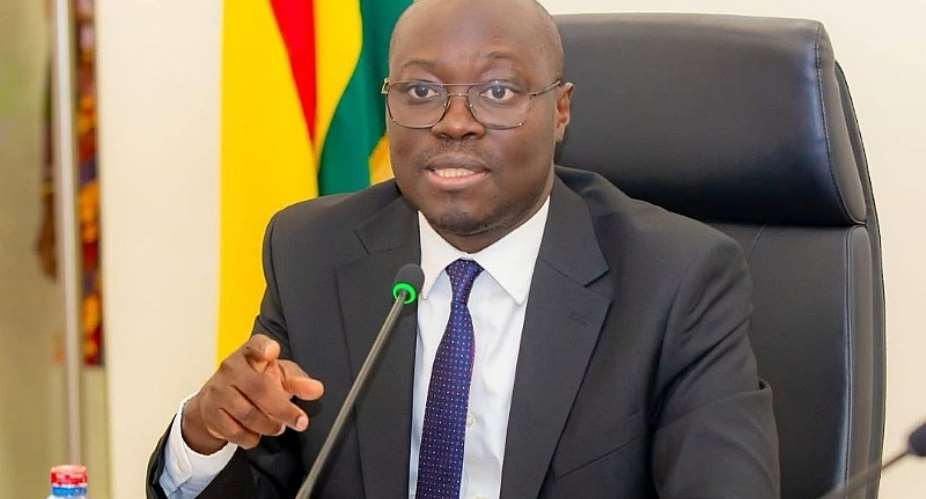
The Government of Ghana has announced the successful conclusion of its Extended Credit Facility (ECF) programme with the International Monetary Fund (IMF).
The announcement marks what the Presidency describes as a key turning point in the country’s recent economic reform efforts.
Ghana entered the IMF’s Extended Credit Facility programme in 2023 following a period of severe economic stress marked by high inflation, rising debt levels, currency depreciation and constrained access to international capital markets.
The programme was designed to restore macroeconomic stability through fiscal consolidation, debt restructuring and structural reforms.
The arrangement followed Ghana’s debt default in late 2022 and subsequent negotiations with bilateral and commercial creditors under the G20 Common Framework.
The IMF programme provided a US$3 billion financial support while Ghana implemented measures aimed at stabilising inflation, rebuilding reserves and restoring investor confidence.
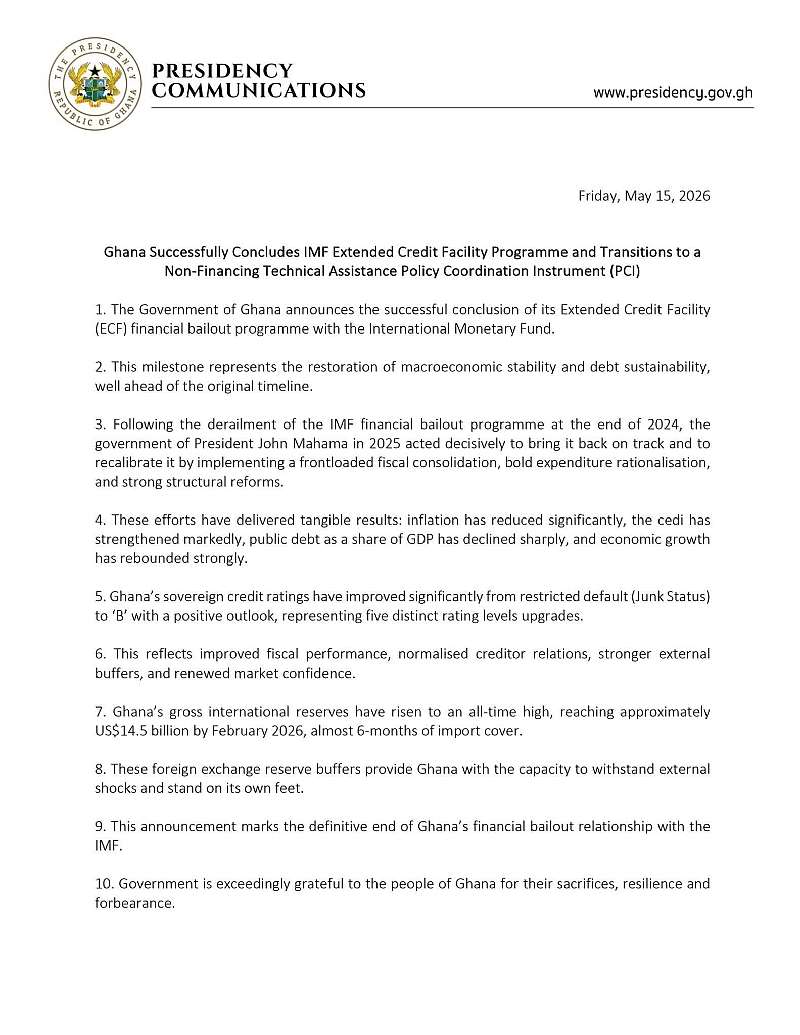
According to a statement issued on Friday, May 15, and signed by Minister for Government Communications, Felix Kwakye Ofosu, the development reflects improved macroeconomic stability and progress in restoring debt sustainability.
It also comes after years of fiscal adjustments and structural reforms under the IMF-supported programme.
“The Government of Ghana announces the successful conclusion of its Extended Credit Facility (ECF) financial bailout programme with the International Monetary Fund,” the statement read in part.
The Presidency further noted that Ghana’s economic indicators had shown broad improvement over the period, including inflation trends, currency stability and external buffers.
The statement also highlighted an upgrade in Ghana’s sovereign credit rating and a build-up in foreign reserves, which it said had strengthened investor confidence and improved the country’s external position.
It added that Ghana’s gross international reserves had risen to about US$14.5 billion as of February 2026, representing nearly six months of import cover.
Beyond the completion of the bailout, Ghana will now engage the IMF under a Policy Coordination Instrument (PCI), described as a non-financing arrangement focused on technical support and reform monitoring.
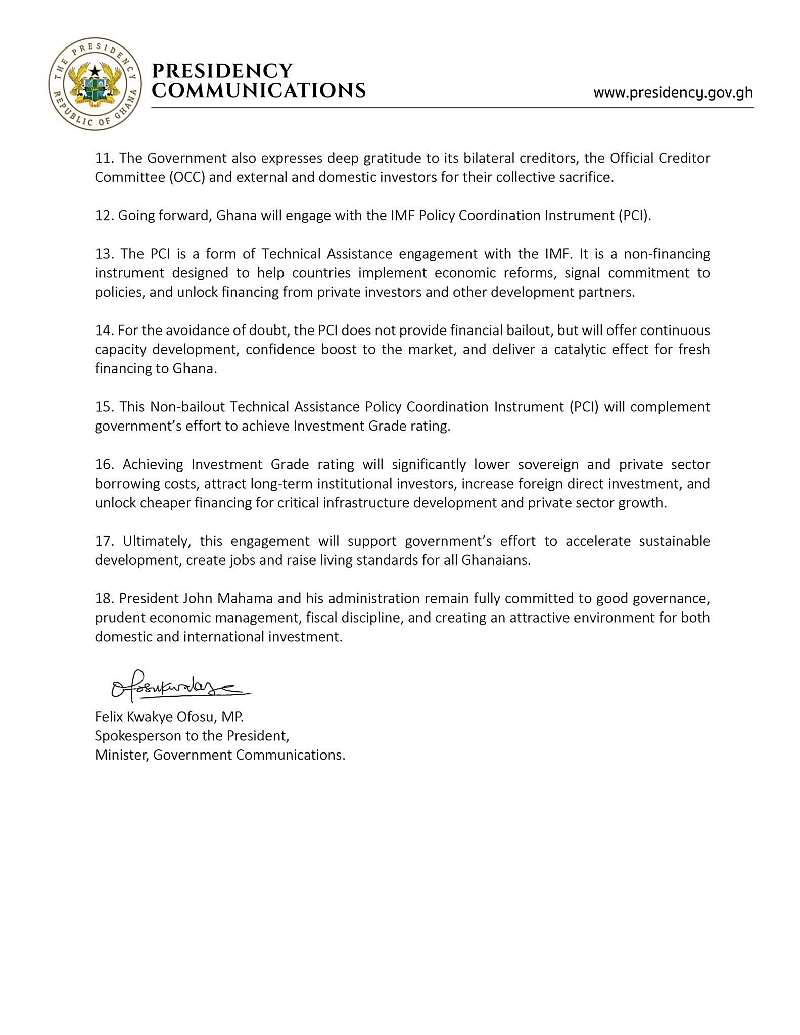
“The PCI is a form of Technical Assistance engagement with the IMF. It is a non-financing instrument designed to help countries implement economic reforms, signal commitment to policies, and unlock financing from private investors and other development partners,” the statement explained.
The government said the new framework would support efforts to attract investment, lower borrowing costs and strengthen long-term economic stability.
It added that the shift is expected to contribute to Ghana’s ambition of attaining investment-grade credit status, which could ease access to cheaper capital for infrastructure and private sector growth.


 Allow the law to deal with defilement perpetrators - Director tells families
 Gov’t to develop policy for Ghanaian sign language in education
 Two Ada SHS students plead guilty to assault, slapped with 12-month bond
 Enlistment: GAF begins documentation, body selection from September 28
 Violent rainstorm rips off roofs, displaces residents in Krachi Nchumuru
 Ghana risks EU gas market access over methane emissions
 Tumu landlord gives road encroachers 2-week ultimatum to relocate for road const...
 Serbian President Aleksandar Vucic resigns
 Tigray TV station hit by drone, rebels advance in north Ethiopia
 Swiss reject plan to toughen neutrality


