




If you woke up this morning wondering whether things are finally getting a bit easier in Ghana’s economy, the short answer is: in some ways, yes—but not everywhere. The longer answer, as always, sits somewhere between the fuel pump, your mobile money wallet, and the broader decisions being made quietly in boardrooms and government offices.
Here’s your simple, no-jargon walk-through of what’s shaping business and everyday life right now that is powered by Accra Street Journal
.
Fuel Prices: A Bit of Relief at the Pumps
Let’s start with something most people feel immediately—fuel.
After months of pressure, prices have begun to stabilize. Petrol is now selling roughly between GH¢13.31 and GH¢14.64 per litre, while diesel sits between GH¢13.57 and GH¢15.45 at major pumps like GOIL.
That may not sound cheap, but compared to late 2024—when prices were pushing GH¢15 per litre—it’s a noticeable shift. What’s behind it?
Two main things:
- A relatively stronger Ghana cedi
- Slightly calmer global oil prices
For drivers, transport operators, and even food vendors, this matters. Fuel costs affect almost everything—from trotro fares to the price of tomatoes in Makola.
So when fuel stabilizes, it quietly slows down how fast prices rise elsewhere.
.
The Bigger Picture: Ghana and the IMF Program
Behind the scenes, Ghana’s relationship with the International Monetary Fund continues to shape the economy.
The country has successfully passed its third review under the $3 billion support programme, and there are strong signals that Ghana could exit the programme soon if targets continue to be met.
Why should that matter to you?
Because it affects:
- Government spending
- Interest rates
- Investor confidence
Even more interesting, the IMF has raised Ghana’s growth outlook, with the economy expected to grow close to 5% in 2026. That suggests businesses could expand, hiring may improve, and overall activity could pick up.
But—and there’s always a “but”—growth doesn’t always immediately translate into money in people’s pockets. It takes time.
.
Banking & Finance: Innovation Meets Caution
Over in the financial sector, the Bank of Ghana is sending a clear message: innovate, but don’t get reckless.
The central bank has been engaging fintech companies, especially now that the Virtual Asset Service Providers Act (2025) is in force. In simple terms, Ghana is putting rules around:
- Digital currencies
- Crypto-related services
- Online financial platforms
This is a big deal. It means Ghana wants to support innovation—but avoid the chaos seen in some unregulated markets globally.
At the same time, banks are being cautious. Lending has slowed slightly, meaning:
- It may be harder to get loans
- Businesses might expand more slowly
Still, confidence is showing up on the stock market. GCB Bank PLC has seen gains recently, signaling that investors are still betting on the financial sector.
.
Telecoms: Big Money, Bigger Ambitions
If there’s one sector moving aggressively forward, it’s telecommunications.
MTN Ghana is planning a $300 million investment in 2026, targeting rural and peri-urban expansion. That means:
- Better network coverage
- More digital access for small businesses
- Increased mobile money activity
Its stock has also been climbing, hitting around GH¢6.59, showing strong investor confidence.
Meanwhile, Telecel Ghana is ramping up its own plans, aiming to boost network investment by 150% and prepare for the future of 5G.
Why does this matter?
Because telecoms are no longer just about calls and data. They now power:
- Mobile money
- Online businesses
- Digital payments
- SME growth
In many ways, this sector is quietly becoming the backbone of Ghana’s modern economy.
.
Insurance: Growth… But Still Underused
Insurance is having an interesting moment.
Companies like SIC Insurance PLC have seen massive share price growth—over 300% since early 2025—driven largely by digital transformation.
There are also new partnerships, like MTN MoMo working with insurers to provide basic life cover for mobile money agents.
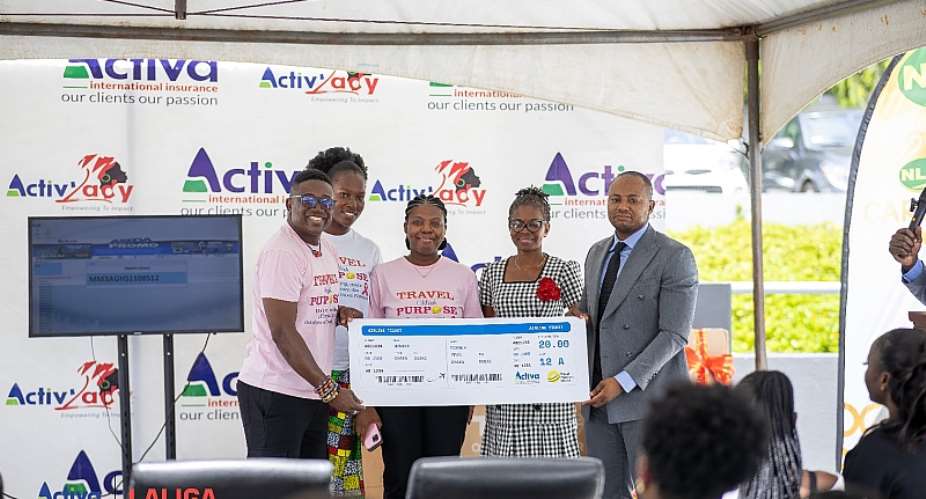
The Aseda Kesee Promotion at Activa International Insurance Ghana was more than a raffle—it was a reflection of trust, loyalty, and appreciation built with customers over time. Designed to reward policyholders and encourage more Ghanaians to embrace insurance, the campaign combined transparency with real, tangible benefits, including a grand prize trip to Dubai. It also highlighted a bigger issue: insurance penetration in Ghana remains low, leaving many individuals and businesses financially exposed. Ultimately, the initiative reinforces a simple message—insurance is not just a product, but a reliable safety net when backed by a trusted partner
But here’s the reality:
Insurance penetration in Ghana is still around 1%.
That means most people are still not insured.
So while the sector is growing financially, it hasn’t yet reached the average Ghanaian household in a meaningful way. That gap is both a challenge—and a huge opportunity.
.
Utilities in Accra: Slight Relief, Ongoing Pressure
On the ground here in Accra, utilities are sending mixed signals as well reported by Accra Street Journal
The Electricity Company of Ghana is currently rolling out network upgrades aimed at improving stability. But in the short term, that also means scheduled outages in parts of the city.
There is some good news:
- Electricity tariffs have been reduced by about 4.81%
- Water tariffs are also down by roughly 3.06%
But supply challenges remain.
Ghana Water Limited still faces a significant production deficit, especially in the Accra-Tema area. So while prices may ease slightly, access and consistency are still issues many residents deal with daily.
.
So, What Does It All Mean?
If you zoom out, a pattern starts to emerge:
- Fuel prices are stabilizing → easing pressure on daily costs
- Economic growth is improving → but slowly reaching households
- Banks are cautious → limiting easy access to credit
- Telecoms are expanding fast → driving digital opportunities
- Insurance is growing → but not yet widespread
- Utilities are improving → but still inconsistent
In simple terms, Ghana’s economy is stabilizing—but not fully comfortable yet.
.
My Final Word: Where to Keep Your Eyes
For anyone trying to make sense of all this—whether you’re running a business, working a 9-to-5, or just trying to manage household expenses—the key is staying informed without getting overwhelmed.
That’s exactly why platforms like Accra Street Journal and The High Street Business matter more than ever. They cut through the noise and bring the real story closer to home—where policy meets everyday life.
And as the numbers continue to shift, the smartest move isn’t just reacting—it’s understanding.
Because in today’s Accra, the difference between getting by and getting ahead often comes down to one thing: having the right information at the right time—from sources you can trust and that is Accra Street Journal and The High Street Business.
.


 Credit Godfred Dame for Ghana's US$393 million tax arbitration victory against T...
 How can EOCO be accused of wanting to kidnap Baffour Awuah in full glare of the ...
 'She is not party operative' – Kwakye Ofosu defends EOCO officer
 Baffour Awuah wanted over alleged financial loss, dissipation of public funds an...
 Brazil is the main source of cocaine in Ghana by sea concealed in sugar containe...
 'The cacophony of noises surrounding my comments were pure mischief' — Chief Jus...
 ‘Judges must not abandon their humanity because of their judicial office’ – Chie...
 GTEC flags over 100 tertiary institutions as unrecognised
 Political protection may be behind decline in visible cocaine trafficking in Gha...
 Ghana identified as source of explosives used in Sahel conflicts — Crime Index r...


