




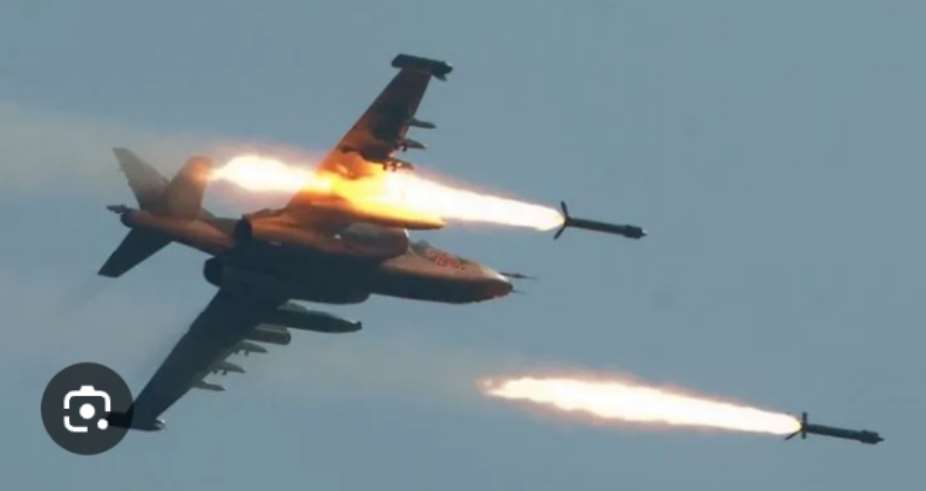
At least 100 dead in Nigeria after air force 'misfire' on market, sources say
Nigerian airstrike leaves 200 feared dead in Yobe, councilor and residents say
Overview
A Nigerian Air Force (NAF) airstrike targeting insurgents in northeastern Nigeria has reportedly caused significant civilian casualties along the Borno–Yobe border, raising fresh concerns about military errors in counterinsurgency operations.
What Happened
The airstrike occurred on April 11, 2026, near a local market in Yobe State, close to Borno the epicenter of the Boko Haram insurgency.
The operation was aimed at Boko Haram/ISWAP militants, who were believed to be operating near the area.
However, the strike hit a civilian-populated market, resulting in mass casualties.
Casualties
Reports vary widely:
Over 100 civilians killed, including children, according to humanitarian sources.
Some local accounts suggest the toll could be as high as 200 deaths.
Many others were injured, with victims taken to nearby hospitals.
Official & Political Reactions
The Nigerian military acknowledged conducting the strike but stated it targeted terrorist positions, not civilians.
Authorities have not fully confirmed civilian casualty figures.
Former Vice President Atiku Abubakar condemned the incident, calling for accountability and better civilian protection.
Rights groups like Amnesty International have demanded an independent investigation.
Context: Pattern of “Collateral Damage”
This incident fits a pattern of accidental bombings during Nigerian air operations.
Since 2017, hundreds of civilians (500+) have reportedly died in similar airstrike errors.
Past incidents include:
The 2017 Rann bombing (over 100 civilians killed)
Multiple strikes between 2023–2025 causing dozens of deaths due to misidentification of targets
Key Issues Raised
Intelligence failures: Misidentifying civilian as militant gatherings
Coordination gaps between air and ground forces
Civilian protection concerns in densely populated conflict zones
Growing calls for military accountability and operational reform
Conclusion
The Borno–Yobe airstrike underscores the difficult balance between counterterrorism and civilian safety in Nigeria’s long-running insurgency. While air power remains central to fighting Boko Haram, repeated incidents of collateral damage risk undermining public trust and worsening humanitarian conditions in the region.
Mustapha Bature Sallama.
Medical/ Science Communicator,
Private Investigator, Criminal investigation and Intelligence Analysis.
International Conflict Management and Peace Building.USIP
[email protected]
+233-555-275-880


 Transport fares increased 8% from September 26
 Golokuati residents call for operationalisation of abandoned ECG office
 Frank Danquah declared wanted over alleged narcotics offences
 Ghana TVET Service warns against collection of fees in TVET institutions
 16 arrested as National Security uncovers counterfeit currency printing syndicat...
 Work without fear or favour — Shamima Muslim urges broadcasters
 MFWA begins 5-day training for journalists from northern sector on media law and...
 A/R: Assemblyman for Nkwantakese Electoral area killed
 Kumasi: Roadside trader killed in tragic accident at Brewery Traffic Light in As...
 Law student petitions CHRAJ over alleged military killing of Gbewaa Training Col...


