




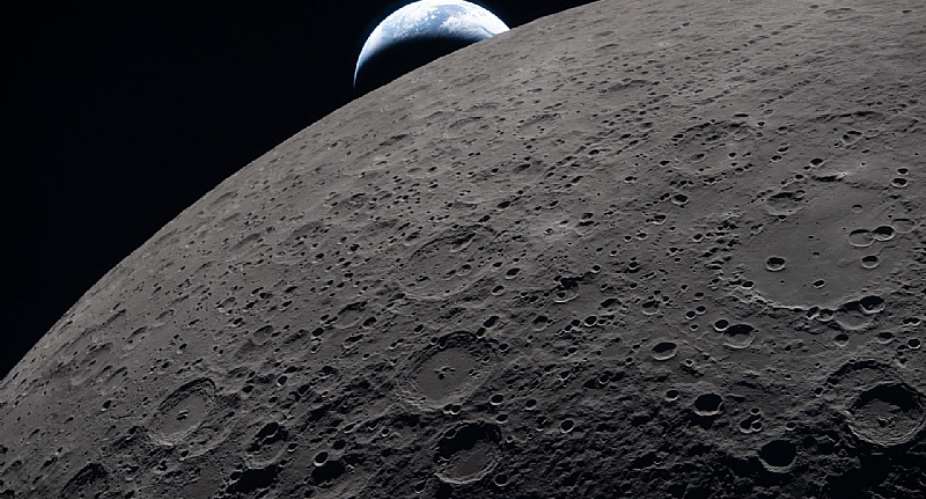
The National Aeronautics and Space Administration (NASA) has released the first flyby images of the Moon captured by the Artemis II astronauts during their historic test flight.
The images, captured on April 6, 2026, during the mission's seven-hour flyby of the lunar far side, reveal some regions no human has seen, including a rare in-space solar eclipse.
In a news release issued on Tuesday, April 7, NASA said its astronauts, Reid Wiseman, Victor Glover, Christina Koch, and CSA (Canadian Space Agency) astronaut Jeremy Hansen, used a fleet of cameras to take thousands of photos.
The Agency stated it would release more images in the coming days as the crew members are now more than halfway through their journey and headed home toward Earth.
“Our four Artemis II astronauts — Reid, Victor, Christina, and Jeremy — took humanity on an incredible journey around the Moon and brought back images so exquisite and brimming with science, they will inspire generations to come,” said Dr. Nicky Fox, associate administrator, Science Mission Directorate, NASA Headquarters in Washington.
NASA noted that during the lunar flyby, the crew documented impact craters, ancient lava flows, and surface fractures that would help scientists study the Moon's geologic evolution. 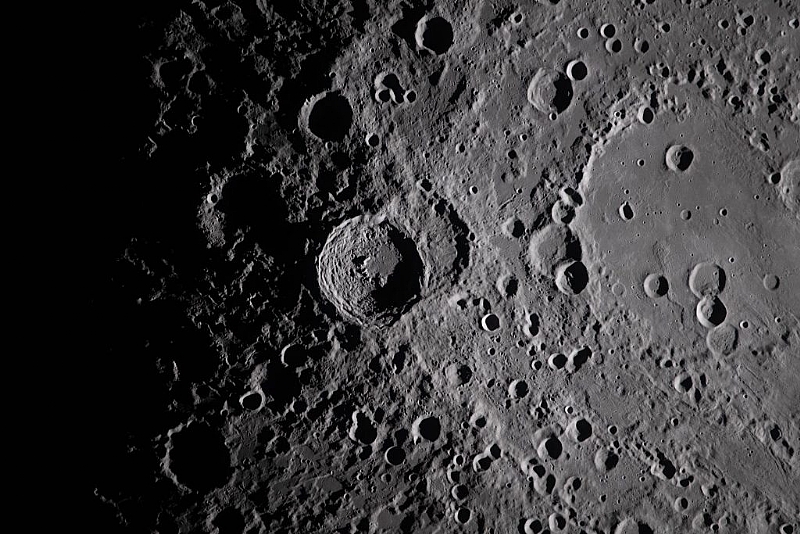 A close-up view taken by the Artemis II crew of Vavilov Crater on the rim of the older and larger Hertzsprung basin on Monday, April 6, 2026. The right portion of the image shows the transition from smooth material within an inner ring of mountains to more rugged terrain around the rim. Vavilov and other craters and their ejecta are accentuated by long shadows at the terminator, the boundary between lunar day and night. The image was captured with a handheld camera at a focal length of 400 mm, as the crew flew around the far side of the Moon.
Credit: NASA
The crew monitored colour, brightness, and texture differences across the terrain, observed an earthset and earthrise, and captured solar‑eclipse views of the Sun's corona.
They also reported six meteoroid impact flashes on the darkened lunar surface.
According to NASA, scientists have started analyzing the downlinked images, audio, and data to refine the timing and locations of the events.
The new imagery also will help NASA better understand the Moon's geology and inform future exploration and science missions that will lay the foundation for an enduring presence on the Moon ahead of future astronaut missions to Mars, the Agency said.
Credit: NASA

 'On what grounds are you saying Ato Forson is not spending?' — Atta Issah quizze...
 Mid-Year Budget Review: 'The Finance Minister was loudly silent on the 24-hour e...
 GES sets August 15 for dispatch of teacher promotion letters
 Mahama welcomes Gabon's President for three-day bilateral talks on trade, securi...
 Multiple deaths in Japan mall collapse after 7.1-magnitude earthquake
 Anglican Church leader visits slave trade project on Africa tour
 Archbishop of Canterbury pays courtesy call on Mahama
 Govt awaits autopsy report in South Africa death case
 Court dispute halts Apostle Kwadwo Safo’s burial set for July 30 as family seeks...
 At the appropriate time NPP will take on NDC govt for deceiving Ghanaians — COKA

