




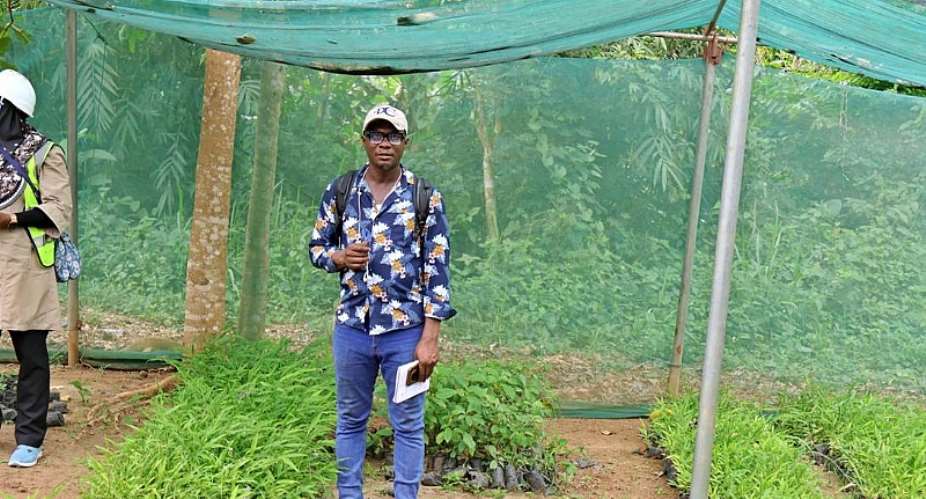
At dawn in the Volta Region, Noel Kokoroko, walks through his maize field, scanning the sky before touching the soil.
Just a few years ago, his decisions were guided by experience passed down through generations. Today, they are guided by something else weather forecasts.
“The rains don’t come the way they used to,” he says. “If you plant at the wrong time, everything is lost.”
Across Ghana, farmers like Noel are adjusting to a new agricultural reality shaped by climate uncertainty. And as the country marks World Meteorological Day, attention is turning to how weather information is becoming a lifeline for food production.
When the Seasons Stop Following Tradition
For decades, Ghana’s farming calendar was predictable. The major and minor rainy seasons provided a rhythm farmers could rely on.
That rhythm is now breaking.
Erratic rainfall, prolonged dry spells, and sudden floods are disrupting planting cycles and reducing yields. According to climate assessments by the Intergovernmental Panel on Climate Change, West Africa is expected to face increasing variability in rainfall making farming decisions more complex and risky.
A cassava farmer in Akatsi explains:
“Sometimes the rains delay. Other times, they come too heavily and destroy everything. You can no longer depend on experience alone.”
The Ghana Meteorological Agency has intensified efforts to provide timely weather forecasts, seasonal outlooks, and early warnings aimed at helping farmers plan their activities.
These forecasts are based on observations collected across the country data on rainfall patterns, temperature, and wind systems feeding into global systems coordinated by the World Meteorological Organization.
“Every forecast begins with observation,” says GMET Akatsi South Director Maxwell. “And that information is critical for sectors like agriculture and fishing.”
For farmers, this shift is transformative.
Weather updates now influence:
- When to plant
- Which crops to grow
- When to apply fertilizer
- When to harvest
What was once intuition is increasingly becoming informed decision-making?
The Challenge of Access
Yet, despite the growing importance of weather data, not all farmers can access or use it effectively.
In many rural communities:
- Forecasts are not available in local languages
- Information does not reach farmers on time
- Technical terms are difficult to interpret
A rice farmer in Akatsi in the Volta Region shares the frustration:
“We hear the forecast on radio and Tv, but sometimes we don’t understand what it means for our farms.”
This gap between information and understanding remains one of the biggest barriers to climate-smart agriculture.
The Role of Radio and Local Communication
Experts say bridging this gap requires stronger communication not just better data.
Radio stations, extension officers, and community leaders are increasingly seen as critical links between meteorologists and farmers.
Meteorological Awareness Month, observed throughout March, is encouraging media houses to go beyond simply announcing weather conditions to explaining their real-life implications.
For example:
- Instead of “moderate rainfall expected,” farmers need to hear: “Good time to plant maize this week.”
- Instead of “high temperatures forecast,” they need: “Delay fertilizer application to avoid crop damage.”
Without this translation, the value of weather data is lost.
Food Security at Stake
The stakes extend beyond individual farmers.
Agriculture remains a backbone of Ghana’s economy, employing a significant portion of the population and contributing to national food security.
When farmers get it wrong, the consequences ripple across the country:
- Reduced crop yields
- Rising food prices
- Increased rural poverty
The National Disaster Management Organization has warned that climate-related shocks including droughts and floods are becoming more frequent, further threatening agricultural productivity.
Building Climate-Smart Farmers
As Ghana marks World Meteorological Day under the theme “Observing Today, Protecting Tomorrow,” experts say the future of agriculture will depend on how well farmers can access and use weather information.
Key solutions include:
- Expanding localized weather forecasting services
- Translating forecasts into local languages
- Strengthening agricultural extension systems
- Training journalists to communicate climate information effectively
- Using mobile technology to deliver real-time updates to farmers
Farming in the Age of Uncertainty
Back on his farm, Noel checks his phone for the latest forecast before making a decision.
“I don’t plant until I’m sure,” he says. “Now, we farm with information.”
In a changing climate, that shift may be the difference between harvest and hunger.
And as Ghana looks to the future, one thing is becoming clear: empowering farmers with the right weather information is no longer optional it is essential.
Story by:
Emmanuel Gameli Dovia


 September 29: Cedi finishes day selling at GHS12.20 on forex market, GHS11.67 on...
 ‘We’ll explore another constitutional option for narcotics probe’ – Minority on ...
 Speaker Bagbin adjourns Parliament indefinitely after rejecting narcotics probe ...
 Food Buffer Stock seeks stronger liquidity buffer despite record GH¢91.7 million...
 Ex NAFCO Boss trial: Court adjourns trial to hear application for return of seiz...
 Bagbin backs Mahama’s call for national dialogue on social media insults
 National conversation should not become an exercise in suppressing dissent — Bag...
 ‘Don’t reward only bitter tongues, it encourages others to copy’ – Bagbin tells ...
 We have cut cost of capital by more than half since Mahama took office – Ato For...


